 flip
flipAvalon Apples with Honey and Hawthorn
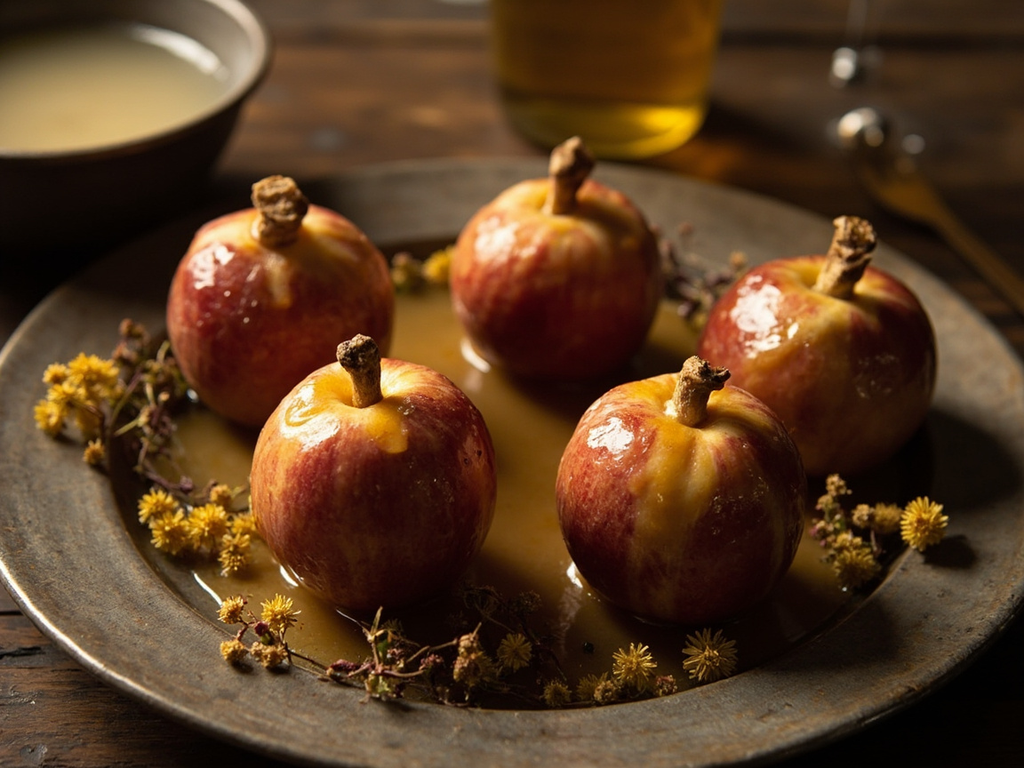
Avalon Apples with Honey and Hawthorn
Why this dish? Avalon, the island where the Lady leads the dying Arthur, literally means "the island of apples" in Celtic tradition. Placing honeyed apples at the lake's edge honors this passage between the mortal world and the fairy realm — the very gesture of the Lady of the Lake.
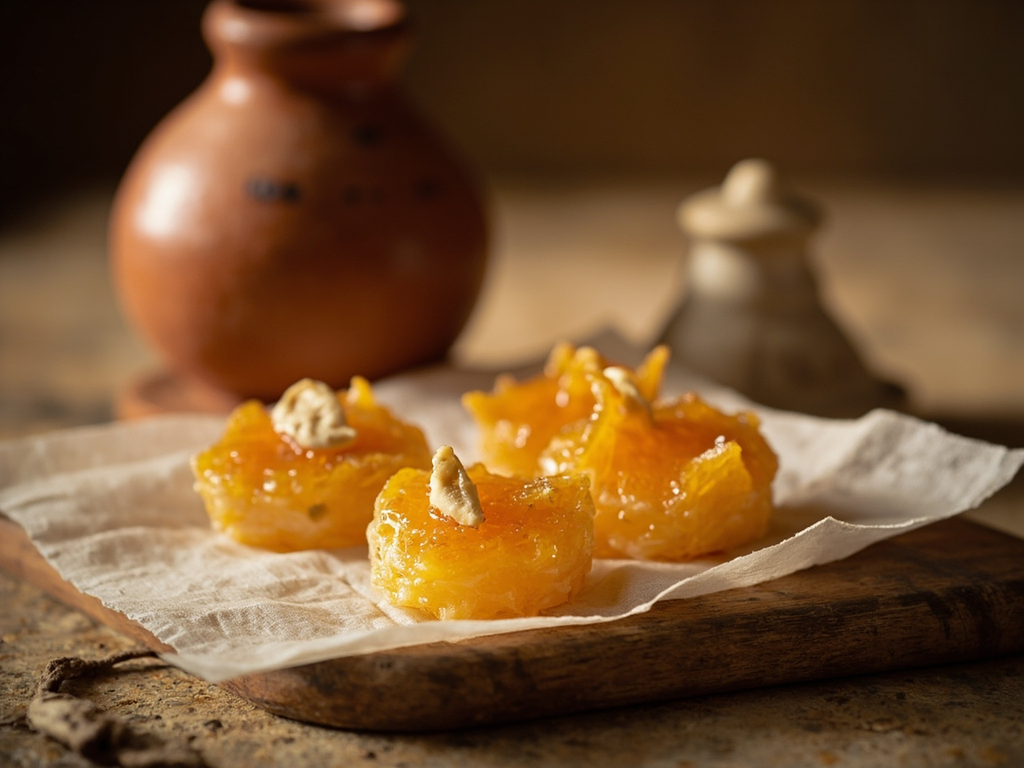
Wild apples gently candied in honey and spring water, perfumed with hawthorn, the boundary bush of Breton tales. Tender, golden, fragrant: a simple and luminous offering.
Approach without fear, child of the upper world. These apples I picked on the isle you call Avalon, the island of orchards that no autumn withers. I let them melt in the honey of my hives and the water of my spring, for the time it takes for them to become golden as the scabbard of Excalibur. Place them at the water's edge before tasting: thus we thank those who watch beneath the waves.
- •Wild apples (or from an old orchard) — a full basket (heart-fruit of the offering)
- •Wild heather honey — a generous spoonful (sweetener and binder)
- •Living spring water — enough to cover the bottom (cooking bath)
- •Hawthorn flowers and young leaves — a handful (scent of the forest)
Avalon Apples with Honey and Hawthorn
Wild apples gently candied in honey and spring water, perfumed with hawthorn, the boundary bush of Breton tales. Tender, golden, fragrant: a simple and luminous offering.
Why this dish? Avalon, the island where the Lady leads the dying Arthur, literally means "the island of apples" in Celtic tradition. Placing honeyed apples at the lake's edge honors this passage between the mortal world and the fairy realm — the very gesture of the Lady of the Lake.
Approach without fear, child of the upper world. These apples I picked on the isle you call Avalon, the island of orchards that no autumn withers. I let them melt in the honey of my hives and the water of my spring, for the time it takes for them to become golden as the scabbard of Excalibur. Place them at the water's edge before tasting: thus we thank those who watch beneath the waves.
Ingredients (period version)
- Wild apples (or from an old orchard) — a full basket (heart-fruit of the offering)
- Wild heather honey — a generous spoonful (sweetener and binder)
- Living spring water — enough to cover the bottom (cooking bath)
- Hawthorn flowers and young leaves — a handful (scent of the forest)
Ingredients
- Reinette or Belle de Boskoop apples — 6 (main fruit)
- Honey (heather or chestnut) — 4 tbsp (sweetener and glaze)
- Water — 10 cl (cooking bath)
- Dried hawthorn flower (or linden if unavailable) — 1 tsp (floral perfume)
- Butter — 20 g (softness (dairy Brittany))
Method
- Wash the apples, core them without peeling entirely and score them in a crown.
- Place them tightly in a dish, pour water at the bottom, drizzle each apple with honey and top with a knob of butter.
- Sprinkle with hawthorn flowers and bake at 180°C for 30 to 35 minutes, basting twice with the cooking juices.
- Let cool slightly: the honey should coat the apples in a shiny veil. Serve warm, drizzled with the syrup from the dish.
How it was made : Cane sugar was unknown in common medieval Brittany: honey was THE sweetener, and apples, abundant, were preserved and cooked under ashes or in the bread oven. Hawthorn, a shrub of hedges and thresholds, was reputed to be protective — it was placed at doors as at the edges of fairy forests.
The contemporary twist : Serve each apple on a mirror of lightly blue-tinted gelled water to evoke the lake, and slide a sliver of toasted almond as a "blade" planted in the fruit.
Lady of the Lake · Charactorium