 flip
flipPinoccate al miele — honey and pine nut cakes
Pinoccate al miele — honey and pine nut cakes
Why this dish? After her conversion, Angela stripped herself of her goods to serve the poor and care for the sick at the hospital of Foligno. This Umbrian sweet of honey and pine nuts evokes those acts of charity: a little honey offered to the hungry, a tangible sign of the mercy she preached.
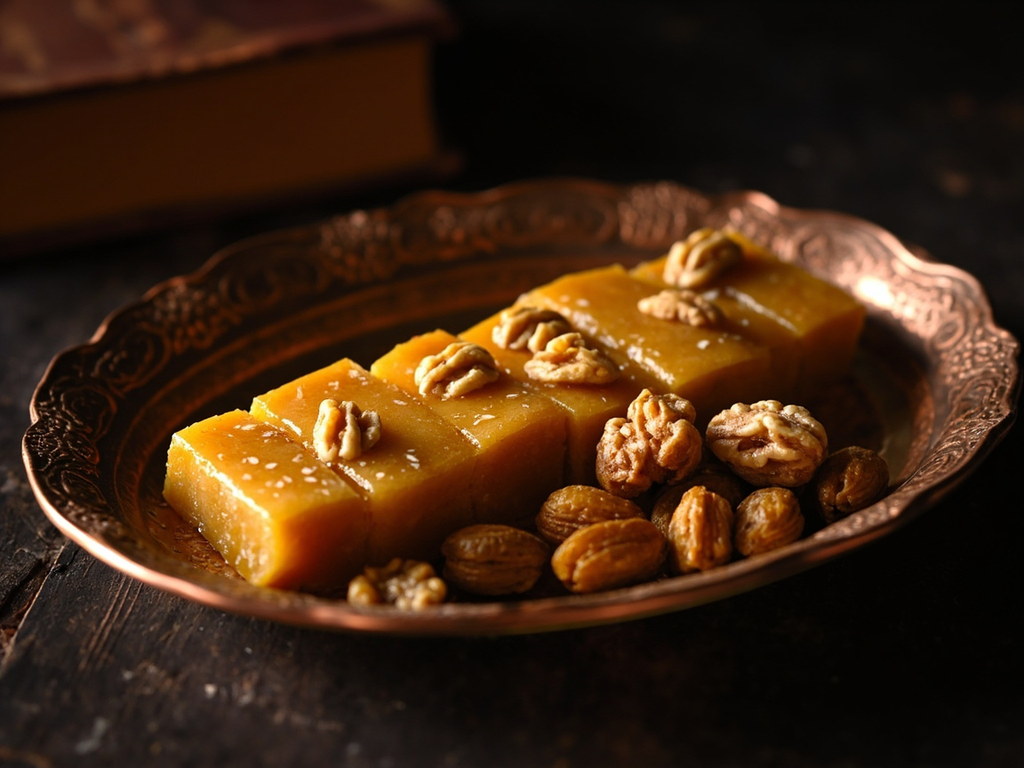
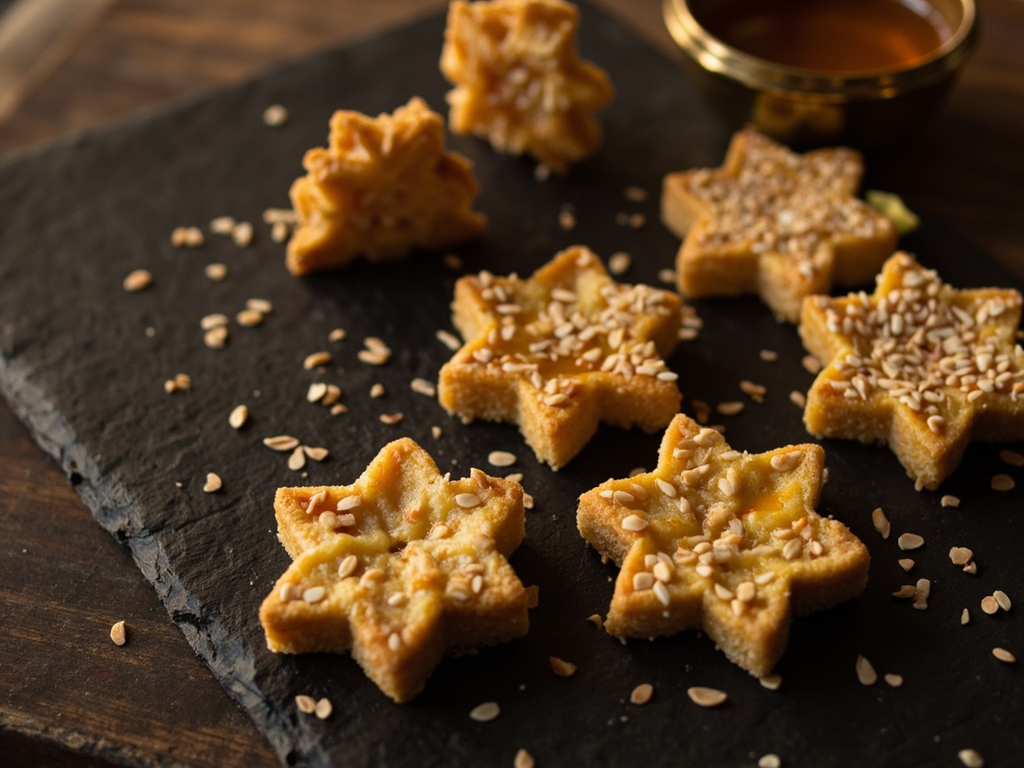
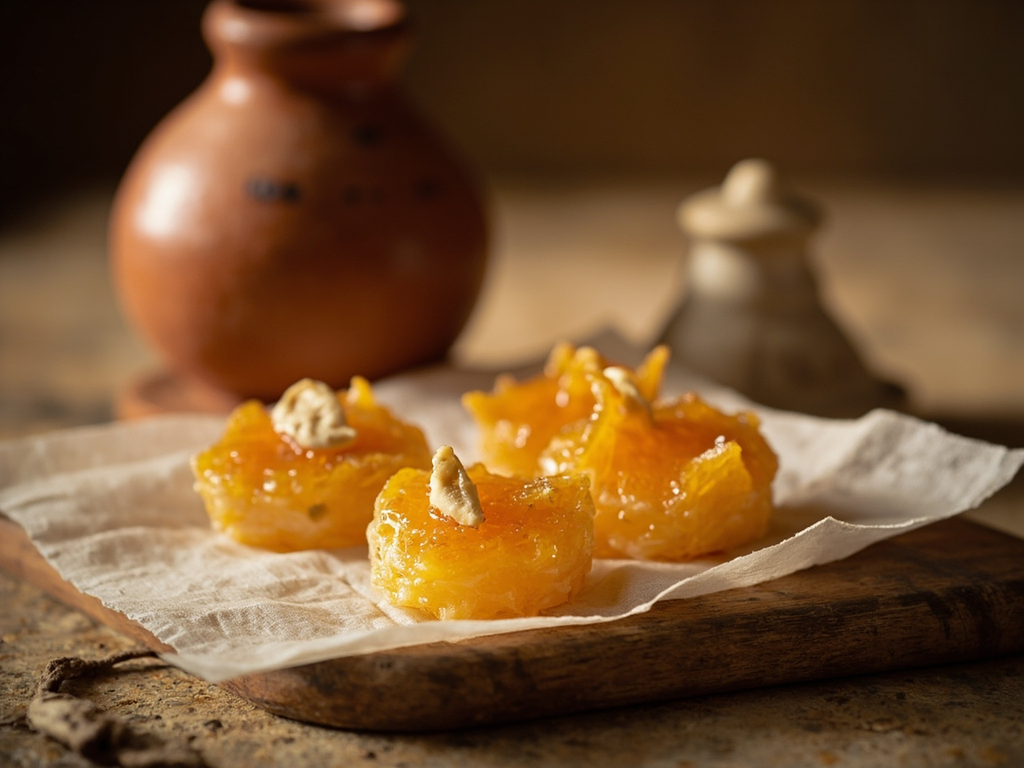
Small, melt-in-the-mouth bites of cooked honey and pine nuts, flavored with lemon zest, hardened into diamond shapes. Sweet, energizing, easy to give and carry: the treat of almsgiving and pilgrimage paths.
When I go to the sick and the beggars, I carry in a cloth these little sweets of honey and pine nuts, for charity also wishes to gladden the body. I melt the honey over the embers until it flows, throw in a good handful of pine nuts, and pour it all onto a wet board to cut into diamonds before it hardens. Give them without counting, soul: what you offer the poor, you offer to Christ himself.
- •Honey from the hills — a bowl (base and binder)
- •Pine nuts — two good handfuls (garnish)
- •Lemon zest — a little, grated (flavoring)
- •Wheat flour — a spoonful to hold (binder)
Pinoccate al miele — honey and pine nut cakes
Small, melt-in-the-mouth bites of cooked honey and pine nuts, flavored with lemon zest, hardened into diamond shapes. Sweet, energizing, easy to give and carry: the treat of almsgiving and pilgrimage paths.
Why this dish? After her conversion, Angela stripped herself of her goods to serve the poor and care for the sick at the hospital of Foligno. This Umbrian sweet of honey and pine nuts evokes those acts of charity: a little honey offered to the hungry, a tangible sign of the mercy she preached.
When I go to the sick and the beggars, I carry in a cloth these little sweets of honey and pine nuts, for charity also wishes to gladden the body. I melt the honey over the embers until it flows, throw in a good handful of pine nuts, and pour it all onto a wet board to cut into diamonds before it hardens. Give them without counting, soul: what you offer the poor, you offer to Christ himself.
Ingredients (period version)
- Honey from the hills — a bowl (base and binder)
- Pine nuts — two good handfuls (garnish)
- Lemon zest — a little, grated (flavoring)
- Wheat flour — a spoonful to hold (binder)
Ingredients
- Honey (acacia or wildflower) — 250 g (base and binder)
- Pine nuts — 150 g (garnish)
- Zest of one untreated lemon — 1 lemon (flavoring)
- Flour — 1 tbsp (binder)
- Water (for the board) — a little (molding aid)
Method
- Pour the honey into a heavy-bottomed saucepan and heat gently until it simmers and darkens slightly (about 115 °C, it forms a thread between wet fingers).
- Remove from heat, stir in the pine nuts, lemon zest, and flour, mixing quickly to coat evenly.
- Pour the hot mixture onto a sheet of parchment paper or a dampened board, spread to 1 cm thick with a wet spatula.
- Let cool for 2 minutes, then cut into small diamonds with an oiled knife before it hardens completely.
- Cool fully: the pinoccate harden as they dry. Detach and store in an airtight container.
How it was made : Cane sugar, imported and precious, was reserved for apothecaries and the very rich; sweetening was done with honey, produced by every convent that kept beehives. Pine nuts, harvested from Mediterranean pine forests, were a noble and energy-rich ingredient in Italian medieval pastry. Pinoccate remain a specialty of Perugia and Umbria, traditionally offered at festivities.
The contemporary twist : Dip one corner of each diamond in warm honey then in crushed toasted pine nuts, and arrange on a fig leaf: luxury carità, unchanged spirit.
Sources : Tradition pâtissière ombrienne (pinoccate de Pérouse) · Bruno Laurioux, Le Moyen Âge à table
Angela of Foligno · Charactorium