 flip
flipHalvo-yi kishmish (Flour Halva with Raisins)
Halvo-yi kishmish (Flour Halva with Raisins)
Why this dish? In Central Asian tradition, flour halva is prepared for pious occasions: end of Ramadan, commemoration of the dead, completion of memorizing a sacred text. Al-Marghinani, whose Al-Hidaya was studied as quasi-sacred, would have seen this halva served at khatm (graduation ceremonies) of his own work.
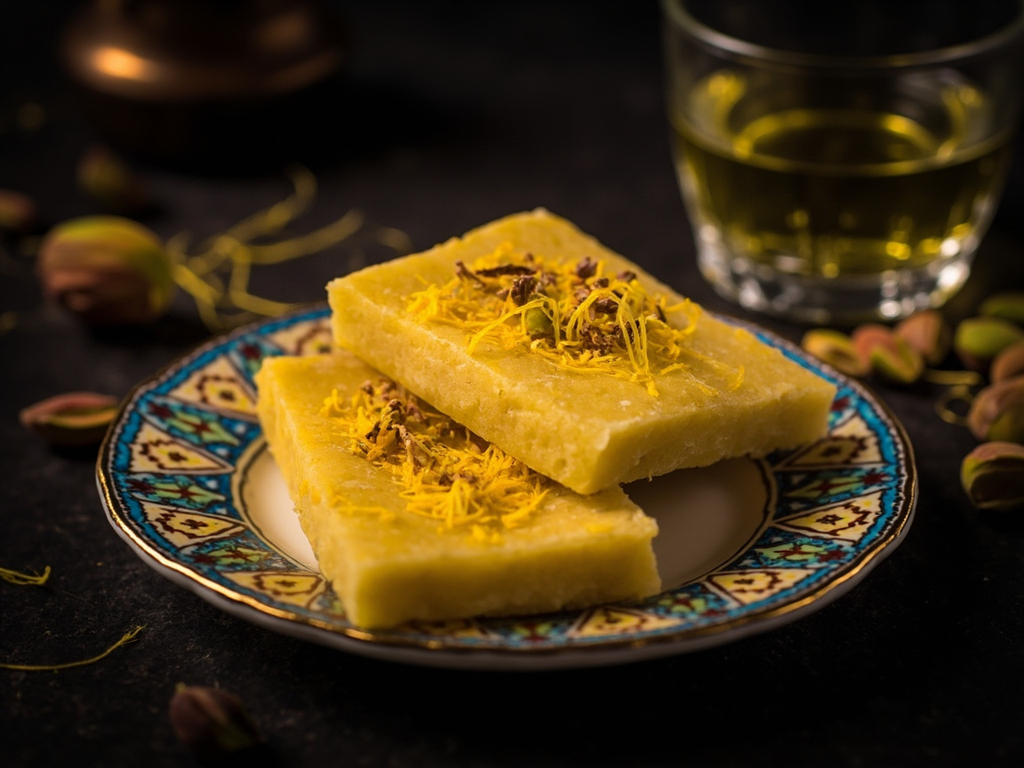
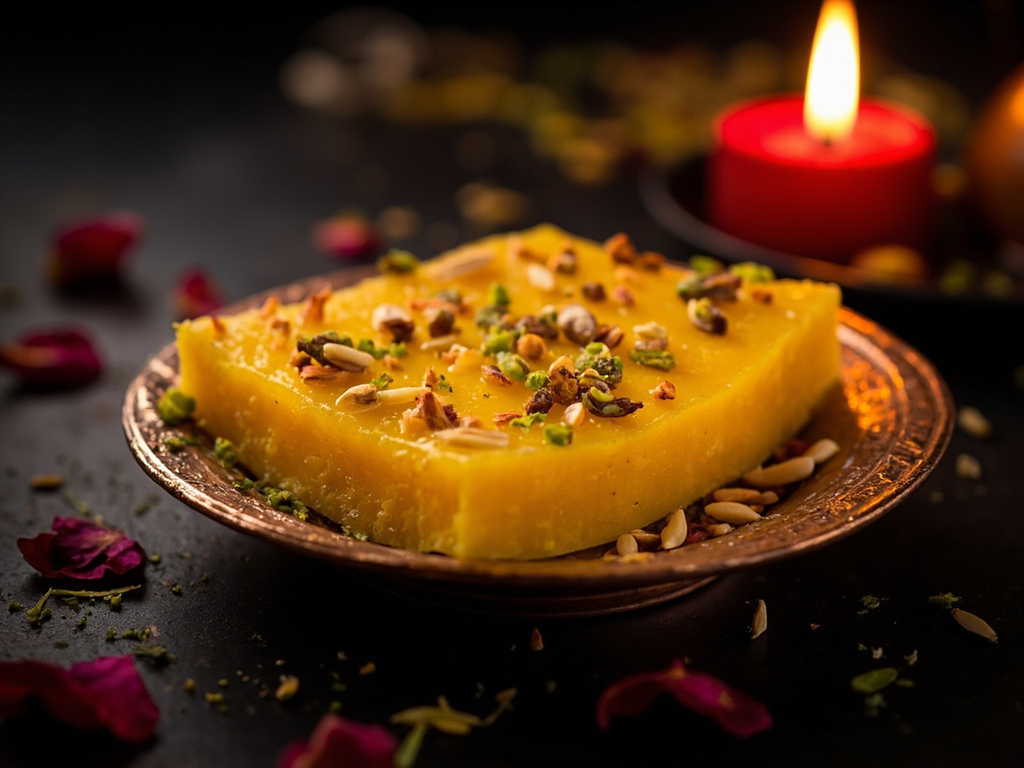
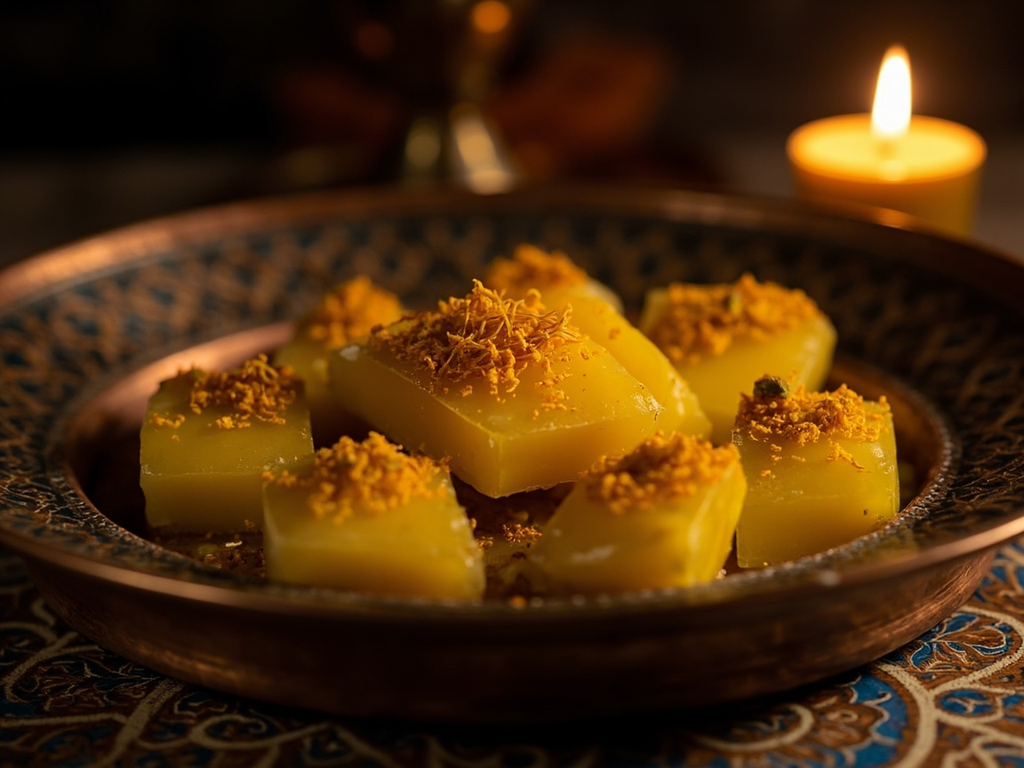
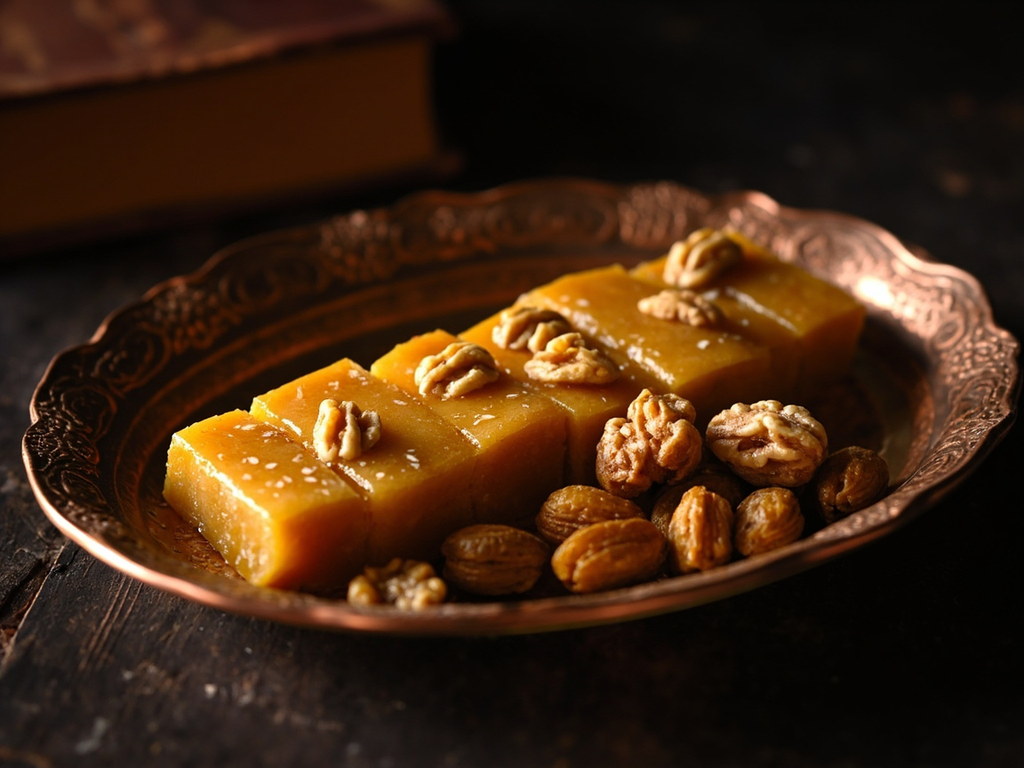
A dense, fragrant halva made from flour toasted in clarified butter, sweetened with honey, and studded with raisins and walnuts. A ritual and generous sweet, distributed to the community.
Halva, you see, is not a treat — it is an act of piety. When it is prepared, it is distributed to neighbors, the poor, the students of the madrasa. My mother, may Allah's mercy be upon her, would toast the flour in roghan until the whole house smelled of hazelnut. Then honey, raisins from Samarkand, and you stir without ceasing — it is a labor of the arm as much as the soul. Each bite is a prayer.
- •Wheat flour — Two handfuls (Base)
- •Roghan (clarified butter) — Equal weight to flour (Fat, richness)
- •Honey — Generously (Sweetener)
- •Raisins (kishmish) — One handful (Fruity sweetness)
- •Crushed walnuts — One handful (Crunch)
- •Cardamom — A few crushed seeds (Fragrance)
Halvo-yi kishmish (Flour Halva with Raisins)
A dense, fragrant halva made from flour toasted in clarified butter, sweetened with honey, and studded with raisins and walnuts. A ritual and generous sweet, distributed to the community.
Why this dish? In Central Asian tradition, flour halva is prepared for pious occasions: end of Ramadan, commemoration of the dead, completion of memorizing a sacred text. Al-Marghinani, whose Al-Hidaya was studied as quasi-sacred, would have seen this halva served at khatm (graduation ceremonies) of his own work.
Halva, you see, is not a treat — it is an act of piety. When it is prepared, it is distributed to neighbors, the poor, the students of the madrasa. My mother, may Allah's mercy be upon her, would toast the flour in roghan until the whole house smelled of hazelnut. Then honey, raisins from Samarkand, and you stir without ceasing — it is a labor of the arm as much as the soul. Each bite is a prayer.
Ingredients (period version)
- Wheat flour — Two handfuls (Base)
- Roghan (clarified butter) — Equal weight to flour (Fat, richness)
- Honey — Generously (Sweetener)
- Raisins (kishmish) — One handful (Fruity sweetness)
- Crushed walnuts — One handful (Crunch)
- Cardamom — A few crushed seeds (Fragrance)
Ingredients
- All-purpose wheat flour — 200 g (Base)
- Clarified butter (ghee) — 200 g (Fat)
- Liquid honey — 150 g (Sweetener)
- Hot water — 100 ml (Dilution of honey)
- Golden raisins — 60 g (Fruity sweetness)
- Walnut halves — 60 g (Garnish)
- Ground cardamom — ½ tsp (Fragrance)
Method
- In a large heavy pan, melt the clarified butter over medium heat.
- Add the flour in a rain, stirring constantly with a wooden spoon for 15-20 minutes, until it turns a golden hazelnut color and smells like biscuit. Do not stop stirring.
- Meanwhile, dilute the honey in hot water and add the cardamom.
- Pour the honey-water mixture over the toasted flour, stirring vigorously. Watch for splatters.
- Add the raisins and half the crushed walnuts. Continue stirring for 5 minutes until a thick, homogeneous paste that pulls away from the pan.
- Pour into an oiled dish, smooth the surface, and sprinkle with the remaining walnuts.
- Let cool slightly, then cut into diamonds. Serve at room temperature.
How it was made : Flour halva (halvo, halvitar) is one of the oldest confections of the Islamic world, mentioned in Arabic cookbooks as early as the 10th century. In Central Asia, it is inseparable from religious ceremonies and funeral rites. Cane sugar, still rare in the region in the 12th century, was replaced by local honey. The tradition of distributing halva to the community after a pious event continues today in Uzbekistan.
The contemporary twist : Cut into small regular diamonds and present in individual cups with a pinch of fleur de sel, like mignardises with tea.
Sources : Nawal Nasrallah, 'Annals of the Caliphs' Kitchens' (halva in Abbasid cuisine) · David Waines, 'In a Caliph's Kitchen' (medieval confections of the Islamic world)
Al-Marghinani · Charactorium