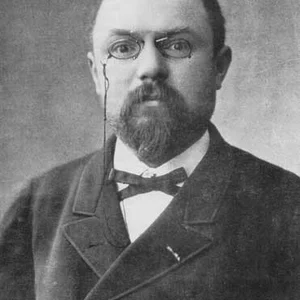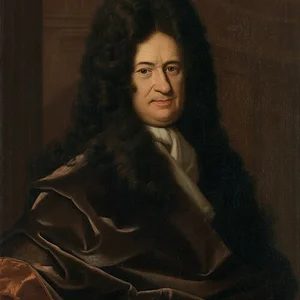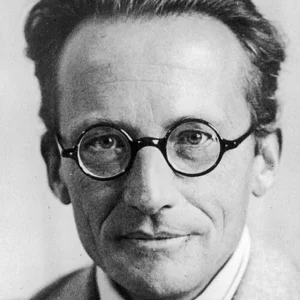

Austrian physicist (1887–1961), Nobel Prize in Physics 1933. He formulated the wave equation that bears his name, a cornerstone of quantum mechanics, and devised the famous Schrödinger's cat thought experiment.
Erwin Schrödinger(1887 — 1961)
Erwin Schrödinger
Allemagne, Troisième Reich, Cisleithanie
8 min read
Frequently asked questions
Famous Quotes
« If all this damned quantum jumping were really here to stay, I should be sorry I ever got involved with quantum theory.»
« Consciousness is never experienced in the plural, only in the singular.»
Key Facts
- 1887: born in Vienna, Austria
- 1926: formulation of the Schrödinger equation, foundation of wave mechanics
- 1933: Nobel Prize in Physics, shared with Paul Dirac
- 1935: publication of the Schrödinger's cat paradox, intended as a critique of the Copenhagen interpretation
- 1944: publication of *What Is Life?*, a work that influenced molecular biology
Works & Achievements
A series of four foundational papers in which Schrödinger formulates his wave equation, providing a rigorous mathematical framework for quantum mechanics. This equation describes the time evolution of a quantum system and remains the central tool of modern quantum physics.
A paper in which Schrödinger introduces his famous cat paradox to critique the probabilistic Copenhagen interpretation. He also coins the concept of quantum entanglement (Verschränkung), a fundamental notion for contemporary quantum technologies.
A book based on public lectures in which Schrödinger applies the principles of quantum physics to biological phenomena. It directly inspired Watson and Crick in their discovery of the structure of DNA, making this book a bridge between physics and molecular biology.
A philosophical essay in which Schrödinger traces the Greek roots of modern scientific thought. He examines the philosophical foundations of physics by placing them alongside pre-Socratic conceptions of the world.
A collection of lectures on the relationship between consciousness and the physical world, influenced by Vedantic philosophy. Schrödinger argues that consciousness is one and indivisible, in opposition to reductive materialism.
Anecdotes
In 1935, Schrödinger devised a thought experiment to expose the absurdities of the Copenhagen interpretation: a cat locked in a box with a radioactive device would, according to quantum physics, be simultaneously alive and dead as long as the box remained unopened. The paradox of “Schrödinger's cat” was never performed with a real animal, but it remains one of the most famous scientific metaphors in history.
It was during a solitary retreat in Arosa, in the Swiss Alps, at Christmas 1925, that Schrödinger formulated his revolutionary wave equation. In a few weeks of intense concentration, he laid the mathematical foundations of wave mechanics, transforming the understanding of the atom. He himself admitted not knowing where that sudden burst of inspiration had come from.
When Hitler came to power in January 1933, Schrödinger, deeply hostile to Nazism, voluntarily left Germany — all the more remarkable given that he was not Jewish. He publicly declared that he could not remain in a country where his colleagues were being persecuted. This act earned him the admiration of the international scientific community.
In 1940, Éamon de Valera, Ireland's Prime Minister and a trained mathematician, created the Dublin Institute for Advanced Studies specifically to welcome Schrödinger, who worked there for seventeen years. Ireland thus became his refuge and adopted homeland, granting him Irish citizenship.
His book “What Is Life?” (1944) had an unexpected influence on molecular biology: in it he suggested that genetic information must be encoded in a stable aperiodic molecule. Both James Watson and Francis Crick acknowledged having been inspired by reading it before discovering the double helix of DNA in 1953.
Primary Sources
I wish to show first, in as simple a manner as possible, that the usual Sommerfeld-Wilson quantization rule can be replaced by another postulate, in which integers no longer appear.
One can even set up quite ridiculous cases. A cat is penned up in a steel chamber with the following diabolical device... The living cat and the dead cat are not mutually exclusive states as long as the box has not been opened.
We have identified the chromosomal substance with an aperiodic solid, in which each group of atoms plays an individual role, not compensated by the repetition of identical elements.
The fundamental idea of wave mechanics is to consider that the motion of a particle is not described by a trajectory, but by a wave function whose squared amplitude gives the probability density of its presence.
Key Places
Schrödinger's birthplace, born on August 12, 1887, in the Erdberg district. He completed his secondary and university studies there, and died in Vienna on January 4, 1961.
It was during his time in Zurich (1921–1927) that Schrödinger formulated his wave equation between December 1925 and January 1926. The city of Zurich was the intellectual cradle of his greatest discovery.
It was in this village in the Graubünden Alps, during a Christmas retreat in 1925, that Schrödinger had the decisive insight that led him to formulate the wave equation — in a state of intense concentration, far from the bustle of academic life.
Schrödinger held the chair of theoretical physics in Berlin from 1927 to 1933, succeeding Max Planck himself. There he worked alongside Einstein and the greatest scientific minds of the era, before fleeing the Nazi regime.
Founded in 1940 at the initiative of Éamon de Valera to welcome Schrödinger, this institute became his intellectual home for seventeen years. There he wrote his major philosophical works and trained generations of Irish physicists.
Typical Objects

An indispensable tool for the theoretical physicist of the 1920s–1950s, on which Schrödinger developed his differential equations during lectures in Zurich, Berlin, and Dublin. The solution to the wave equation was first worked out in chalk before being submitted for publication.

Schrödinger filled entire notebooks with calculations and philosophical reflections. His notebooks from the Arosa retreat (December 1925) bear witness to the remarkably swift genesis of his wave equation.

Schrödinger was a pipe smoker, a habit widespread among European intellectuals of the interwar period. He is often depicted in a thoughtful pose, pipe in hand, in the drawing rooms where scientific discussions took place.

Passionate about Indian philosophy from an early age, Schrödinger read the Upanishads and Vedanta texts assiduously. This Eastern philosophical influence shaped his reflections on consciousness and the unity of the world in his later writings.

Although a theoretical physicist, Schrödinger took a keen interest in biology; while writing *What Is Life?*, he followed closely the work on cytology and chromosomes observed under the microscope.

Like all the great physicists of his era, Schrödinger maintained a voluminous correspondence with Einstein, Bohr, Heisenberg, and Pauli. These letters are invaluable primary sources on the founding debates of quantum mechanics.
School Curriculum
Vocabulary & Tags
Key Vocabulary
Daily Life
Morning
Schrödinger began his mornings with deep philosophical or mathematical reading, often standing or pacing around his apartment or garden. He would work intensively on his equations from the moment he woke up, taking advantage of the morning quiet for his most abstract theoretical tasks. In Dublin, he had developed a habit of long morning walks along the canal before heading to his office at the Institute.
Afternoon
Afternoons were devoted to seminars, lectures, and discussions with his students and colleagues at the university. A gifted teacher, he presented his ideas with remarkable clarity and a talent for metaphor, always seeking to connect physics to broader philosophical intuitions. He also kept up with his voluminous correspondence with the leading physicists of the era.
Evening
Schrödinger's evenings were often spent in lively intellectual circles where philosophy, physics, and literature mingled freely. Passionate about poetry — he wrote verse in German himself — he would readily read Schopenhauer, the Upanishads, or Spinoza before going to sleep. In Dublin, he frequented the salons of the Irish intelligentsia with his wife Anny.
Food
Schrödinger's diet was essentially Continental European, shaped by the Viennese cuisine of his childhood: roasted meats, vegetables, rye breads, and pastries. In Ireland, he adapted to local habits, enjoying potatoes and fish. He was a lover of strong coffee, an inseparable feature of Viennese intellectual life.
Clothing
Schrödinger dressed in the sober, bourgeois manner typical of European university professors of the interwar period: three-piece suit, tie, and felt hat. He was not particularly elegant and favored comfort over display. In conference photographs, he is often recognizable by his round tortoiseshell-framed glasses, characteristic of the era.
Housing
In Vienna, he lived in the bourgeois apartments of the university quarter, then rented flats in the various cities where he taught: Zurich, Stuttgart, Breslau, Berlin. In Dublin, he lived in a comfortable house in the Clontarf neighborhood, on the edge of the bay, where he regularly welcomed colleagues and students. His domestic life was marked by an unconventional conjugal arrangement, with his wife Anny and other companions, accepted within his close circle.
Historical Timeline
Period Vocabulary
Liens externes & ressources
Références
Œuvres
Quantisierung als Eigenwertproblem (Quantification comme problème aux valeurs propres)
1926
Die gegenwärtige Situation in der Quantenmechanik (La situation actuelle en mécanique quantique)
1935
What is Life? The Physical Aspect of the Living Cell (Qu'est-ce que la vie ?)
1944
Nature and the Greeks (La Nature et les Grecs)
1954
Mind and Matter (L'Esprit et la Matière)
1958