 flip
flipBilly Tea in the Bush
Billy Tea in the Bush
Why this dish? Tea, distributed with the rations at the Raukkan mission, became a central part of Unaipon's daily life. During his countless journeys across South Australia—on foot or by train—to give lectures, preach, or meet scientists, billy tea boiled over a campfire was the universal travel companion. The billy ritual is inseparable from Australian life of that era.
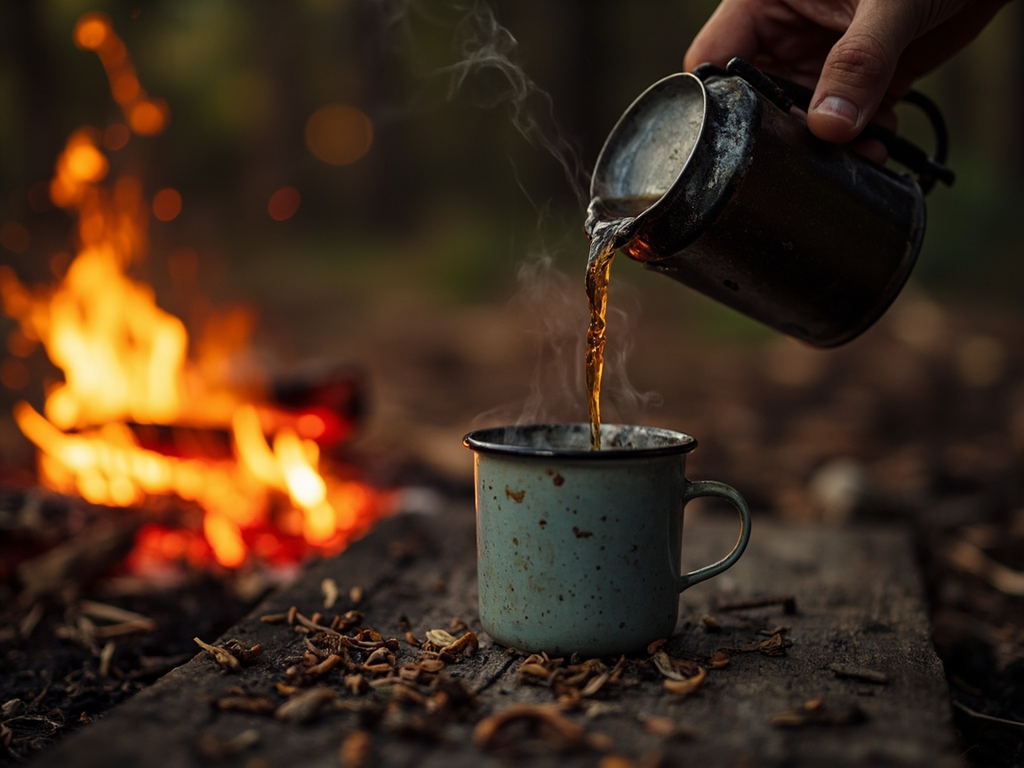
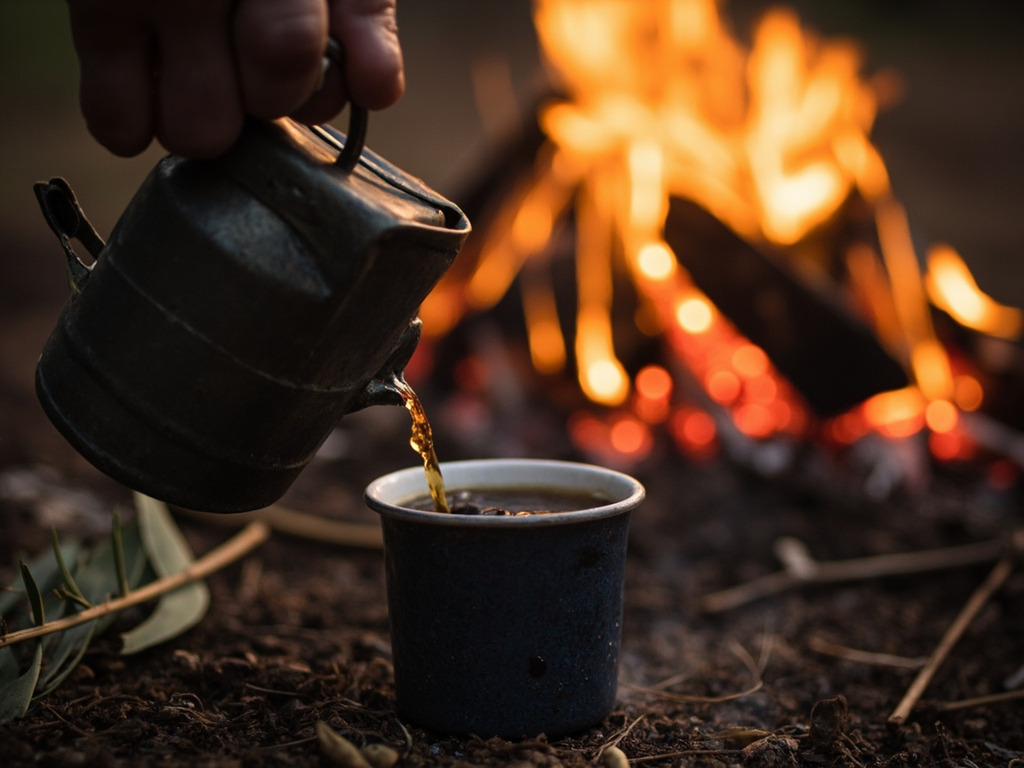
Strong black tea boiled in a billy can (a small tin kettle) directly on the embers of a campfire. Water and tea leaves boil together, producing a robust, tannic brew sweetened with sugar. The traditional gesture is to swing the billy by its handle to settle the leaves at the bottom.
The billy is the first thing you put on the fire, and the last thing you take off. When I traveled between Raukkan and Adelaide to present my work, I often stopped by the roadside, gathered a few branches, and in ten minutes I had my tea. They say the English brought tea to Australia—true, but we perfected it. No porcelain teapot or silver strainer, just a billy blackened by fire, water boiling vigorously, and leaves thrown in without ceremony. Then you swing the billy—a flick of the wrist, like the boomerang—and the leaves fall to the bottom. It is applied physics, pure and simple.
- •Black tea leaves (mission rations) — a good handful for a billy (base)
- •River or well water — a full billy (about 1 litre) (solvent)
- •Sugar — to taste, generously (sweetener)
- •Lemon-scented eucalyptus leaf (optional) — one or two (flavoring)
Billy Tea in the Bush
Strong black tea boiled in a billy can (a small tin kettle) directly on the embers of a campfire. Water and tea leaves boil together, producing a robust, tannic brew sweetened with sugar. The traditional gesture is to swing the billy by its handle to settle the leaves at the bottom.
Why this dish? Tea, distributed with the rations at the Raukkan mission, became a central part of Unaipon's daily life. During his countless journeys across South Australia—on foot or by train—to give lectures, preach, or meet scientists, billy tea boiled over a campfire was the universal travel companion. The billy ritual is inseparable from Australian life of that era.
The billy is the first thing you put on the fire, and the last thing you take off. When I traveled between Raukkan and Adelaide to present my work, I often stopped by the roadside, gathered a few branches, and in ten minutes I had my tea. They say the English brought tea to Australia—true, but we perfected it. No porcelain teapot or silver strainer, just a billy blackened by fire, water boiling vigorously, and leaves thrown in without ceremony. Then you swing the billy—a flick of the wrist, like the boomerang—and the leaves fall to the bottom. It is applied physics, pure and simple.
Ingredients (period version)
- Black tea leaves (mission rations) — a good handful for a billy (base)
- River or well water — a full billy (about 1 litre) (solvent)
- Sugar — to taste, generously (sweetener)
- Lemon-scented eucalyptus leaf (optional) — one or two (flavoring)
Ingredients
- Black tea leaves (Ceylon or English Breakfast) — 3 tbsp (base)
- Water — 1 litre (base)
- Brown sugar — 2–3 tsp, to taste (sweetener)
- Lemongrass stalk or lemon zest — 1 stalk or a few strips, optional (flavoring)
Method
- Pour water into a saucepan (or a billy can if you have one). Bring to a rolling boil.
- Throw the tea leaves directly into the boiling water. Add lemongrass or zest if desired.
- Let boil for 2–3 minutes—the tea should be very dark and strong.
- Remove from heat. If using a billy with a handle, swing it in a wide arc to force the leaves to the bottom (centrifugal force does the work). Otherwise, let sit for 1 minute for the leaves to settle.
- Pour gently into cups, holding back the leaves (or strain through a sieve). Sweeten generously, bush-style.
- Serve piping hot, preferably outdoors.
How it was made : Billy tea was the universal drink of rural Australia in the 19th and first half of the 20th centuries. The billy can—a simple recycled tin can or small tin kettle—went everywhere. In Aboriginal missions, tea and sugar were part of the basic rations distributed by the administration. The gesture of swinging the billy is attested as early as the 1850s; it uses centrifugal force to separate the leaves from the infusion, a physical principle that a mind like Unaipon's would not have failed to appreciate.
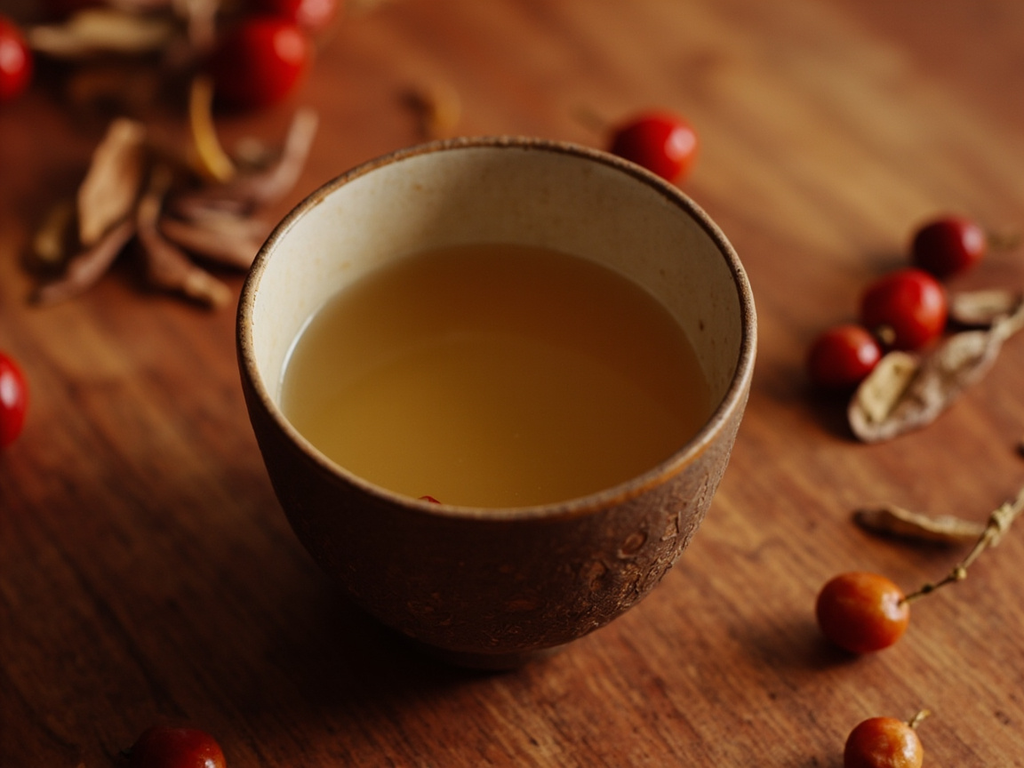
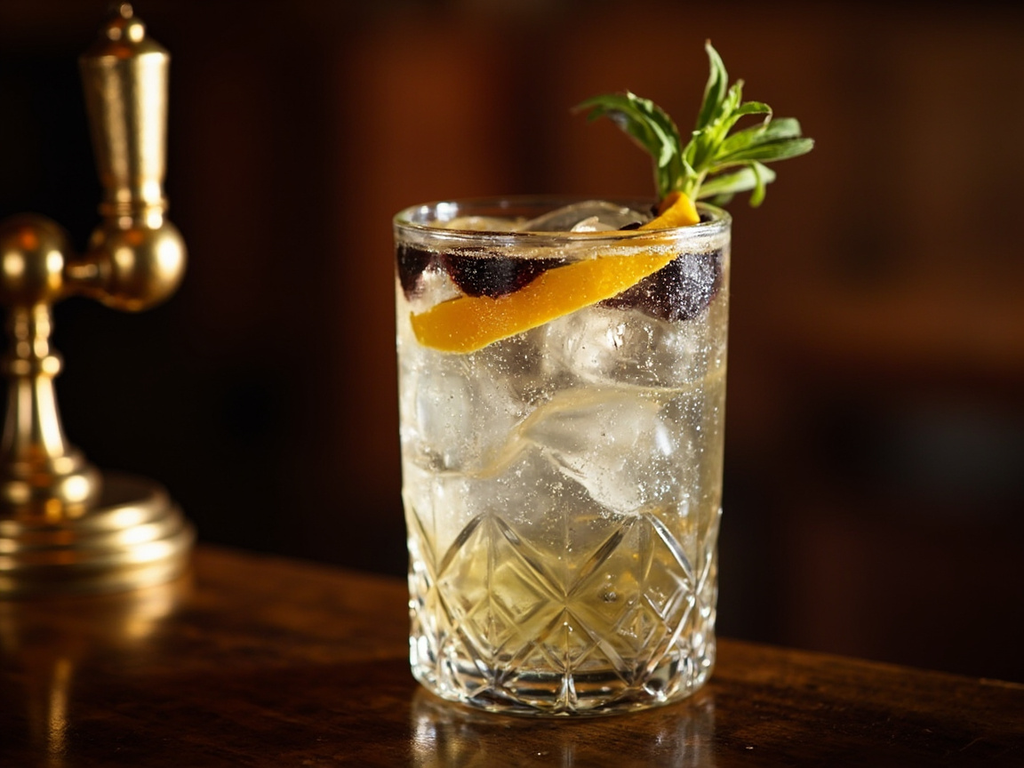
The contemporary twist : Cold-brew for 12 hours with dried Australian lemon myrtle and serve over ice with bush honey syrup for a refreshing summer version.
Sources : Michael Symons, « One Continuous Picnic: A Gastronomic History of Australia », Melbourne University Press, 2007 · Richard Broome, « Aboriginal Australians: A History Since 1788 », Allen & Unwin, 5th ed., 2019
David Unaipon · Charactorium