 flip
flipWarm jujube and ginger congee (棗薑粥)
Warm jujube and ginger congee (棗薑粥)
Why this dish? Deng Sui's reign was marked by famines, earthquakes, and epidemics, which she managed efficiently, opening granaries and relieving the people. Jujube and ginger congee, sweet and fortifying, embodies this care for weakened bodies — a comfort food imagined as distributed like grain in times of crisis.
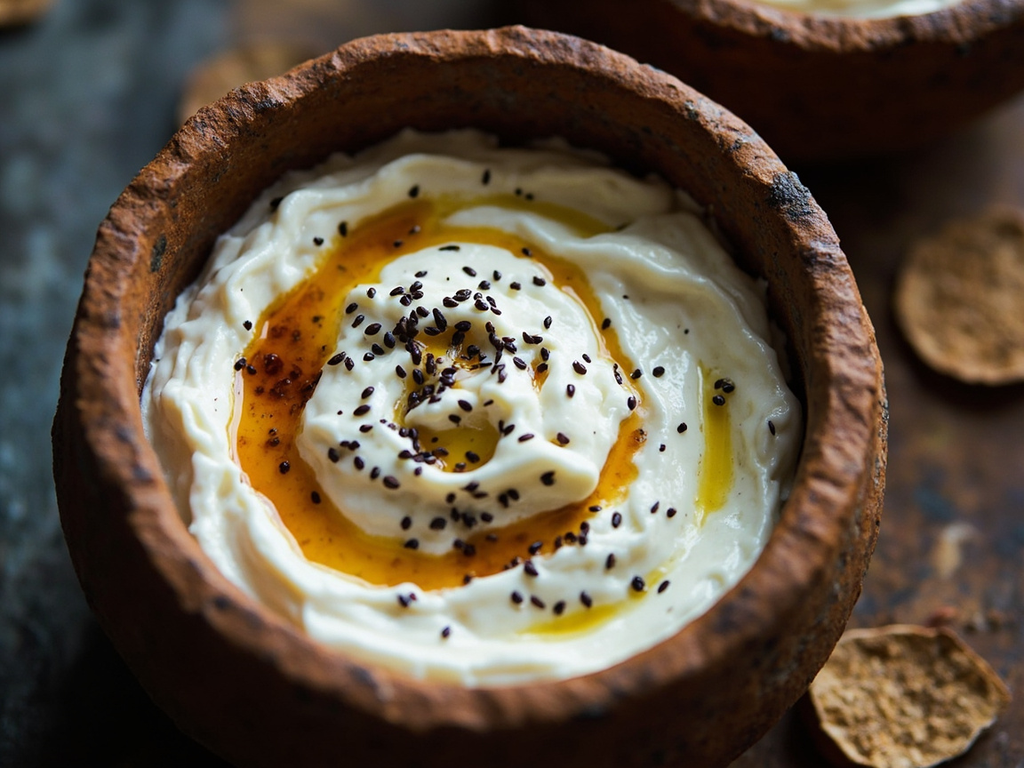
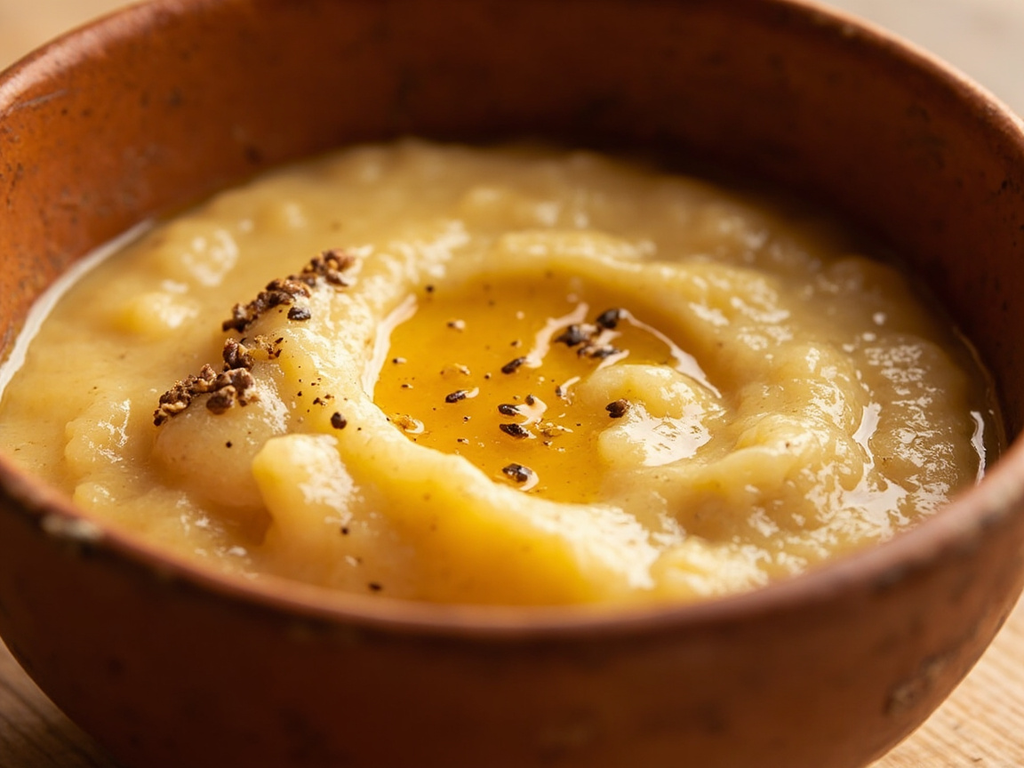
A millet or rice porridge slowly cooked with jujubes (Chinese dates) and ginger until creamy and naturally sweet. Warm and comforting, it is the Han remedy dish to warm and restore strength.
When the earth trembled and famine followed floods, I had the granaries opened; but grain alone does not comfort the sick or the exhausted elderly. For those, nothing beats a long-simmered porridge, where jujubes bring their sweetness and ginger its warmth. Cook it until it coats the spoon; give it warm, in small sips, to those who no longer have the strength to chew. This is how a government nourishes its people even in their weakness.
- •Millet or rice (粟 / 米) — a small bowl (porridge base)
- •Dried jujubes (棗) — a handful (sweetness and tonic)
- •Ginger (薑) — a few slices (warmth, heating virtue)
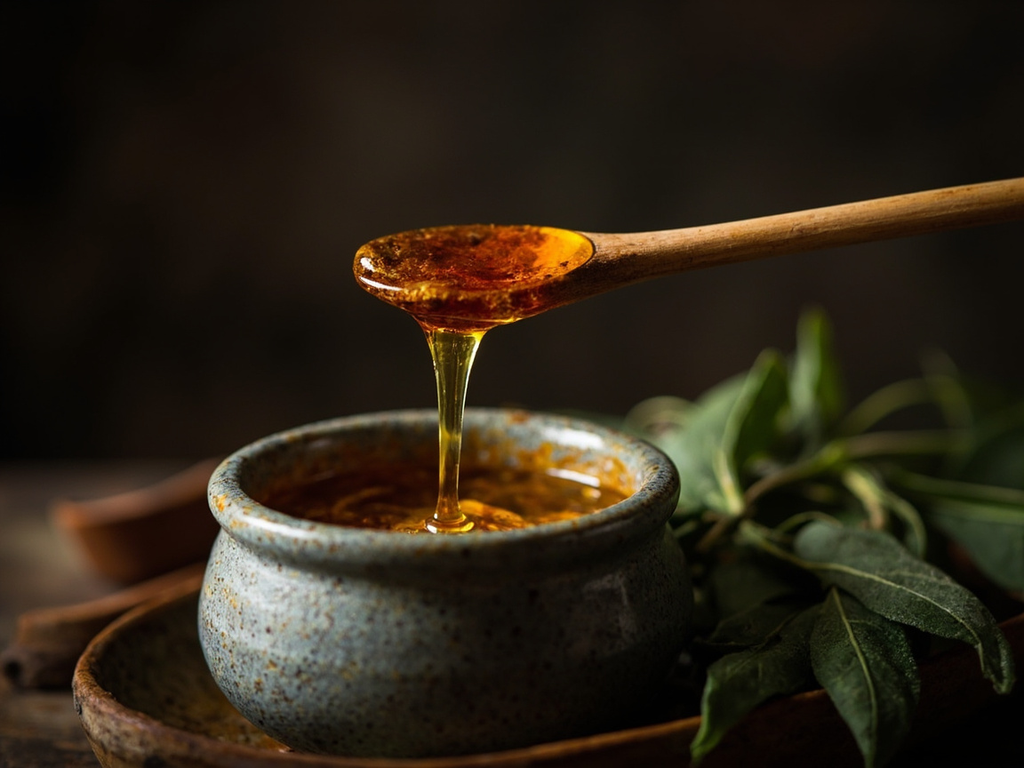
- •Honey (蜜) — a drizzle, optional (extra sweetness)
- •Water — in abundance (long cooking)
Warm jujube and ginger congee (棗薑粥)
A millet or rice porridge slowly cooked with jujubes (Chinese dates) and ginger until creamy and naturally sweet. Warm and comforting, it is the Han remedy dish to warm and restore strength.
Why this dish? Deng Sui's reign was marked by famines, earthquakes, and epidemics, which she managed efficiently, opening granaries and relieving the people. Jujube and ginger congee, sweet and fortifying, embodies this care for weakened bodies — a comfort food imagined as distributed like grain in times of crisis.
When the earth trembled and famine followed floods, I had the granaries opened; but grain alone does not comfort the sick or the exhausted elderly. For those, nothing beats a long-simmered porridge, where jujubes bring their sweetness and ginger its warmth. Cook it until it coats the spoon; give it warm, in small sips, to those who no longer have the strength to chew. This is how a government nourishes its people even in their weakness.
Ingredients (period version)
- Millet or rice (粟 / 米) — a small bowl (porridge base)
- Dried jujubes (棗) — a handful (sweetness and tonic)
- Ginger (薑) — a few slices (warmth, heating virtue)
- Honey (蜜) — a drizzle, optional (extra sweetness)
- Water — in abundance (long cooking)
Ingredients
- Short-grain rice or millet — 100 g (porridge base)
- Dried jujubes (Chinese dates) — 10 to 12, pitted (natural sweetness)
- Fresh ginger — 4 thin slices (warmth)
- Water — 1.5 L (long cooking)
- Honey — 1 tbsp (optional) (sweetness adjustment)
Method
- Rinse the rice (or millet) and place in a large pot with water, jujubes, and ginger.
- Bring to a boil, then reduce to very low heat.
- Simmer for 45 minutes to 1 hour, stirring occasionally, until a creamy porridge forms and the jujubes have melted.
- Remove the ginger slices if you prefer them subtle; optionally mash some jujubes to thicken.
- Sweeten with a drizzle of honey off the heat if desired.
- Serve warm, in a bowl, by small spoonfuls.
How it was made : Long-cooked grain porridge (粥, zhōu) has been, since high Chinese antiquity, at once the food of the poor, the staple of times of dearth, and a remedy for convalescents: digestible, economical (little grain for much water), it nourishes widely. Jujube (棗) and ginger (薑), food-medicines of nascent Chinese dietetics, bring sweetness and warmth reputed to restore strength.
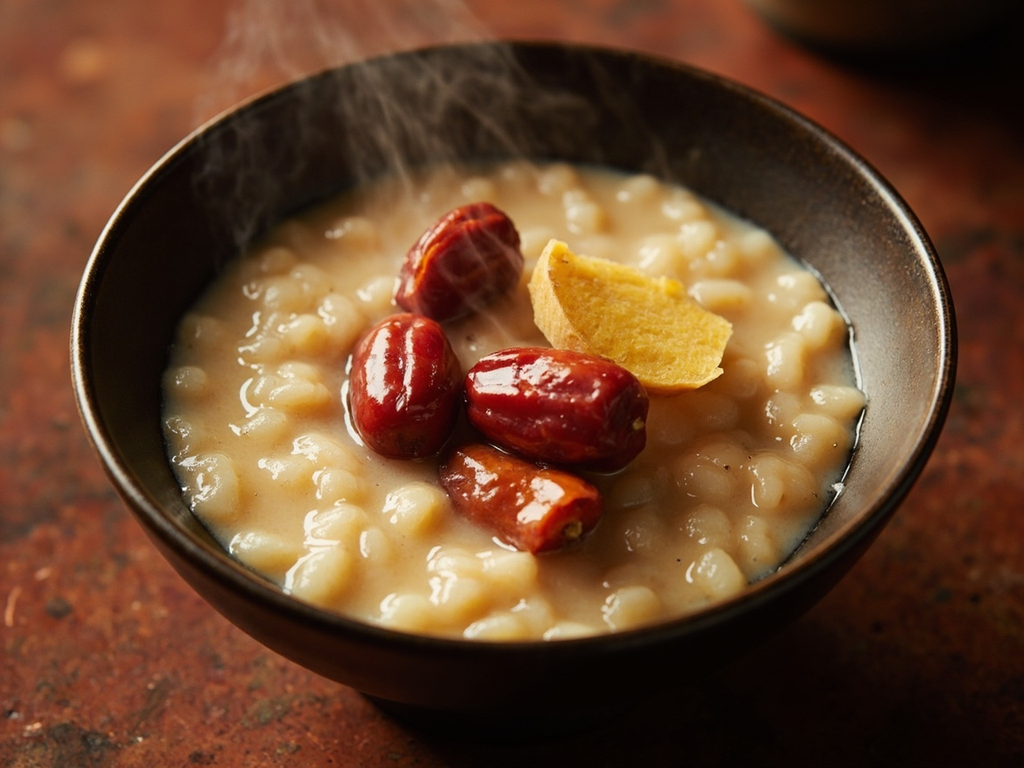
The contemporary twist : Pour the pearly porridge into a dark bowl, top with a few split whole jujubes and a veil of candied ginger: an ancestral care presented as a contemporary warm dessert.
Sources : H. T. Huang, Science and Civilisation in China, vol. 6 part 5, Cambridge University Press, 2000 · Tradition diététique chinoise ancienne (食療), aliments-médicaments jujube et gingembre · Françoise Sabban, travaux sur l'alimentation chinoise, EHESS
Deng Sui · Charactorium