 flip
flipHoney-roasted goose with figs and coriander
Honey-roasted goose with figs and coriander
Why this dish? Fat goose was the royal poultry par excellence, raised in large numbers and offered to gods and pharaohs alike. For a builder-king like Djoser, whose feasts marked the religious festivals of Memphis, a goose gilded with honey and figs embodied the abundance that the king owed to his people and to Ra.
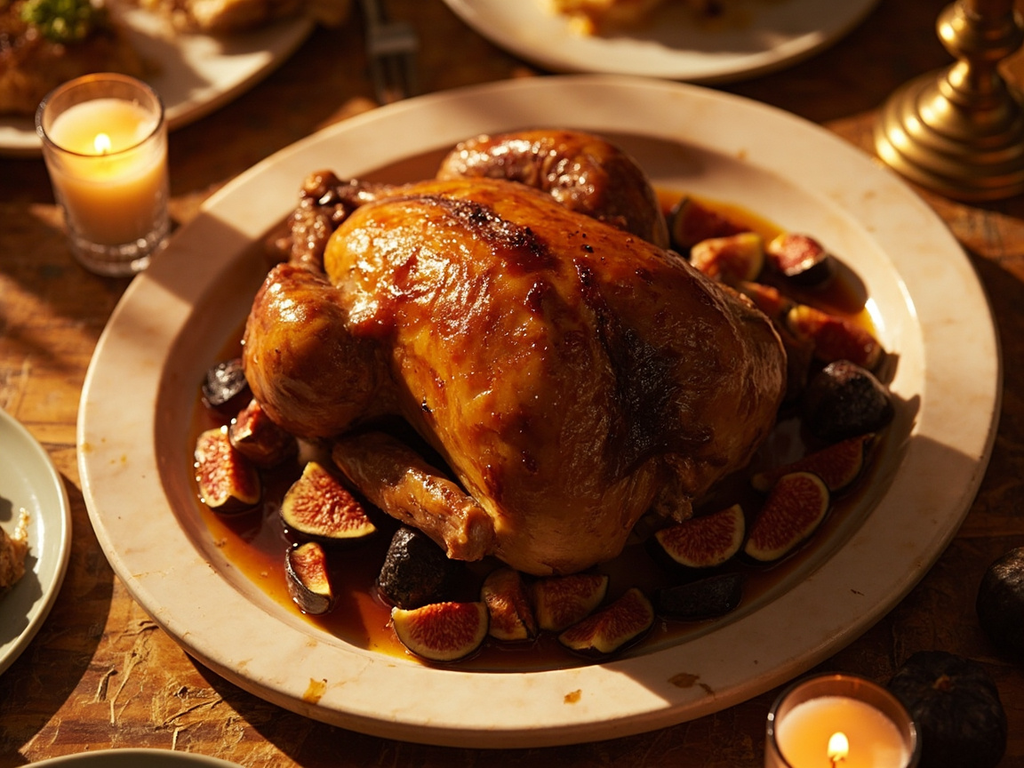
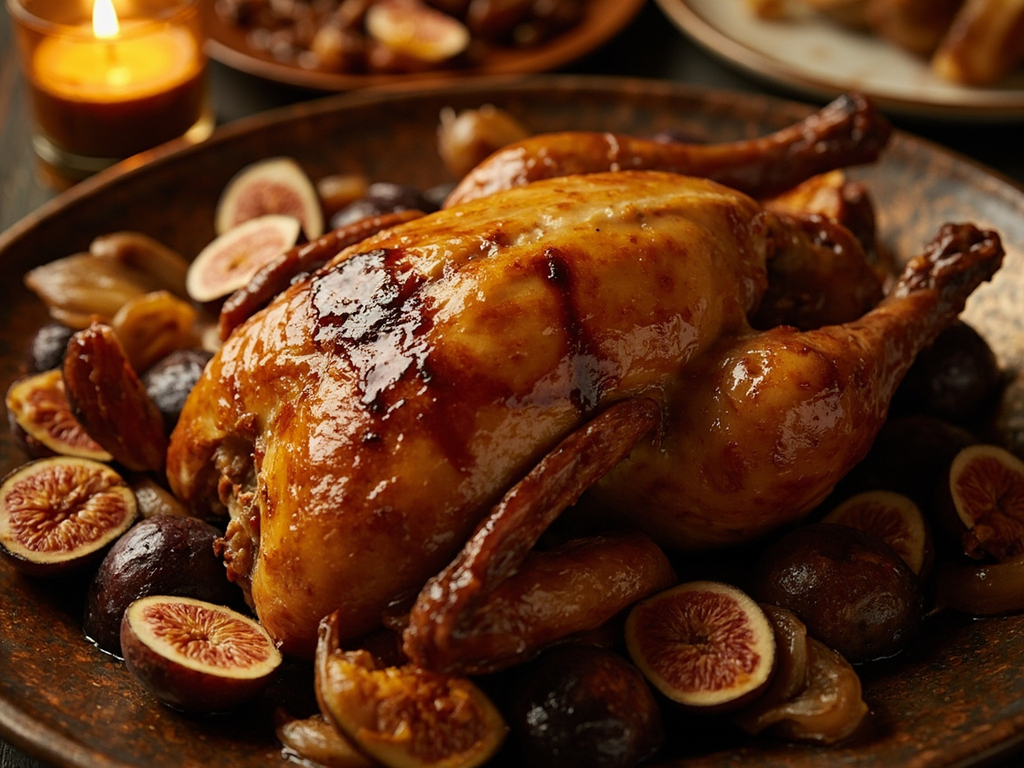
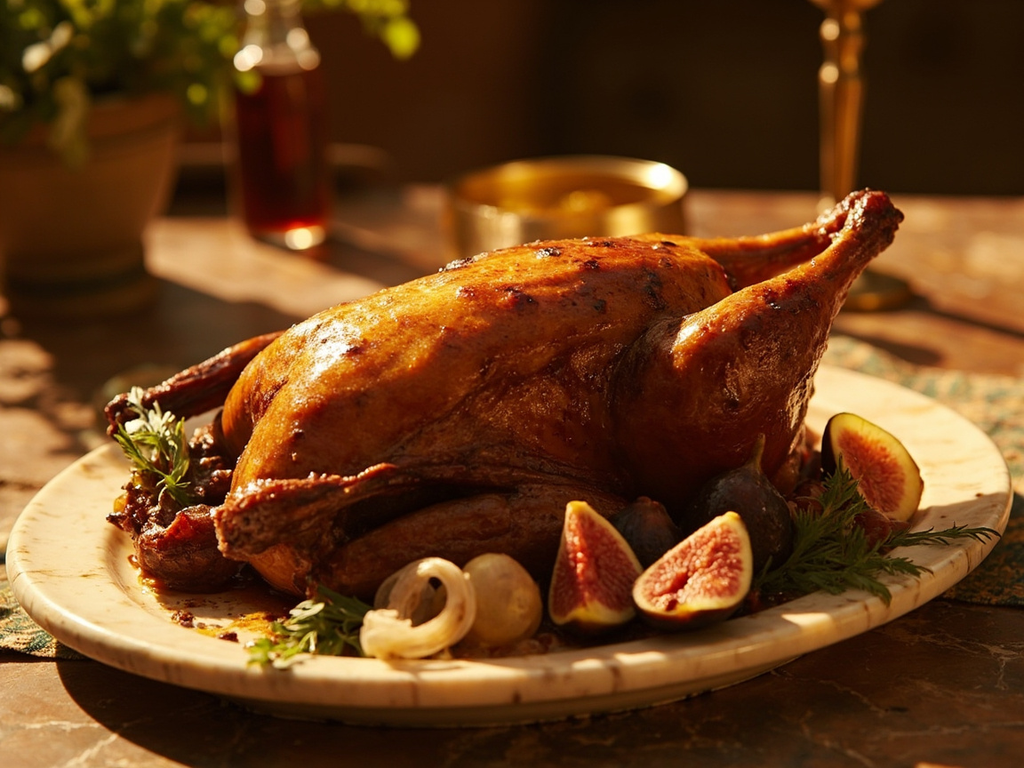
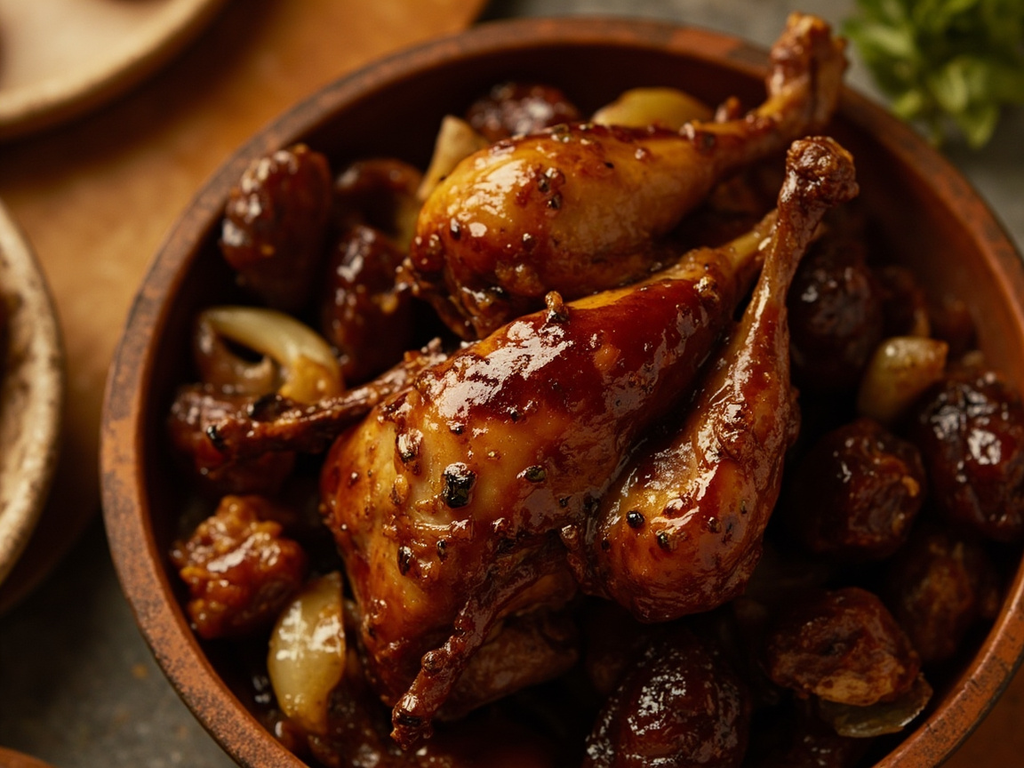
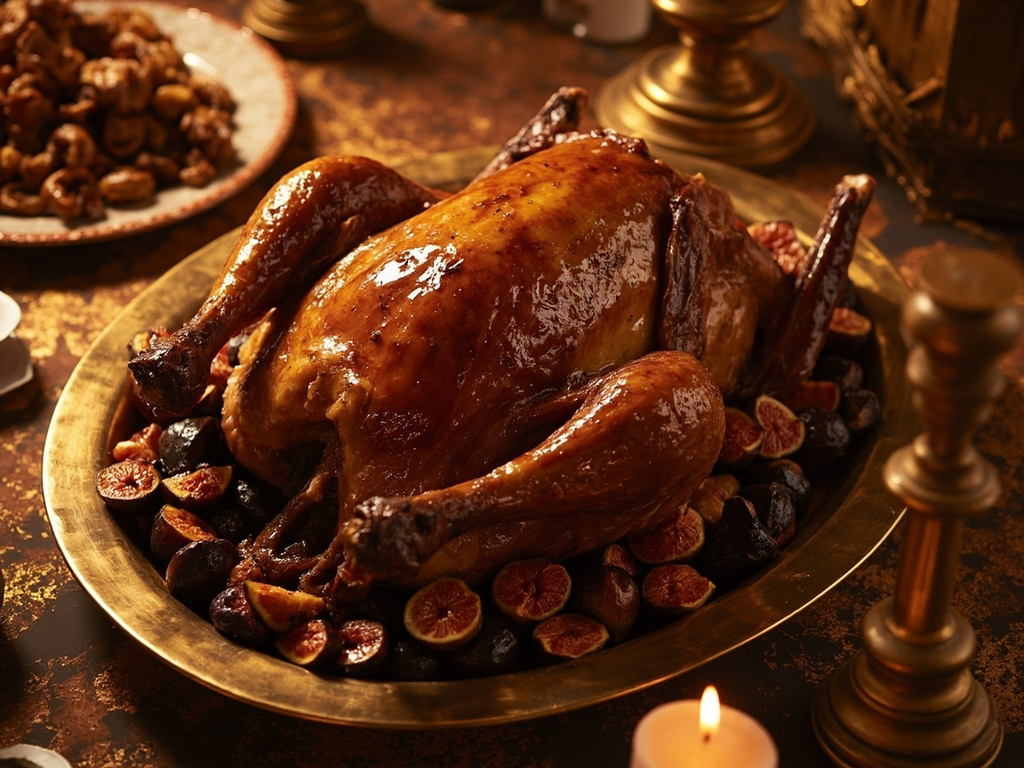
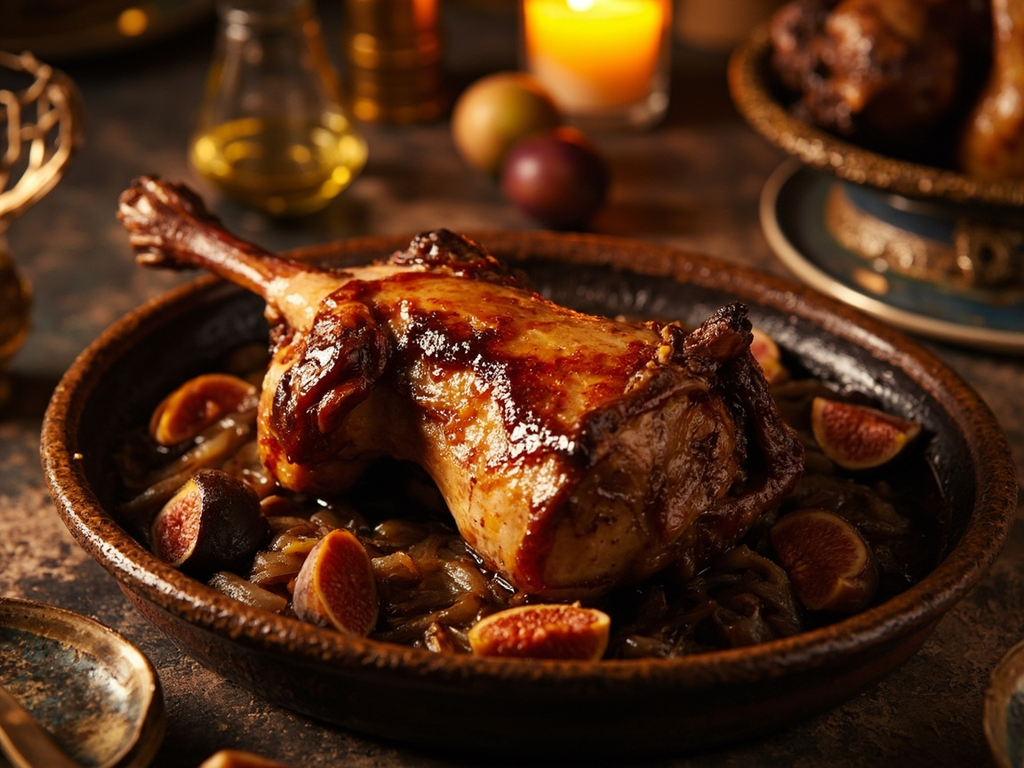
A roast goose with honey-lacquered skin, stuffed with figs and onions, scented with coriander. The melting fat, sweetness of the fruit, and saltiness of the meat make a pure feast dish.
When the Nile flood fills the granaries, I invite my household to the feast, as befits the Golden Horus. Then we present the goose fattened in the marshes of the Delta, its skin polished with wild honey, its belly filled with ripe figs. Turn it slowly over the embers, baste it with its own juice, and let the coriander perfume the hall. What the gods receive as offering, the king shares: that is my law.
- •Fat goose — one whole bird (centerpiece)
- •Wild honey — by the ladleful (sweet lacquer)
- •Fresh figs — a handful (sweet garnish)
- •Onions — a few (garnish)
- •Coriander and cumin — a pinch (flavor)
- •Salt — to taste (seasoning)
Honey-roasted goose with figs and coriander
A roast goose with honey-lacquered skin, stuffed with figs and onions, scented with coriander. The melting fat, sweetness of the fruit, and saltiness of the meat make a pure feast dish.
Why this dish? Fat goose was the royal poultry par excellence, raised in large numbers and offered to gods and pharaohs alike. For a builder-king like Djoser, whose feasts marked the religious festivals of Memphis, a goose gilded with honey and figs embodied the abundance that the king owed to his people and to Ra.
When the Nile flood fills the granaries, I invite my household to the feast, as befits the Golden Horus. Then we present the goose fattened in the marshes of the Delta, its skin polished with wild honey, its belly filled with ripe figs. Turn it slowly over the embers, baste it with its own juice, and let the coriander perfume the hall. What the gods receive as offering, the king shares: that is my law.
Ingredients (period version)
- Fat goose — one whole bird (centerpiece)
- Wild honey — by the ladleful (sweet lacquer)
- Fresh figs — a handful (sweet garnish)
- Onions — a few (garnish)
- Coriander and cumin — a pinch (flavor)
- Salt — to taste (seasoning)
Ingredients
- Goose or duck legs (or whole goose) — 4 legs or 1 goose of 3.5 kg (centerpiece)
- Honey — 4 tbsp (lacquer)
- Fresh or dried figs — 10 (garnish)
- Onions — 3 (garnish)
- Ground coriander seeds — 2 tsp (flavor)
- Ground cumin — 1 tsp (flavor)
- Salt — to taste (seasoning)
Method
- Rub the poultry with salt, coriander, and cumin, inside and out.
- Slide some cut figs and onions into the cavity (or arrange them around for legs).
- Roast in the oven at 180 °C, basting regularly with the cooking juices (about 45 min for legs, up to 2 h for a whole goose).
- Halfway through, brush generously with honey to lacquer the skin; add the remaining figs around.
- Let rest 10 minutes before serving, drizzled with its juices and the candied figs.
How it was made : The Egyptians already force-fed geese and ducks to obtain foie gras and fatty meat. Poultry was roasted on a spit over embers, and honey — the only sweetener available — was used to lacquer and preserve festive meats.
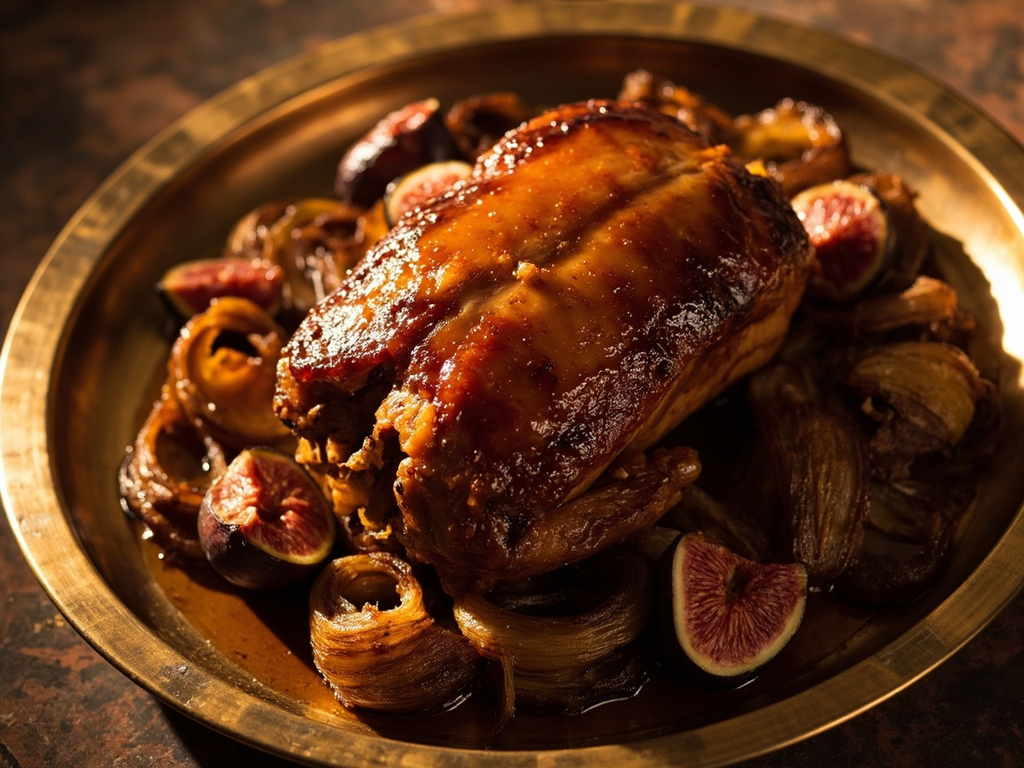
The contemporary twist : Present the goose on a bed of roasted figs and slip in a few caramelized onion petals: a golden "offering" worthy of a tomb bas-relief.
Sources : Pierre Tallet, Histoire de la cuisine et de la gastronomie égyptiennes (PUF) · Patrick Faas, Around the Roman Table (for comparative ancient roasting techniques)
Djoser · Charactorium