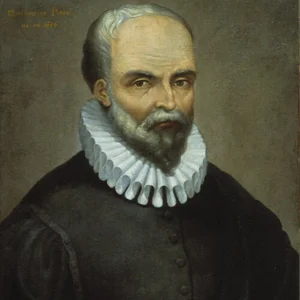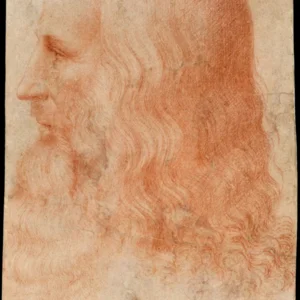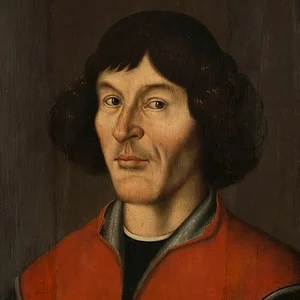

Italian Renaissance astronomer and mathematician, professor at the University of Bologna. He was the teacher and collaborator of Nicolaus Copernicus, with whom he carried out decisive astronomical observations.
Domenico Maria Novara(1454 — 1504)
Domenico Maria Novara
5 min read
Frequently asked questions
Key Facts
- Born in 1454 in Ferrara, Italy
- Professor of astronomy and mathematics at the University of Bologna from 1483
- Teacher and collaborator of Nicolaus Copernicus, whom he hosted in Bologna around 1496-1500
- Carried out with Copernicus the observation of the occultation of the star Aldebaran by the Moon on 9 March 1497
- Died in 1504 in Bologna
Works & Achievements
An observation made with Copernicus and later cited in De revolutionibus: direct proof of their scientific collaboration.
Astronomical and astrological calendars published every year in Bologna, predicting eclipses and planetary positions.
Novara argued that the geographical coordinates set by Ptolemy had changed, suggesting a slow shift of the Earth's axis.
For more than twenty years, he held the chair of astronomy, passing on the legacy of Regiomontanus and training the next generation.
His role as teacher and collaborator to Copernicus helped awaken in him the doubts that would lead to heliocentrism.
Anecdotes
At the University of Bologna, Domenico Maria Novara took into his home a young Polish student named Nicolaus Copernicus, who had come to study canon law. Rather than being a mere professor, Novara made the young man his assistant for sky observations: together, they scanned the stars from the city's rooftops.
On 9 March 1497, Novara and Copernicus together observed the occultation of the star Aldebaran by the Moon. This carefully recorded observation would later be cited by Copernicus himself in his great work: it is one of the rare direct traces of their joint work.
Novara was an admirer of the ideas of Plato and the Neoplatonists. He dared to criticize certain values established by Ptolemy more than a thousand years earlier, suspecting that the position of places on Earth might have changed — an intellectual boldness that foreshadowed the critical spirit of his famous pupil.
Each year, as professor of astronomy at Bologna, Novara was required to publish an almanac forecasting the events of the coming year. These astrological predictions, blending the science and beliefs of the time, were eagerly awaited by the city's inhabitants.
Novara belonged to a prestigious scholarly lineage: he had been trained in the tradition of Regiomontanus, one of the greatest astronomers of the 15th century. He passed this heritage on to Copernicus, making Bologna an essential link in the chain that led to the astronomical revolution.
Primary Sources
Copernicus reports the observation made with his teacher Novara in Bologna, where they saw the Moon occult the brightest star of the Hyades (Aldebaran).
Rheticus describes Copernicus as having been in Bologna not so much the student as the assistant and witness to the observations of the most learned man Domenico Maria.
Novara, as holder of the chair of astronomy, signed the annual almanacs forecasting eclipses, planetary positions, and upcoming events.
Key Places
City in northern Italy where Novara was born in 1454, a brilliant center of the Este court and of humanist culture.
The oldest university in Europe, where Novara taught astronomy and mathematics and trained Nicolaus Copernicus.
Great university city where Novara spent most of his career and carried out his astronomical observations. He died there in 1504.
Capital of the Italian Renaissance and home of the Neoplatonism that inspired Novara to criticize ancient astronomy.
Typical Objects

Astronomical instrument used to measure the altitude of celestial bodies above the horizon and to calculate the time. It was the basic tool of every Renaissance astronomer.

Instrument shaped like a graduated quarter-circle used to measure angles and the altitude of stars. Novara used it for his precise observations.

Collections of calculations predicting the position of the planets and stars day after day. Novara relied on the tables inherited from Regiomontanus and Ptolemy.

A model of the sky made of rings representing the celestial circles (equator, ecliptic, tropics). It was used to teach and to visualize the movement of the celestial bodies.

An annual printed calendar announcing eclipses, planetary conjunctions and predictions for the year. Writing it was part of the duties of the Bologna professor of astronomy.

Indispensable tools for recording nightly observations and writing out calculations. Novara carefully noted down every measurement of the sky.
School Curriculum
Vocabulary & Tags
Key Vocabulary
Daily Life
Morning
In the morning, Novara went to the University of Bologna to give his astronomy and mathematics lectures to the students. He commented on the ancient texts of Ptolemy and Euclid before an audience that came from all over Europe.
Afternoon
The afternoon was devoted to calculations: planetary positions, preparation of the annual almanacs and the study of astronomical tables. He also discussed the problems of the motion of the heavenly bodies with his students, including the young Copernicus.
Evening
As soon as night fell, Novara climbed up to observe the sky, often from the rooftops or a terrace, equipped with his quadrant and his astrolabe. He carefully noted the altitude of the stars and the eclipses to come.
Food
Like cultivated Italians of the Renaissance, he ate bread, vegetable soups, cheese and, on feast days, meat, all washed down with wine. Olive oil and spices added flavor to the dishes.
Clothing
As a university professor, he wore the long robe (toga) and the cap of the learned, dark garments marking his status as a scholar. Beneath the robe, a tunic of wool or linen depending on the season.
Housing
He lived in a house in Bologna, a city with streets lined with arcades, where he hosted his student Copernicus for a time. The dwelling held his books, his instruments and a space well suited to observing the sky.
Historical Timeline
Period Vocabulary
Liens externes & ressources
Références
Œuvres
Observation de l'occultation d'Aldébaran
9 mars 1497
Pronostications et almanachs annuels
vers 1483-1504
Critique de la latitude des lieux de Ptolémée
fin du XVe siècle
Enseignement de l'astronomie à Bologne
1483-1504
Formation de Nicolas Copernic
1496-1500