 flip
flipOrchard Plum Tart (Pflaumenkuchen)
Orchard Plum Tart (Pflaumenkuchen)
Why this dish? For the feast, the village fair (Kirmes), or the end of harvest, the yeast dough and orchard plums were brought out. In a Hessian inn, these large sweet sheets delighted the table — the very atmosphere where the tales Dorothea knew so well circulated.
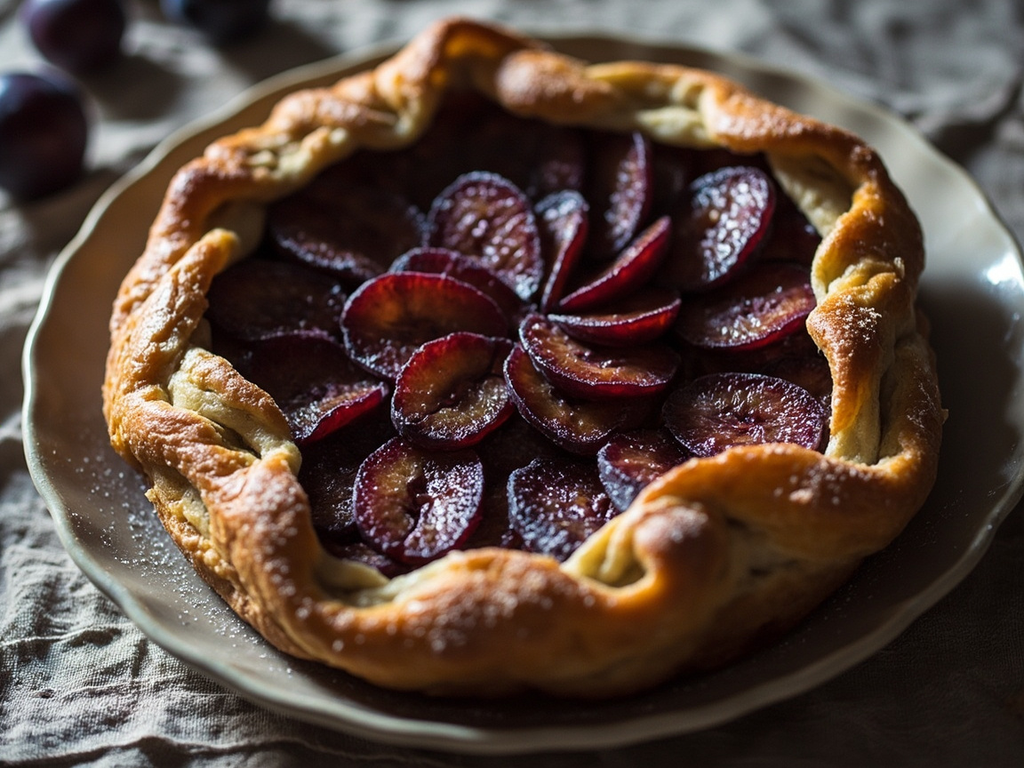
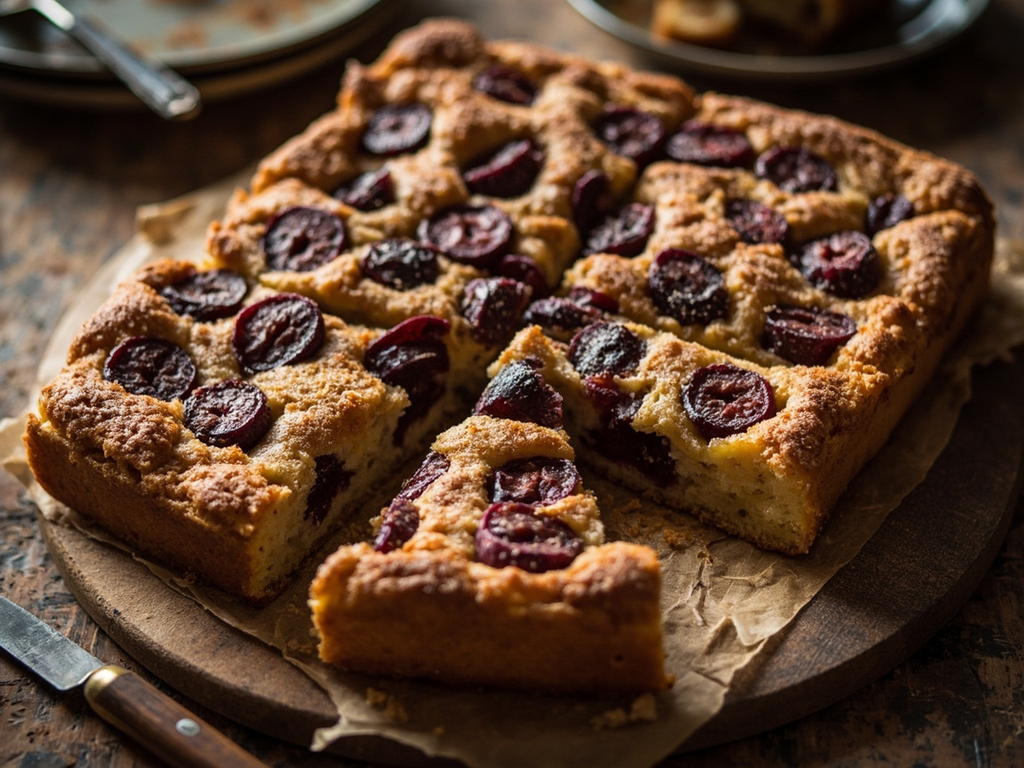
A soft yeast dough covered with tightly packed plum quarters (quetsches), releasing their tangy juice as they bake. A little honey or sugar and a hint of cinnamon: the typical festive sweetness of northern Hesse.
Ah, when the quetsches in the orchard bend the branches in September, it is a day of joy! I knead my dough with a little sourdough, let it rise by the stove under a cloth, then lay it on the baking sheet and arrange the plums on top, packed tight like roof tiles. In the village oven after the bread baking, the scent fills the whole street. A drizzle of honey on top, and even the bailiff asks for more.
- •Wheat flour — according to the tray (dough)
- •Sourdough or brewer's yeast — a little (leavening)
- •Warm milk — as needed (dough liquid)
- •Butter — a knob (fat)
- •Eggs — one or two (binder)
- •Quetsches (plums) from the orchard — a large basket (topping)
- •Honey or sugar — to taste (sweetness)
- •Cinnamon — a pinch (flavor)
Orchard Plum Tart (Pflaumenkuchen)
A soft yeast dough covered with tightly packed plum quarters (quetsches), releasing their tangy juice as they bake. A little honey or sugar and a hint of cinnamon: the typical festive sweetness of northern Hesse.
Why this dish? For the feast, the village fair (Kirmes), or the end of harvest, the yeast dough and orchard plums were brought out. In a Hessian inn, these large sweet sheets delighted the table — the very atmosphere where the tales Dorothea knew so well circulated.
Ah, when the quetsches in the orchard bend the branches in September, it is a day of joy! I knead my dough with a little sourdough, let it rise by the stove under a cloth, then lay it on the baking sheet and arrange the plums on top, packed tight like roof tiles. In the village oven after the bread baking, the scent fills the whole street. A drizzle of honey on top, and even the bailiff asks for more.
Ingredients (period version)
- Wheat flour — according to the tray (dough)
- Sourdough or brewer's yeast — a little (leavening)
- Warm milk — as needed (dough liquid)
- Butter — a knob (fat)
- Eggs — one or two (binder)
- Quetsches (plums) from the orchard — a large basket (topping)
- Honey or sugar — to taste (sweetness)
- Cinnamon — a pinch (flavor)
Ingredients
- Wheat flour — 300 g (dough)
- Baker's yeast — 10 g fresh (or 4 g dry) (leavening)
- Warm milk — 120 ml (liquid)
- Softened butter — 50 g (fat)
- Egg — 1 (binder)
- Sugar — 50 g (+ a little for sprinkling) (sweetness)
- Quetsches (plums) — 800 g (topping)
- Cinnamon — 1 teaspoon (flavor)
Method
- Dissolve the yeast in warm milk, mix with flour, sugar, egg, and butter, knead until smooth.
- Cover and let rise near a heat source for about 1 hour, until doubled.
- Roll out the dough on a buttered baking sheet. Pit the plums, halve them, and arrange tightly on the dough.
- Sprinkle with sugar and cinnamon. Let rest 15 minutes.
- Bake at 190°C for about 30 to 35 minutes, until the dough is golden and the plums are candied in their juice. Serve warm.
How it was made : Fruit tarts on yeast dough (with plums, apples) were baked in the communal oven after the bread batch, using residual heat. Since sugar was expensive and imported, honey and the natural sweetness-acidity of ripe fruits often provided most of the sweetness.
The contemporary twist : A dollop of lightly whipped vanilla-scented thick cream (Schmand) alongside the still-warm slice.
Dorothea Viehmann · Charactorium