 flip
flipVana-shaka — forest greens with ghee and long pepper
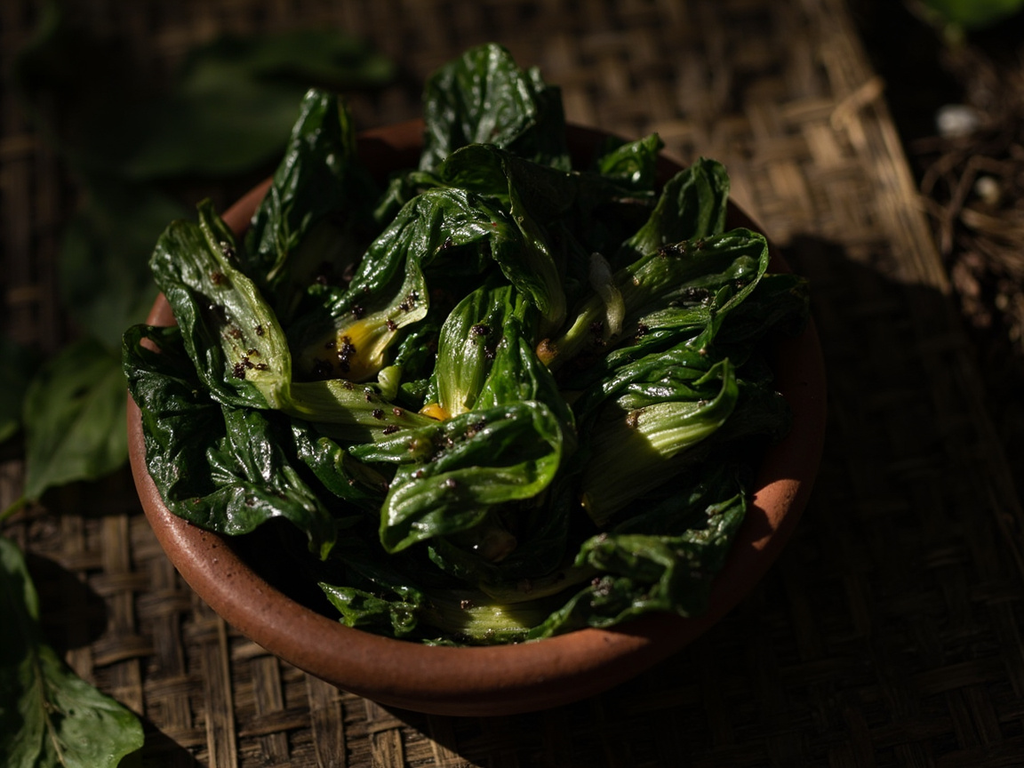
Vana-shaka — forest greens with ghee and long pepper
Why this dish? During the twelve years of exile in the forests of Kamyaka and Dvaitavana, the Pandavas and Draupadi lived as hermits, gathering roots, fruits, and wild herbs; this dish of bitter greens, simple and fortifying, embodies the subsistence cooking of the fallen queen who learned patience deep in the woods.
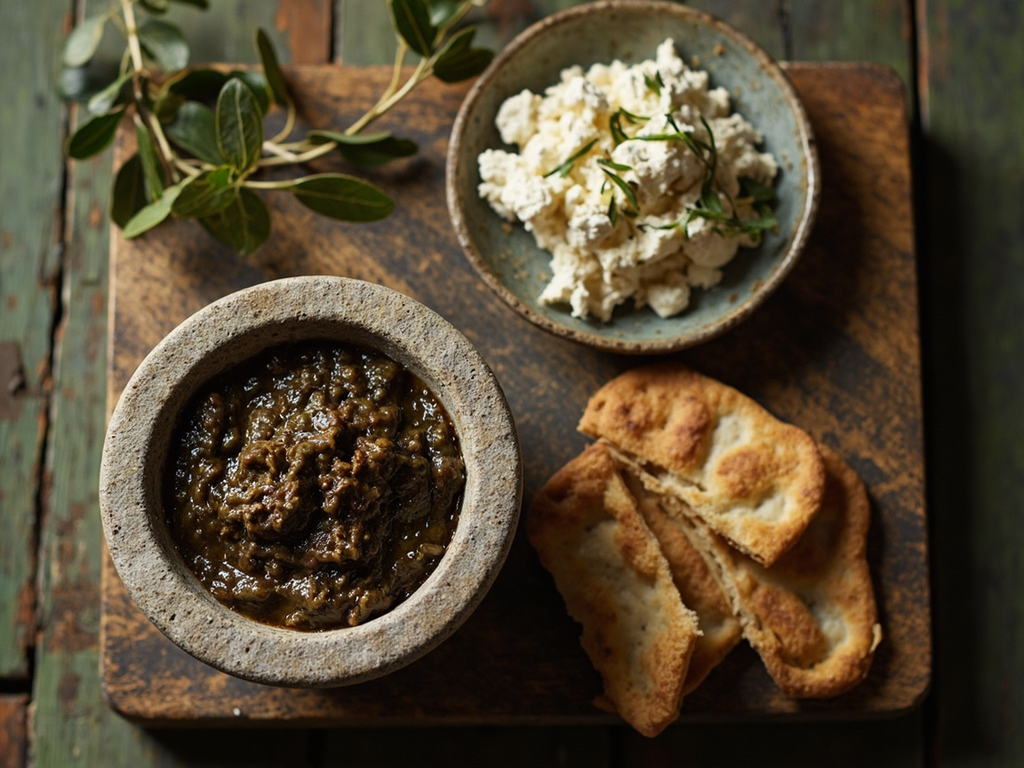
Green leaves (spinach, tops, bitter herbs) wilted in ghee with ginger and long pepper, barely salted, retaining their frank bitterness of woodland plants. The austere but living dish of one who eats what the forest offers.
They thought me broken when they tore me from my palaces and cast me under the trees. But the forest feeds those who know how to read it. I would gather at dawn the leaves still heavy with dew, drop them into ghee with ginger and long pepper that warms the belly. Bitter, yes — as were my years of waiting — but whoever eats bitter learns to endure. Take it with your rice, and remember that dignity does not depend on the number of dishes.
- •Wild green leaves (amaranth, mustard, forest herbs) — a large armful (main vegetable)
- •Ghee — a spoonful (cooking fat)
- •Fresh ginger — a piece (aromatic)
- •Long pepper (pippali) or black pepper — a few grains (heat)
- •Asafoetida — a pinch (aromatic)
- •Salt — to taste (seasoning)
Vana-shaka — forest greens with ghee and long pepper
Green leaves (spinach, tops, bitter herbs) wilted in ghee with ginger and long pepper, barely salted, retaining their frank bitterness of woodland plants. The austere but living dish of one who eats what the forest offers.
Why this dish? During the twelve years of exile in the forests of Kamyaka and Dvaitavana, the Pandavas and Draupadi lived as hermits, gathering roots, fruits, and wild herbs; this dish of bitter greens, simple and fortifying, embodies the subsistence cooking of the fallen queen who learned patience deep in the woods.
They thought me broken when they tore me from my palaces and cast me under the trees. But the forest feeds those who know how to read it. I would gather at dawn the leaves still heavy with dew, drop them into ghee with ginger and long pepper that warms the belly. Bitter, yes — as were my years of waiting — but whoever eats bitter learns to endure. Take it with your rice, and remember that dignity does not depend on the number of dishes.
Ingredients (period version)
- Wild green leaves (amaranth, mustard, forest herbs) — a large armful (main vegetable)
- Ghee — a spoonful (cooking fat)
- Fresh ginger — a piece (aromatic)
- Long pepper (pippali) or black pepper — a few grains (heat)
- Asafoetida — a pinch (aromatic)
- Salt — to taste (seasoning)
Ingredients
- Spinach and mustard leaves (or Swiss chard, radish tops) — 400 g (main vegetable)
- Ghee — 2 tbsp (cooking fat)
- Grated ginger — 1 tsp (aromatic)
- Ground long pepper (or black pepper) — 1/2 tsp (heat)
- Asafoetida (hing) — 1 pinch (aromatic)
- Cumin seeds — 1/2 tsp (aromatic)
- Salt — to taste (seasoning)
Method
- Wash leaves thoroughly, remove tough stems, chop coarsely.
- Heat ghee, crackle cumin with asafoetida, then add ginger.
- Add the still-wet leaves, cover, and let wilt 5 minutes over medium heat.
- Uncover, season with salt and long pepper, and evaporate excess water while stirring.
- Serve hot as an accompaniment to rice or krishara.
How it was made : Ancient medical and culinary treatises (Ayurveda) classified bitter leaves as cleansing and beneficial, and the forest ascetic life (vanaprastha) relied on these gathered shaka. They were cooked with minimal ingredients: ghee, rock salt, and native spices — long pepper, ginger, asafoetida — never chili, which was absent from ancient India.
The contemporary twist : Serve in a small nest on a rice disk, with a touch of long pepper powder as a final note for the clean pungency and camphor-like aroma.
Sources : K.T. Achaya, Indian Food: A Historical Companion, Oxford University Press, 1994
Draupadi · Charactorium