 flip
flipMoretum, the herb and cheese paste
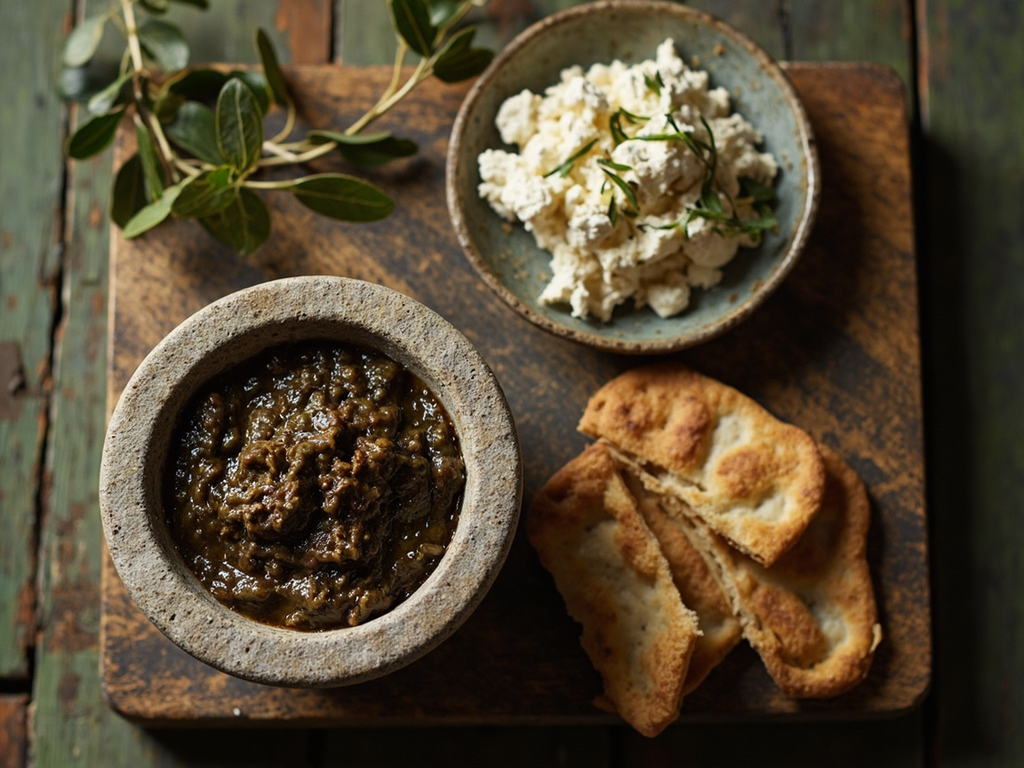
Moretum, the herb and cheese paste
Why this dish? On the roads of Macedonia and in the camps before Philippi, the legionary and the traveler filled their bread with this robust paste of garlic, herbs, and cheese, which keeps and travels well. For Brutus, a proponent of frugality, this is the unadorned food fit for a man on the march.
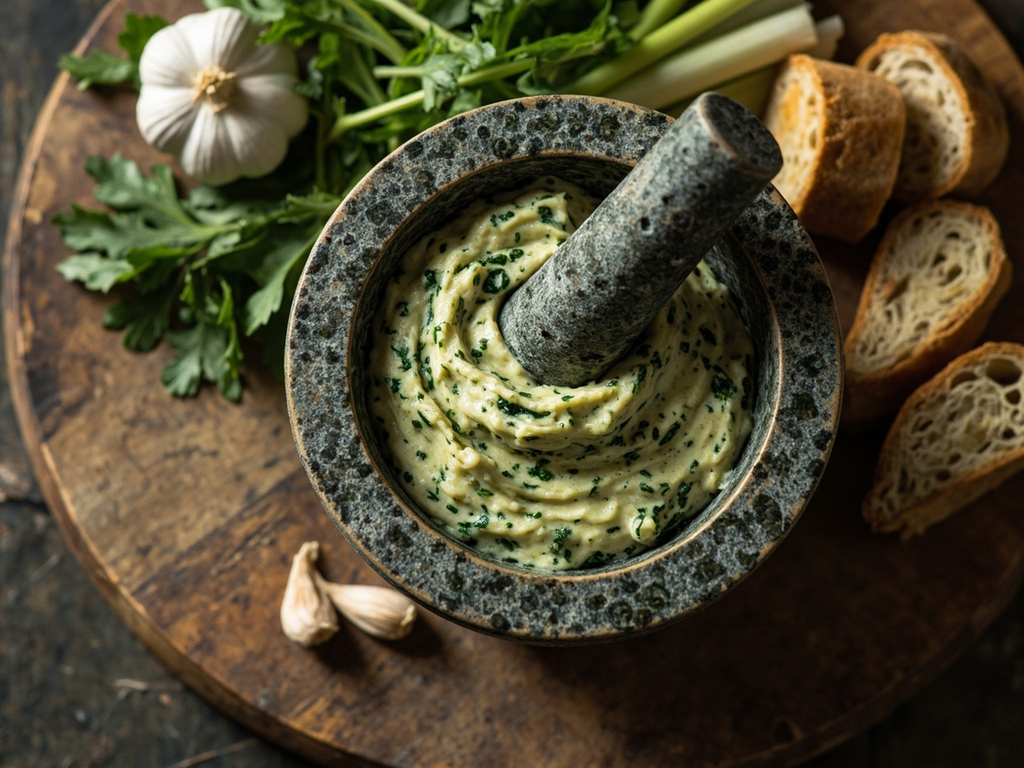
A firm paste pounded in a mortar: dry cheese, garlic, fresh herbs (celery, coriander, rue), a little salt, vinegar, and oil. The condiment of the Roman peasant and traveler, to spread on bread.
When far from Rome, one has neither cook nor oven — so one pounds. Put in your mortar the garlic, the herbs from the hedge, the hard cheese, a little salt, and turn the pestle until the colors blend into one. Drizzle with oil and vinegar, knead into a ball: here is what to enliven your bread for three days' march. It is harsh, it stings, and it sticks to the body — the food of men who have better things to do than feast.
- •Dry ewe's milk cheese — a good piece (base)
- •Garlic — a few cloves (pungency)
- •Herbs (celery leaves, coriander, rue) — a handful (bitterness and freshness)
- •Salt — a pinch (seasoning and preservation)
- •Vinegar — a dash (acidity, preservation)
- •Olive oil — a drizzle (fat binder)
Moretum, the herb and cheese paste
A firm paste pounded in a mortar: dry cheese, garlic, fresh herbs (celery, coriander, rue), a little salt, vinegar, and oil. The condiment of the Roman peasant and traveler, to spread on bread.
Why this dish? On the roads of Macedonia and in the camps before Philippi, the legionary and the traveler filled their bread with this robust paste of garlic, herbs, and cheese, which keeps and travels well. For Brutus, a proponent of frugality, this is the unadorned food fit for a man on the march.
When far from Rome, one has neither cook nor oven — so one pounds. Put in your mortar the garlic, the herbs from the hedge, the hard cheese, a little salt, and turn the pestle until the colors blend into one. Drizzle with oil and vinegar, knead into a ball: here is what to enliven your bread for three days' march. It is harsh, it stings, and it sticks to the body — the food of men who have better things to do than feast.
Ingredients (period version)
- Dry ewe's milk cheese — a good piece (base)
- Garlic — a few cloves (pungency)
- Herbs (celery leaves, coriander, rue) — a handful (bitterness and freshness)
- Salt — a pinch (seasoning and preservation)
- Vinegar — a dash (acidity, preservation)
- Olive oil — a drizzle (fat binder)
Ingredients
- Grated dry pecorino — 150 g (base)
- Garlic — 2 cloves (pungency)
- Celery leaves + fresh coriander — 1 good handful (freshness and bitterness)
- Parsley or arugula (for bitterness, if rue is unavailable) — a few leaves (bitter note)
- Salt — 1 pinch (seasoning)
- Wine vinegar — 1 teaspoon (acidity)
- Olive oil — 3 tablespoons (fat binder)
Method
- Pound the garlic in a mortar with a pinch of salt until it forms a paste.
- Add the herbs and crush them, then gradually incorporate the grated cheese.
- Pour in the vinegar, then the oil in a stream, pounding until a homogeneous, firm paste forms.
- Roll into a ball, let rest in the fridge for an hour, and spread on rustic bread.
- (Do not use real rue, toxic in large doses: substitute arugula or parsley for bitterness.)
How it was made : The poem *Moretum* (from the *Appendix Vergiliana*) describes in detail a peasant preparing at dawn this paste of garlic, herbs, cheese, salt, vinegar, and oil, ground in the mortar from which the dish takes its name. Salty and tangy, it kept for a few days and accompanied the bread of the humble as well as soldiers on campaign.
The contemporary twist : Served as a quenelle on grilled oiled toasts, like an aperitif 'Roman pesto' — the ancient ancestor of herb cream cheese.
Sources : Appendix Vergiliana, Moretum · Columella, De re rustica, XII (herb condiments)
Brutus · Charactorium