 flip
flipBarley Flatbreads and Dried Fish for the Traveler
Barley Flatbreads and Dried Fish for the Traveler
Why this dish? In the Book of Tobit, Tobias leaves Nineveh for Ecbatana in Media, following the trails and the course of the Tigris, accompanied by the angel Raphael. The traveler carried dry barley flatbreads and salted-dried fish — precisely the fish from which the remedy against Asmodeus was drawn.
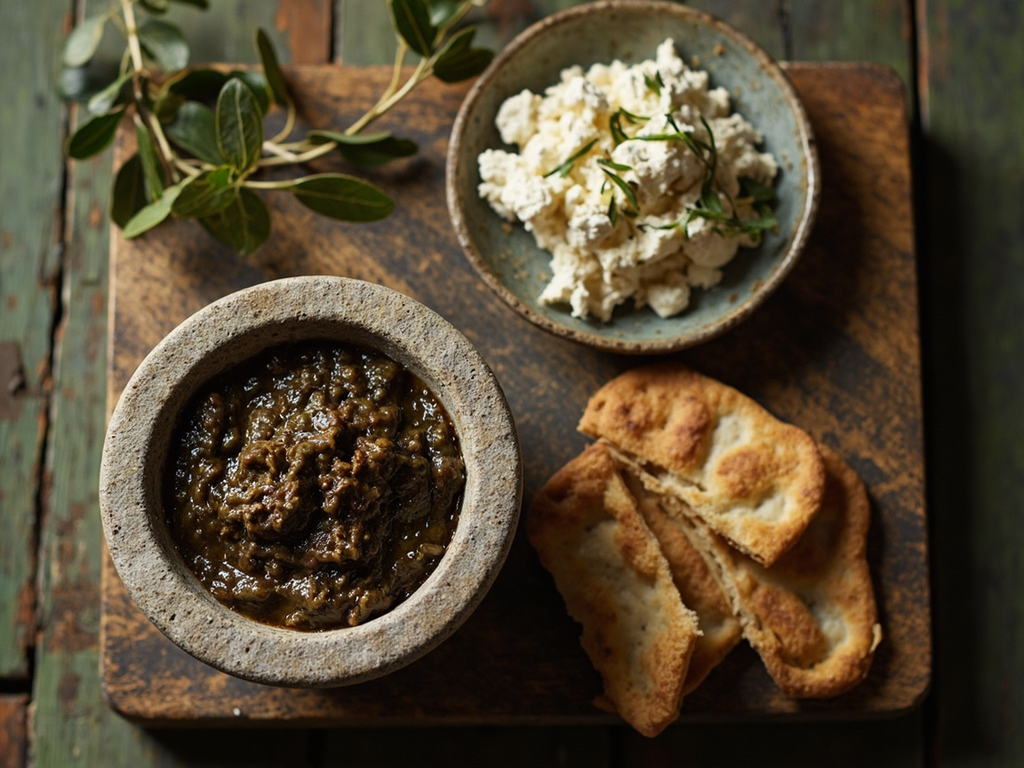
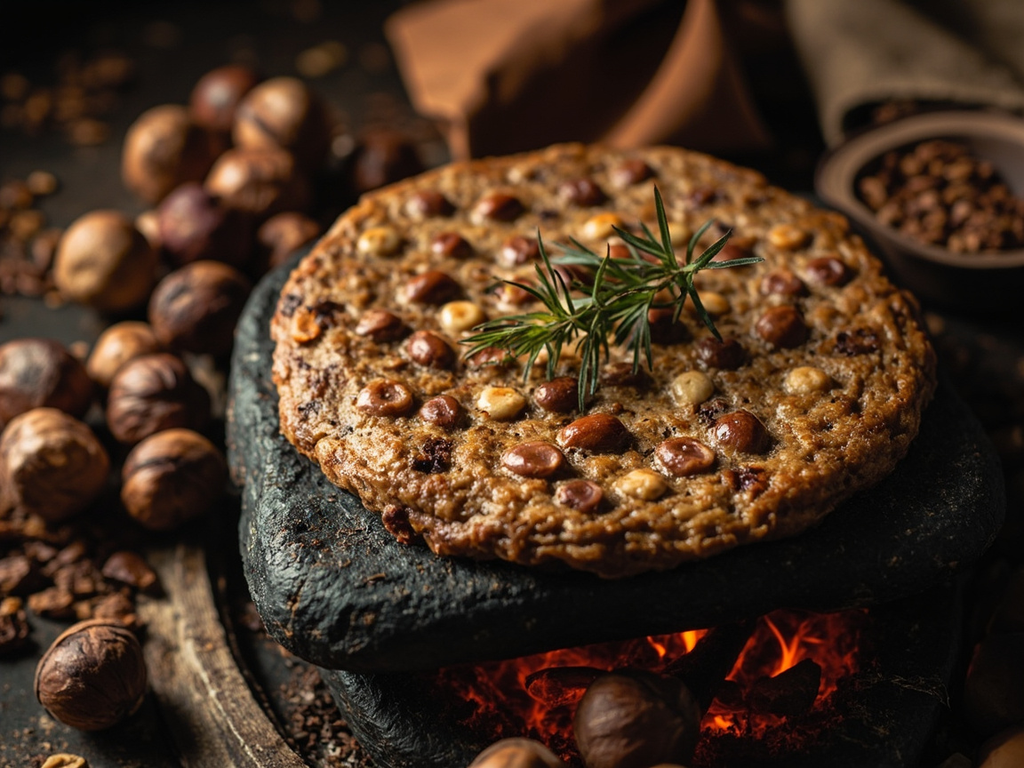
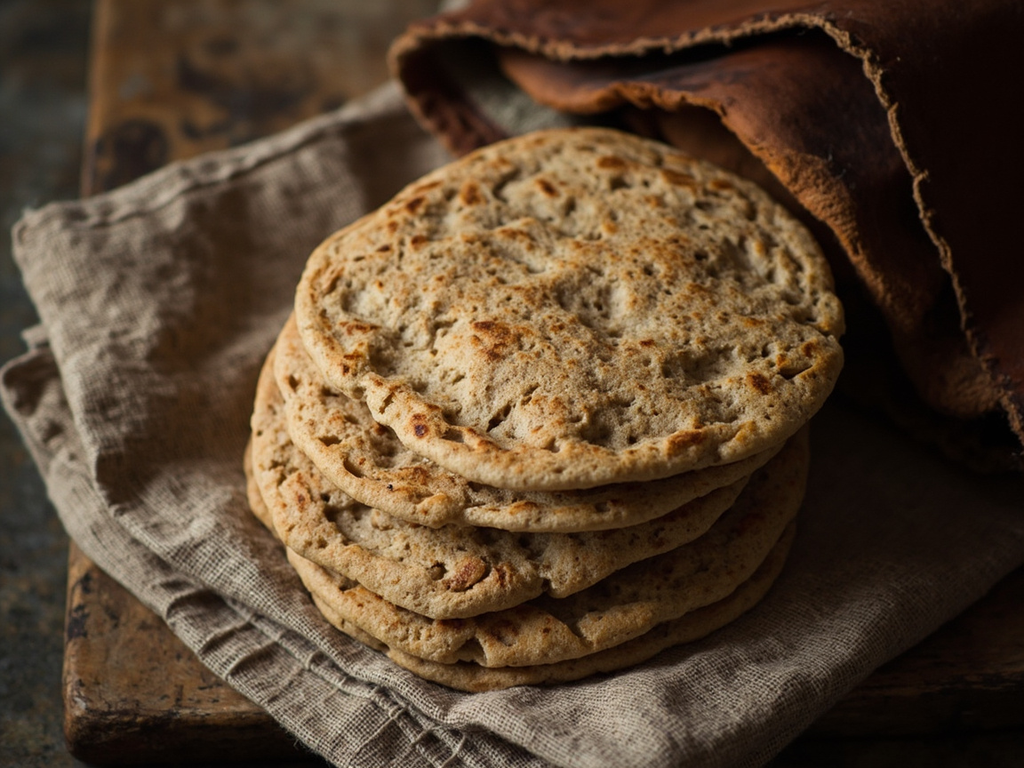
Flat barley loaves, baked on hot stone and dried for preservation, accompanied by strips of salted fish dried in the sun — the marching provisions of the roads of Media.
You're taking the road to Ecbatana, mortal? That's the path young Tobias took, his angel disguised at his side and, in his pack, that dried fish that sealed my defeat. On these scorched trails, they carried only what lasts: barley flatbread hard as a tile, salted fish that doesn't rot. Soak them together in the evening near the fire — and watch well, for the roads of Media have their invisible watchers.
- •Barley flour — enough (flatbread base)
- •Water and salt — for the dough (binder)
- •River fish — a few pieces (preserved protein)
- •Salt — generously (preservation)
- •Cumin seeds — a pinch (flavor)
Barley Flatbreads and Dried Fish for the Traveler
Flat barley loaves, baked on hot stone and dried for preservation, accompanied by strips of salted fish dried in the sun — the marching provisions of the roads of Media.
Why this dish? In the Book of Tobit, Tobias leaves Nineveh for Ecbatana in Media, following the trails and the course of the Tigris, accompanied by the angel Raphael. The traveler carried dry barley flatbreads and salted-dried fish — precisely the fish from which the remedy against Asmodeus was drawn.
You're taking the road to Ecbatana, mortal? That's the path young Tobias took, his angel disguised at his side and, in his pack, that dried fish that sealed my defeat. On these scorched trails, they carried only what lasts: barley flatbread hard as a tile, salted fish that doesn't rot. Soak them together in the evening near the fire — and watch well, for the roads of Media have their invisible watchers.
Ingredients (period version)
- Barley flour — enough (flatbread base)
- Water and salt — for the dough (binder)
- River fish — a few pieces (preserved protein)
- Salt — generously (preservation)
- Cumin seeds — a pinch (flavor)
Ingredients
- Barley flour (or half barley, half whole wheat) — 250 g (flatbread base)
- Warm water — 150 ml (binder)
- Salt — 1 tsp + for the fish (seasoning and preservation)
- Mackerel or trout fillets — 200 g (dried protein)
- Cumin seeds — 1 tsp (flavor)
Method
- Generously salt the fish fillets and let them drain for 12 hours, then dry them in a very low oven (60°C) for several hours until firm.
- Mix barley flour, salt, cumin, and water to form a firm dough.
- Roll out very thinly and cook on a hot griddle or stone for 2-3 minutes per side.
- Air-dry the flatbreads so they keep.
- When eating, break a flatbread and dip it with the dried fish in a little water or warm beer.
How it was made : Unleavened barley bread, baked on stone or oven walls, and salted-dried fish were the basic provisions of caravaneers and travelers in the ancient Near East. Salt, a precious commodity controlled by palaces, allowed Tigris fish to be preserved for long marches toward Media and Persia.
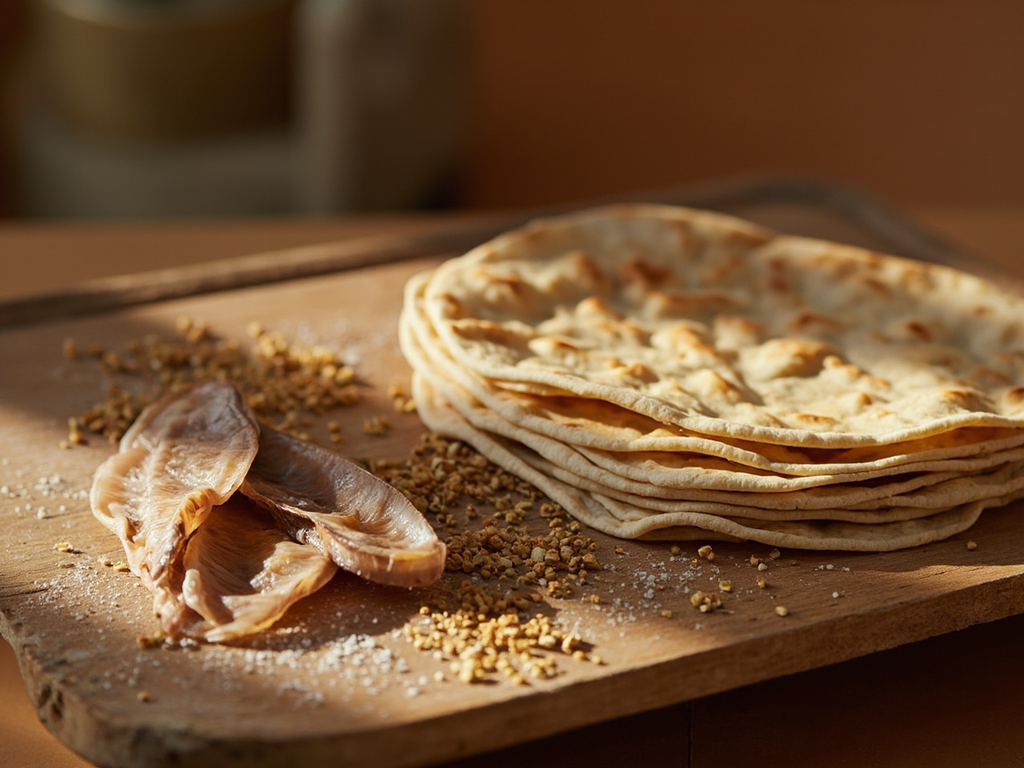
The contemporary twist : Served as a 'pilgrim's board': stacked flatbreads, dried fish shavings, and a small bowl of cumin-scented salt on a raw wooden plank.
Sources : Book of Tobit, ch. 5-6 (the journey from Nineveh to Ecbatana) · Jean Bottéro, La plus vieille cuisine du monde, Audibert, 2002
Asmodeus · Charactorium