 flip
flipGravlaks — salt- and sugar-cured salmon with dill
Gravlaks — salt- and sugar-cured salmon with dill
Why this dish? Munch's Norway lived from the sea; preserving salmon with salt was an ancestral skill of the coasts and fjords. Sliced thin on rye bread at kveldsmat, gravlaks embodies the sober and careful Norwegian table that the painter rediscovered upon returning home.
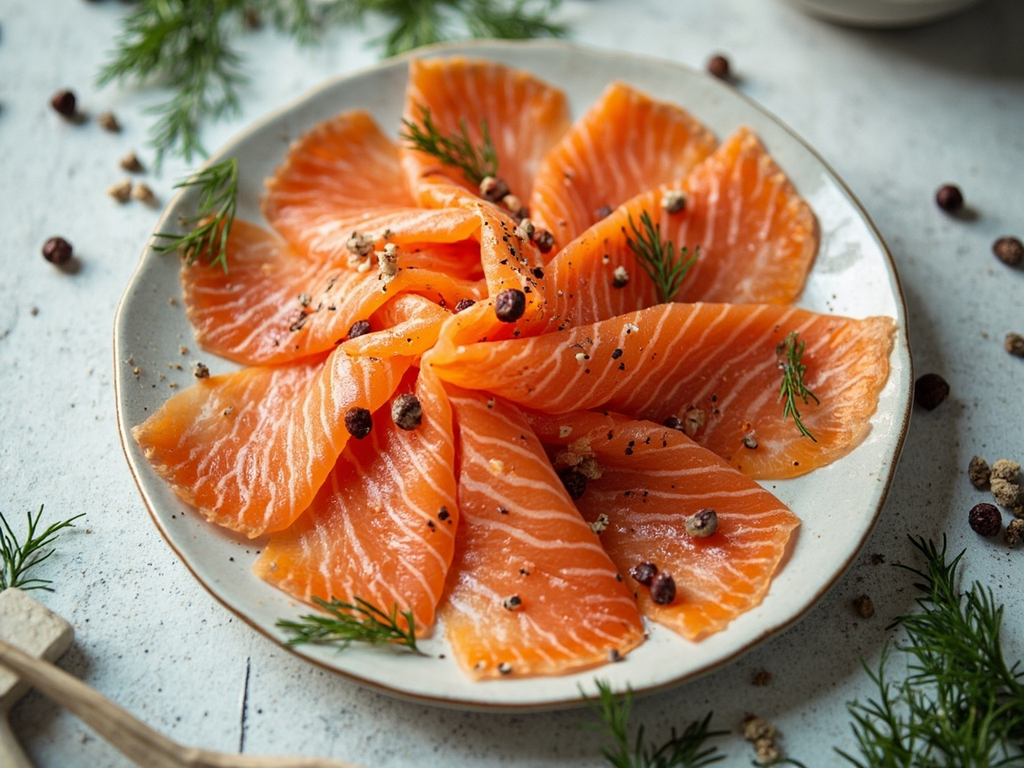
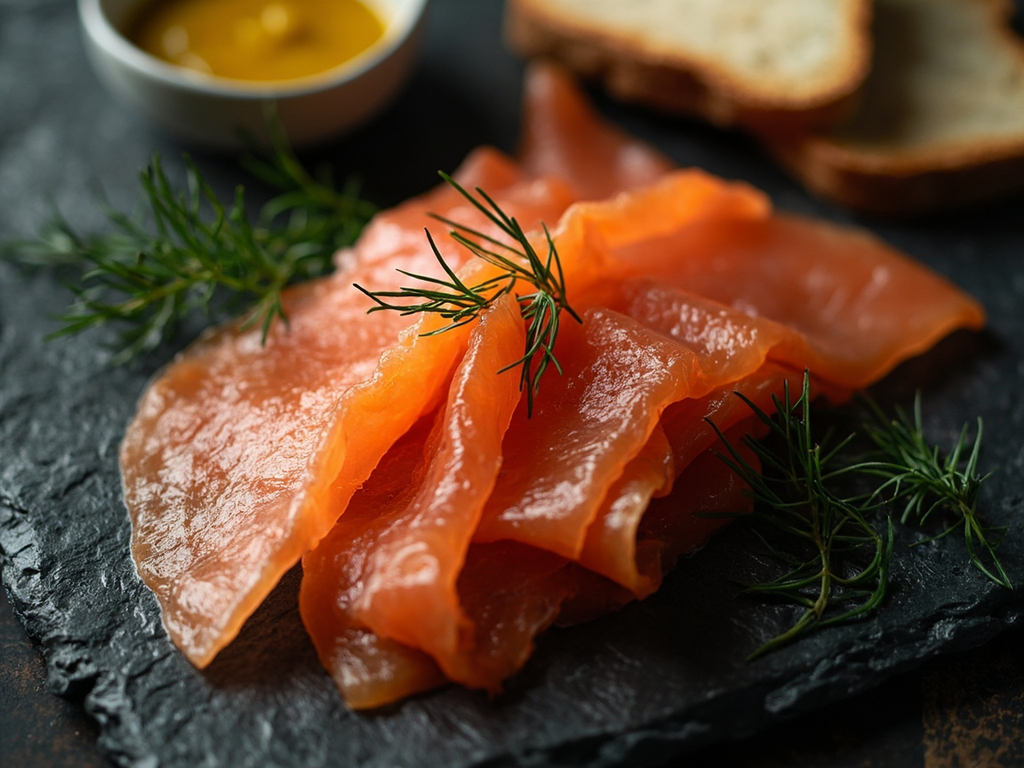
A salmon fillet buried for several days in a mixture of salt, sugar, and dill, which 'cooks' it without fire and renders it firm, silky, and fragrant. It is sliced into thin strips served on bread, with a mustard-dill sauce.
On the coast, we didn't wait for fire to prepare the salmon: we buried it in salt and dill, and the sea did the rest. That's where the word comes from, you see — grav, the grave, like a burial of the fish. After three days we unearth it, slice it as thin as a leaf, and lay it on a slice of rye bread. I who have painted so many fish and fishermen of the North, I tell you: there is in this salmon the color of pale flesh something of our winter light.
- •Very fresh salmon fillet with skin — a nice piece (main ingredient)
- •Coarse salt — generous portions (preservation, firms the flesh)
- •Sugar — a little less than the salt (balance and tenderness)
- •Fresh dill — a large bunch (signature flavor)
- •Cracked pepper — a pinch (aromatic lift)
Gravlaks — salt- and sugar-cured salmon with dill
A salmon fillet buried for several days in a mixture of salt, sugar, and dill, which 'cooks' it without fire and renders it firm, silky, and fragrant. It is sliced into thin strips served on bread, with a mustard-dill sauce.
Why this dish? Munch's Norway lived from the sea; preserving salmon with salt was an ancestral skill of the coasts and fjords. Sliced thin on rye bread at kveldsmat, gravlaks embodies the sober and careful Norwegian table that the painter rediscovered upon returning home.
On the coast, we didn't wait for fire to prepare the salmon: we buried it in salt and dill, and the sea did the rest. That's where the word comes from, you see — grav, the grave, like a burial of the fish. After three days we unearth it, slice it as thin as a leaf, and lay it on a slice of rye bread. I who have painted so many fish and fishermen of the North, I tell you: there is in this salmon the color of pale flesh something of our winter light.
Ingredients (period version)
- Very fresh salmon fillet with skin — a nice piece (main ingredient)
- Coarse salt — generous portions (preservation, firms the flesh)
- Sugar — a little less than the salt (balance and tenderness)
- Fresh dill — a large bunch (signature flavor)
- Cracked pepper — a pinch (aromatic lift)
Ingredients
- Salmon fillet with skin, ultra-fresh — 600 g (main ingredient)
- Coarse salt — 60 g (dry brine)
- Sugar — 50 g (balance)
- Fresh dill — 1 large bunch (40 g) (flavor)
- Cracked black pepper — 1 tsp (spice)
- For the sauce: mild mustard, dill, vinegar, a little oil and sugar — equal parts adjusted (accompaniment)
Method
- Mix salt, sugar, and pepper. Coarsely chop the dill.
- Line a dish with some of the mixture, place the salmon skin side down, cover with the remaining salt-sugar mixture, then all the dill.
- Cover with plastic wrap, place a board and a weight on top, refrigerate for 48 to 72 hours, turning the fillet once a day.
- Rinse quickly, pat dry, then slice very thinly on the bias, removing the skin.
- Prepare the sauce by whisking together mustard, vinegar, sugar, oil, and chopped dill; serve the salmon on rye bread with a drizzle of sauce.
How it was made : Before refrigeration, Scandinavian fishermen buried salted salmon in the sand above the tide line to lightly ferment and preserve it — hence grav ('buried'). The modern version, simply salt-sugar cured and refrigerated, abandons fermentation but retains the dry-salting method and the signature dill.
The contemporary twist : Arrange the slices in a translucent fan on a dark slate board, a few sprigs of dill and a dot of sauce — a cameo of pale pink and deep green, very Nordic.
Edvard Munch · Charactorium