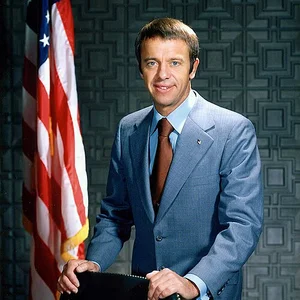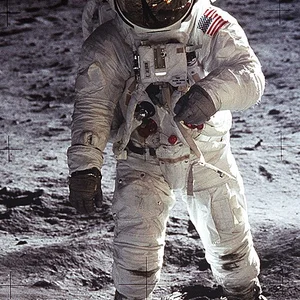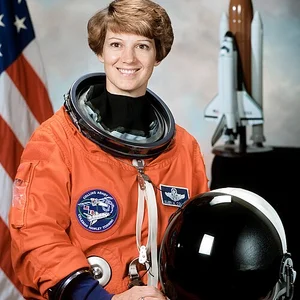

An American astronaut and military pilot, Eileen Collins was the first woman to pilot and then command an American Space Shuttle. She completed four missions with NASA between 1995 and 2005.
Eileen Collins(1956 — ?)
Eileen Collins
États-Unis
8 min read
Frequently asked questions
Famous Quotes
« I would like to be remembered as someone who inspired young people to pursue their dreams.»
« I think it's important that we never stop exploring.»
Key Facts
- 1995: first woman to pilot a Space Shuttle (STS-63, Discovery)
- 1999: first woman to command a Space Shuttle (STS-93, Columbia)
- 2005: commanded the return-to-flight mission STS-114 following the Columbia disaster (2003)
- A graduate of the United States Air Force Academy, she flew more than 30 types of aircraft
- Selected by NASA in 1990 as part of astronaut class #13
Works & Achievements
Eileen Collins's first mission, during which she became the first woman to pilot an American space shuttle. The shuttle performed a close-range rendezvous with the Russian Mir station, inaugurating American-Russian space cooperation.
Collins's second mission, during which she piloted Atlantis to a successful docking with the Mir station. The mission relieved American astronaut Jerry Linenger and transferred several tons of equipment between the two spacecraft.
Collins became the first woman to command an American space shuttle. The mission successfully deployed the Chandra X-ray telescope, which would revolutionize astronomy by enabling the observation of extreme phenomena such as black holes.
Collins commanded the first crewed mission following the Columbia disaster. The mission tested new safety procedures, inspected the thermal shield in orbit, and delivered supplies to the International Space Station, marking NASA's confident return to flight.
Anecdotes
Eileen Collins grew up in a modest family in Elmira, New York, where she lived in public housing. From childhood, she would spend hours watching planes take off from the local airport, and saved her pocket money to pay for her first flying lessons at the age of nineteen, inspired by the stories of pioneering female aviators such as Amelia Earhart.
In February 1995, during the STS-63 mission aboard the shuttle Discovery, Eileen Collins became the first woman to pilot an American space shuttle. During the mission, she maneuvered the shuttle to within just eleven meters of the Russian station Mir — an unprecedented orbital rendezvous that foreshadowed future international space cooperation.
In July 1999, Collins took command of the shuttle Columbia for the STS-93 mission, becoming the first woman to command an American spacecraft. The mission had a major scientific objective: deploying the Chandra X-ray telescope, one of the most powerful ever launched, which would go on to revolutionize astronomy for decades.
In 2005, Collins was selected to command the STS-114 mission, dubbed "Return to Flight" — the first crewed spaceflight following the Columbia shuttle disaster of 2003. Acutely aware of both the symbolic weight and the safety stakes, she personally oversaw the new thermal protection inspection procedures, determined to ensure that the fatal error of Columbia would never be repeated.
Before joining NASA, Eileen Collins had logged more than 5,000 flight hours across more than 30 different types of aircraft in the United States Air Force. Her test pilot training at Edwards Air Force Base had given her experience flying cutting-edge military aircraft — a decisive asset for her selection by NASA in 1990.
Primary Sources
I always wanted to fly. I remember watching airplanes from my backyard as a child. My parents didn't have a lot of money, but I worked and saved to take flying lessons. I never thought about the barriers — I just focused on what I needed to do to achieve my goal.
Deploying Chandra is an incredible achievement. This telescope will allow scientists to observe X-ray sources in the universe that we have never been able to see before. I am proud that our crew could contribute to this scientific milestone.
The loss of Columbia and her crew was a devastating tragedy. But the men and women of NASA have worked tirelessly to understand what happened and to make the shuttle safer. We are ready to fly again, and we will honor Columbia's crew by flying safely.
America's space program is essential to our future. When I flew as commander, I thought about the young girls watching from their homes, wondering if they could one day do what I was doing. The answer is yes — with hard work and determination, they can.
Key Places
Eileen Collins's hometown, where she grew up in modest circumstances and discovered her passion for aviation by watching planes from her backyard. This city in upstate New York celebrated its favorite daughter after each of her missions.
The legendary air base where Collins completed the elite Air Force Test Pilot School program, graduating in 1990. This training was a near-essential requirement for selection as a NASA pilot astronaut.
NASA's operational hub where Collins trained for years in the shuttle simulator and the neutral buoyancy pool. This is where she planned and prepared her four space missions alongside her crews.
The launch site from which Collins lifted off on all four of her missions between 1995 and 2005. The KSC runway also welcomed several of her landings as she returned to Earth aboard the shuttle.
The institution where Collins earned her bachelor's degree in mathematics and economics in 1978. That degree, complemented by a master's from Stanford, gave her the scientific foundation she needed to join the Air Force and set her sights on NASA.
Typical Objects

Pressurized orange suit worn by shuttle astronauts during launch and landing. Collins wore it as protection against depressurization or emergency evacuation across her four missions.

A comprehensive set of procedures and checklists that Collins had to master completely. Hundreds of hours of simulation allowed her to execute them with precision even under the extreme pressure of an orbital emergency.

Space observatory deployed by Collins during mission STS-93 in July 1999. Measuring 13.8 meters in length and weighing over 4 tons, its release from Columbia's payload bay stands as one of the defining achievements of Collins's career.

Joystick used by the pilot or commander to maneuver the shuttle during the delicate phases of orbital rendezvous and landing. Collins used it to bring Discovery to within eleven meters of the Mir space station in 1995.

Twin-seat supersonic jet aircraft used by NASA astronauts to keep their piloting skills sharp between missions. Collins logged thousands of hours in it throughout her career.

Distinctive embroidered badge worn on the flight suit, representing the crew and scientific objectives of each mission. Collins wore four different patches over the course of her career, each one marking a historic milestone.
School Curriculum
Vocabulary & Tags
Key Vocabulary
Tags
Daily Life
Morning
During training periods in Houston, Eileen Collins began her days very early with a workout — running or swimming — required by NASA physicians to maintain astronauts' physical fitness. She would then move on to sessions in the shuttle simulator, running through takeoff, orbital rendezvous, and landing scenarios under increasingly demanding conditions.
Afternoon
Her afternoons were devoted to technical briefings with mission engineers, studying flight manuals, and training in simulated weightlessness in the Neutral Buoyancy Lab, a vast pool where astronauts practice extravehicular activities. Collins also attended coordination meetings with scientific teams to prepare mission objectives.
Evening
Evenings were often dedicated to reviewing emergency procedures and technical reading. Collins, a mother, sought to spend time with her children and sometimes participated in public lectures to encourage young people — girls in particular — to pursue careers in science, mathematics, and aviation.
Food
Like all astronauts in training, Collins followed a balanced diet supervised by NASA dietitians, high in proteins and complex carbohydrates to support intense physical effort. In space, she consumed rehydrated freeze-dried meals or thermostabilized foods, learning to eat carefully to prevent crumbs from floating through the cabin and damaging equipment.
Clothing
In her day-to-day life at the Johnson Space Center, Collins wore the standard blue astronaut suit during training sessions and simulations. On missions, she wore the orange pressurized Launch and Entry Suit during takeoff and landing, and a lightweight blue suit for activities aboard the shuttle while in orbit.
Housing
Eileen Collins lived with her family in the suburbs of Houston, close to the Johnson Space Center, like most active astronauts. During space missions, she lived in the very confined quarters of the shuttle, sharing a space of approximately 74 square meters with five to six other crew members, sleeping in sleeping bags attached to the walls.
Historical Timeline
Period Vocabulary
Liens externes & ressources
Références
Œuvres
Mission STS-84 — Pilote de la navette Atlantis
Mai 1997
Mission STS-93 — Commandante de la navette Columbia
Juillet 1999
Mission STS-114 — Commandante de la navette Discovery (Return to Flight)
Juillet-août 2005