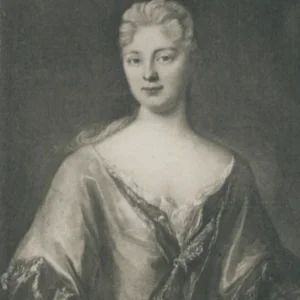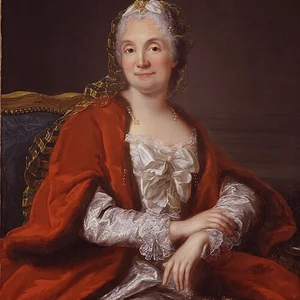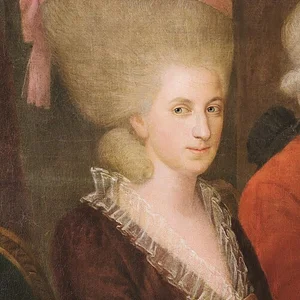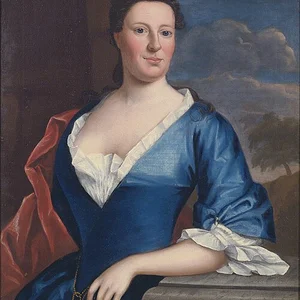

Elizabeth Francis (1708-1800) was a figure of 18th-century British society who lived through most of the Age of Enlightenment. Her exceptional longevity (92 years) made her a witness to major transformations: the American Revolution, the French Revolution, and the early stirrings of the Industrial Revolution.
Elizabeth Francis(1708 — 1800)
Elizabeth Francis
8 min read
Frequently asked questions
Key Facts
- Born in 1708, during the reign of Queen Anne of England
- Lived until 1800, spanning the entirety of the 18th century
- Contemporary of the great Atlantic revolutions (American 1776, French 1789)
Works & Achievements
The assiduous correspondence of Elizabeth Francis, a central practice for any educated woman of the Georgian bourgeoisie, constitutes her main body of work: decades of letters commenting with lucidity on the events of her time, from the Jacobite rebellion to the Atlantic revolutions.
Her exceptional longevity of 92 years made Elizabeth Francis a living archive: she could recount to her grandchildren events that had occurred before their birth, giving several generations a direct awareness of the profound transformations their century had witnessed.
Anecdotes
Elizabeth Francis, born in 1708 under Queen Anne and died in 1800 under George III, lived through nine decades of unprecedented upheaval. Her longevity of 92 years was so rare for the time — life expectancy barely exceeded 40 years on average — that her contemporaries regarded her as a true living memory of the century.
A direct witness to the Jacobite rebellion of 1745, Elizabeth Francis saw England tremble at the threat of a Stuart restoration. The pretender Charles Edward Stuart, known as 'Bonnie Prince Charlie', had marched as far as Derby before retreating: the news spread panic all the way to London, where some merchants had begun hiding their money.
Elizabeth Francis witnessed the remarkable transformation of travel in England: born at a time when the journey from London to Bath took several days by cart, she saw the rise of toll roads (turnpikes) that made it possible to cover that same distance in a single day by fast stagecoach. This change, which she reportedly remarked upon in her correspondence, represented to her the very emblem of the century's modernity.
In 1789, at the age of 81, Elizabeth Francis learned from England of the storming of the Bastille and the outbreak of the French Revolution. Like many British people of her generation, she initially viewed these events with some sympathy for the ideals of liberty, before the execution of Louis XVI in 1793 and the Terror turned English public opinion to horror.
Primary Sources
Anglican parish baptism registers are the primary civil records for eighteenth-century England, noting the name, date, and parentage of children baptised in the weeks following their birth.
The first British periodical with wide circulation, founded in 1731, it published political news, obituaries, poetry, and scientific reports. It is a primary source for the social and intellectual life of Georgian England throughout the eighteenth century.
The epistolary archives of numerous middle-class and minor noble English families from the eighteenth century, held at the British Library and in county record offices, shed light on the daily lives, political opinions, and social networks of educated women of the period.
"The city of Bath is become the general resort of all the nobility and gentry of the kingdom; they come for their health, to be sure, but chiefly to see and be seen, to form alliances and maintain the networks of polite society."
Anglican parish registers systematically recorded burials with the age of the deceased, making them the sole form of official civil record for families before the Registration Act of 1836.
Key Places
The largest city in Europe in the 18th century, London was the political, commercial, and cultural heart of the British Empire. Its coffee houses, theatres, markets, and clubs made it the hub of all news and debate that ran through Elizabeth Francis's life.
A spa town and the social capital of Georgian England, Bath was the resort where polite society gathered each season to take the waters, see and be seen, and forge alliances. The Pump Rooms and Assembly Rooms made it the centre of middle-class sociability.
The Anglican parish was the fundamental framework of social and spiritual life in England: it was where people were baptised, married, and buried, and parish registers served as the only form of civil record before 1836.
A symbolic city in the Jacobite rising of 1745: it was as far as Derby that Bonnie Prince Charlie's troops marched before turning back, spreading panic across the country and leaving a lasting mark on the minds of Elizabeth Francis's generation.
Typical Objects

A portable case containing quill pens, an inkwell, blotting powder and sealing wax. Letter writing was the central intellectual activity of educated women in the Georgian middle class, and Elizabeth Francis was particularly noted for her dedication to it.

Tea, imported by the East India Company, had become the quintessential daily social ritual in England. Owning a fine porcelain tea service — Wedgwood founded his pottery in 1759 — signalled belonging to Georgian polite society.

In English Protestant families, the Bible served as both prayer book and civil register: births, marriages and deaths were recorded by hand on the endpapers, making this object the genealogical memory of the household, passed down through the generations.

An indispensable feminine accessory in Georgian society, the fan was used to cool oneself but also to communicate through a coded language at assemblies, balls and receptions. The painted motifs — bucolic landscapes, mythological scenes — reflected the classical taste of the age.

The periodical press expanded considerably in 18th-century England. Literate women like Elizabeth Francis followed political news — colonial wars, parliamentary debates, dispatches from Paris — with growing interest.

A wicker basket containing threads, needles, thimbles and works in progress. Embroidery and fine needlework were the expected manual activities of respectable women in the Georgian middle class, practised during social calls or family evenings.
School Curriculum
Vocabulary & Tags
Key Vocabulary
Daily Life
Morning
Elizabeth Francis rose early, following the bourgeois habits of the time, beginning her day with morning prayers before a light breakfast of bread, butter, and small beer. The morning was devoted to household management: overseeing servants, checking supplies, and reading letters or gazettes — a moment to stay informed about the wider world.
Afternoon
The afternoon was reserved for social calls, a cornerstone of Georgian life: receiving friends or paying visits allowed for the exchange of news and gossip, needlework or reading aloud, and the discreet discussion of current political and literary events that was expected of women.
Evening
The evening brought the family together for a more substantial dinner, the primary occasion for intimate socializing. Afterwards, one might read novels aloud — Richardson, Fielding, and later Fanny Burney — play whist, or take tea with a few trusted guests before retiring early by candlelight.
Food
The Georgian middle-class diet was built around roasted meats (roast beef, mutton), white bread, boiled vegetables, and sweet puddings. Tea, drunk several times a day, structured social interactions. Sugar from the West Indies and Oriental spices — products of colonial trade — flavored homemade desserts and preserves.
Clothing
In her youth, Elizabeth Francis wore the wide hooped skirts and boned bodices fashionable in the 1720s–1740s, with powdered wigs for formal occasions. Over the decades, silhouettes became lighter under neoclassical influence: by the end of her life, around 1800, high-waisted gowns and white linen caps for older women had replaced the former splendor.
Housing
A woman of the English middle class in the eighteenth century typically lived in a two- or three-storey Georgian brick townhouse: a reception room on the first floor, kitchen and service rooms on the ground floor, bedrooms above. Heating came from fireplaces in each main room; lighting from tallow or wax candles depending on one's means.
Historical Timeline
Period Vocabulary
Liens externes & ressources
Références
Œuvres
Correspondance épistolaire (lettres familiales et sociales)
1730-1800
Mémoire orale transmise sur plusieurs générations
Tout au long du XVIIIe siècle