 flip
flipPot-au-feu du fourneau
Pot-au-feu du fourneau
Why this dish? Emblematic dish of the French bourgeois table that Zola, a big eater, appreciated. Simmered for hours on the stove during his long writing days, it provided both a broth-soup and the meat for the meal — the embodiment of honest, nourishing 19th-century cooking.
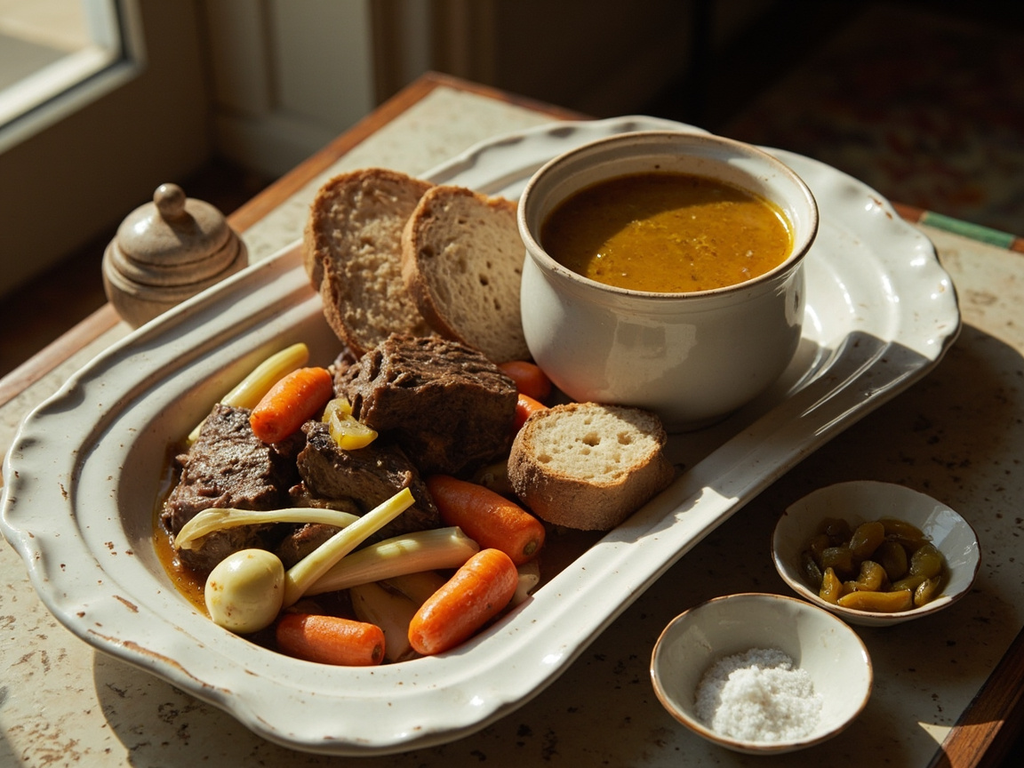
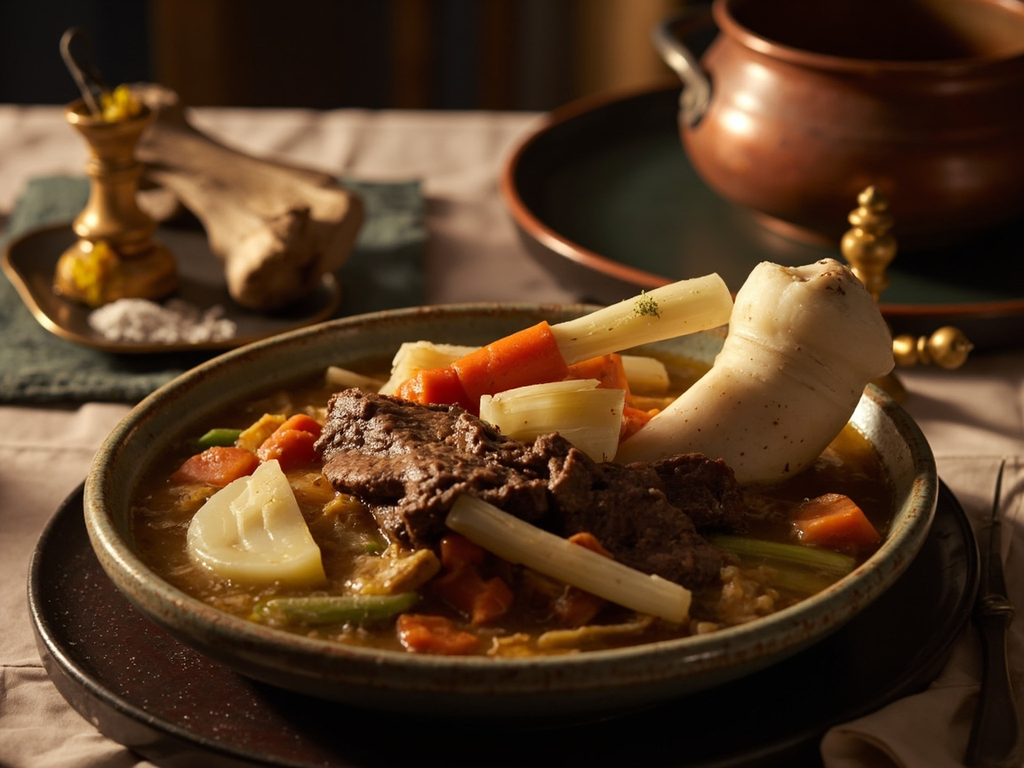
A piece of beef and root vegetables poached very slowly in a large broth perfumed with a bouquet garni. First a golden soup is drawn, then the steaming meat served with coarse salt and cornichons.
Ah, the pot-au-feu! There is the dish that sustained my labor, there on the corner of the stove, simmering for hours while I blackened my pages. My cook would throw in a nice piece of gîte, leeks, carrots, and a turnip, and the whole house filled with an honest steam that smelled of work well done. I tell you, nothing beats this golden broth for comforting a man who wears out his eyes depicting the misery of the world. First we drew the soup, then the meat with coarse salt and cornichons — a frugal bourgeois meal, but what a treat!
- •Gîte or paleron of beef — a fine piece (lean, tender meat)
- •Marrow bones — two or three sections (richness and umami of the broth)
- •Leeks, carrots, turnips — a generous handful (pot vegetables)
- •Onion studded with cloves — one (flavor)
- •Bouquet garni (thyme, bay leaf, parsley) — one bundle (aromatic signature)
- •Coarse salt and peppercorns — to taste (seasoning)
Pot-au-feu du fourneau
A piece of beef and root vegetables poached very slowly in a large broth perfumed with a bouquet garni. First a golden soup is drawn, then the steaming meat served with coarse salt and cornichons.
Why this dish? Emblematic dish of the French bourgeois table that Zola, a big eater, appreciated. Simmered for hours on the stove during his long writing days, it provided both a broth-soup and the meat for the meal — the embodiment of honest, nourishing 19th-century cooking.
Ah, the pot-au-feu! There is the dish that sustained my labor, there on the corner of the stove, simmering for hours while I blackened my pages. My cook would throw in a nice piece of gîte, leeks, carrots, and a turnip, and the whole house filled with an honest steam that smelled of work well done. I tell you, nothing beats this golden broth for comforting a man who wears out his eyes depicting the misery of the world. First we drew the soup, then the meat with coarse salt and cornichons — a frugal bourgeois meal, but what a treat!
Ingredients (period version)
- Gîte or paleron of beef — a fine piece (lean, tender meat)
- Marrow bones — two or three sections (richness and umami of the broth)
- Leeks, carrots, turnips — a generous handful (pot vegetables)
- Onion studded with cloves — one (flavor)
- Bouquet garni (thyme, bay leaf, parsley) — one bundle (aromatic signature)
- Coarse salt and peppercorns — to taste (seasoning)
Ingredients
- Paleron of beef — 800 g (braising meat)
- Marrow bones — 2 sections (rich broth)
- Carrots — 4 (vegetable)
- Leeks — 2 (vegetable)
- Turnips — 2 (vegetable)
- Onion studded with 2 cloves — 1 (aromatic)
- Bouquet garni — 1 (signature)
- Coarse salt — 1 tbsp (seasoning)
Method
- Put the meat in a large pot of cold water, bring gently to a simmer and carefully skim off the gray foam.
- Add the clove-studded onion, bouquet garni, and coarse salt; let simmer gently, covered, for 2½ hours.
- Add the carrots, leeks, and turnips, as well as the marrow bones, and continue for 45 minutes until everything is tender.
- Serve first the strained broth as soup (over croutons), then the meat and vegetables with coarse salt, mustard, and cornichons.
How it was made : In the 19th century, the pot-au-feu simmered all morning on the coal stove. It was considered the French national dish: economical, it provided two courses (soup then boiled meat) from a single cooking, and the marrow was spread on toast.
The contemporary twist : Serve the roasted marrow on a thin slice of toasted country bread with fleur de sel and parsley — a bistro nod to bourgeois frugality.
Émile Zola · Charactorium