 flip
flipFrijoles de la Olla and Tortillas on the Comal
Frijoles de la Olla and Tortillas on the Comal
Why this dish? This was the exact daily fare of Zapata and the peasants of Anenecuilco: corn tortillas, black beans, and chile. Before becoming the leader of the Army of the South, he grew up with this dish in his mouth, morning and evening, like every child of Morelos.
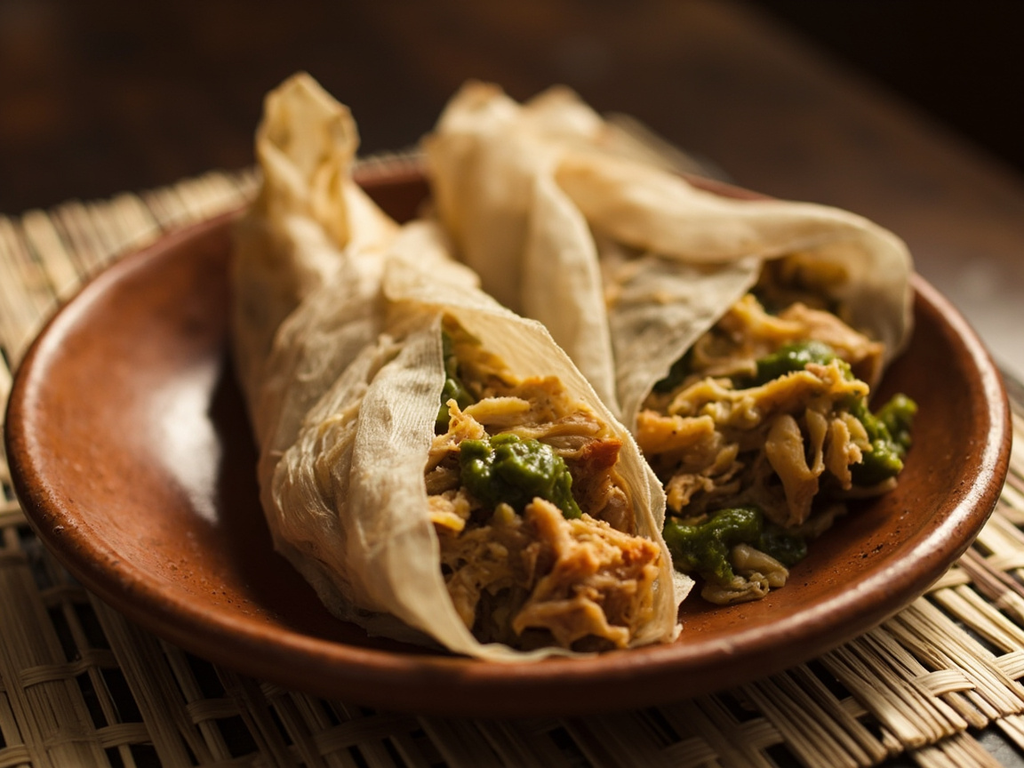
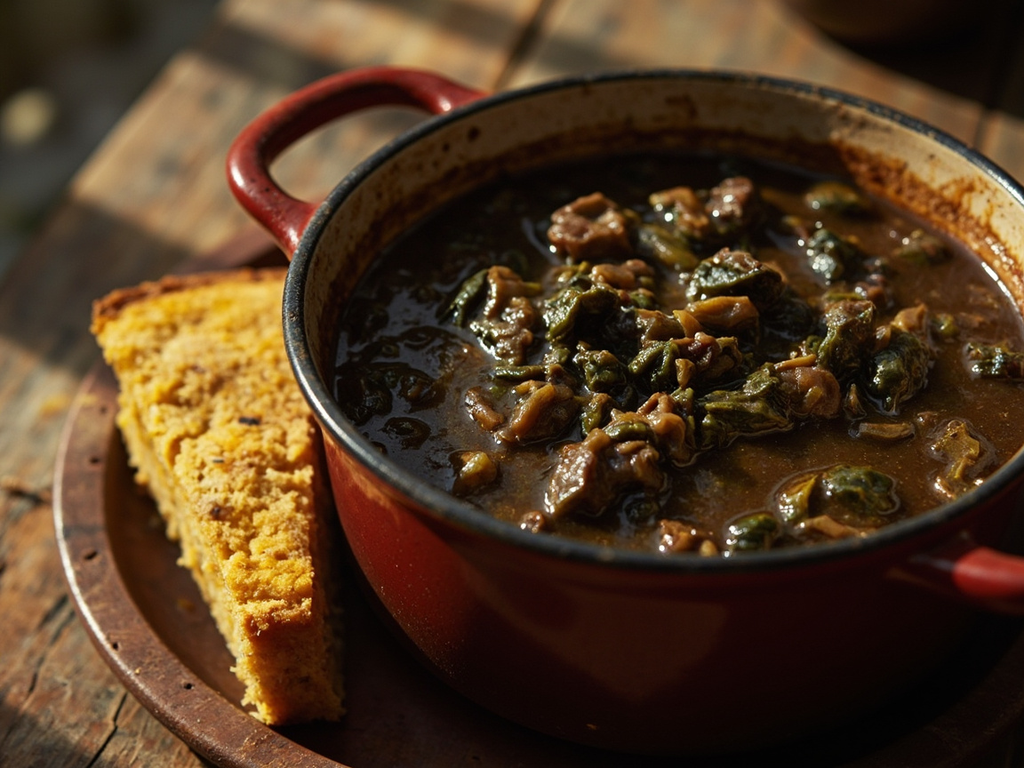
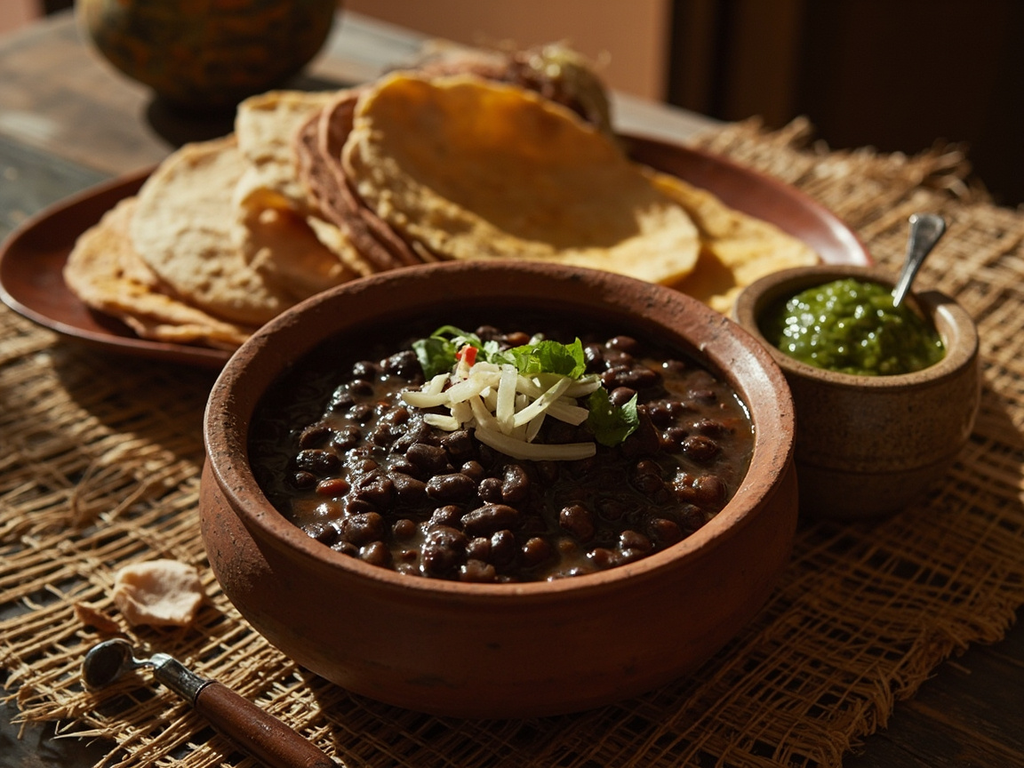
Black beans simmered long in their fragrant juice, mashed or whole, placed on hot tortillas fresh from the comal and spiced with a chili salsa. The simplest and most universal meal of the Mexican countryside.
Mira, compañero, listen well: here we don't eat like the rich folks in the capital. At home in Anenecuilco, mother puts the frijoles in the clay pot at first light, with a sprig of epazote, and they simmer while we work the milpa. You take your hot tortilla, roll it up with beans and a little spicy salsa, and there you have strength for the day. The land gives us corn, corn gives us life. That's why we fight: Tierra y Libertad.
- •Nixtamalized corn (masa) — enough to make a stack of tortillas (base for tortillas)
- •Black beans — a handful per person (heart of the dish)
- •Epazote — a few sprigs (aromatic herb)
- •Fresh chile (serrano or chile de árbol) — to taste (salsa)
- •Onion — one small (aromatic)
- •Salt — to taste (seasoning)
Frijoles de la Olla and Tortillas on the Comal
Black beans simmered long in their fragrant juice, mashed or whole, placed on hot tortillas fresh from the comal and spiced with a chili salsa. The simplest and most universal meal of the Mexican countryside.
Why this dish? This was the exact daily fare of Zapata and the peasants of Anenecuilco: corn tortillas, black beans, and chile. Before becoming the leader of the Army of the South, he grew up with this dish in his mouth, morning and evening, like every child of Morelos.
Mira, compañero, listen well: here we don't eat like the rich folks in the capital. At home in Anenecuilco, mother puts the frijoles in the clay pot at first light, with a sprig of epazote, and they simmer while we work the milpa. You take your hot tortilla, roll it up with beans and a little spicy salsa, and there you have strength for the day. The land gives us corn, corn gives us life. That's why we fight: Tierra y Libertad.
Ingredients (period version)
- Nixtamalized corn (masa) — enough to make a stack of tortillas (base for tortillas)
- Black beans — a handful per person (heart of the dish)
- Epazote — a few sprigs (aromatic herb)
- Fresh chile (serrano or chile de árbol) — to taste (salsa)
- Onion — one small (aromatic)
- Salt — to taste (seasoning)
Ingredients
- Corn tortillas (store-bought or homemade) — 8 to 10 (base of the meal)
- Dried black beans — 250 g (soaked overnight) (heart of the dish)
- Dried or fresh epazote — 1 sprig (aromatic herb)
- White onion — 1/2 (aromatic)
- Fresh serrano chiles — 2 to 3 (salsa)
- Tomatillos (or lime juice if unavailable) — 4 (or 1 lime) (green salsa)
- Salt — to taste (seasoning)
Method
- Drain the soaked beans, cover with cold water, add the half-onion and epazote. Bring to a simmer and cook for 1.5 to 2 hours without salt, until tender.
- Salt only at the end of cooking (otherwise the beans harden) and let the liquid reduce to a creamy sauce.
- For the green salsa: dry-roast the chiles and tomatillos in a pan, then crush them in a mortar with a little salt.
- Reheat the tortillas on a pan or comal until they puff up and smell of toasted corn.
- Serve the frijoles in a bowl, accompanied by hot tortillas and salsa. Eat by rolling the beans in the tortilla.
How it was made : In Zapata's time, corn was nixtamalized at home (soaked in limewater to release nutrients), ground by hand on the metate, then pressed and cooked on a clay comal. The beans cooked for hours in a clay olla set on the embers. This was the dietary staple of millions of peasants.
The contemporary twist : A tortilla folded into a taco of beans, topped with a little crumbled fresh cheese and cilantro: the peasant almuerzo becomes an irresistible street antojito.
Sources : Pilcher, Jeffrey M., ¡Que vivan los tamales! Food and the Making of Mexican Identity, University of New Mexico Press, 1998 · Bauer, Arnold J., Goods, Power, History: Latin America's Material Culture, Cambridge University Press, 2001
Emiliano Zapata · Charactorium