 flip
flipCorn Tamales in Husks
Corn Tamales in Husks
Why this dish? Vasconcelos, a son of Oaxaca who later became minister in Mexico City, kept a tenderness for his country's cuisine that he claimed even during his European stays. The tamal, eaten standing early in the morning or shared with family, was the quintessential daily dish of every Mexican, from muleteer to scholar.
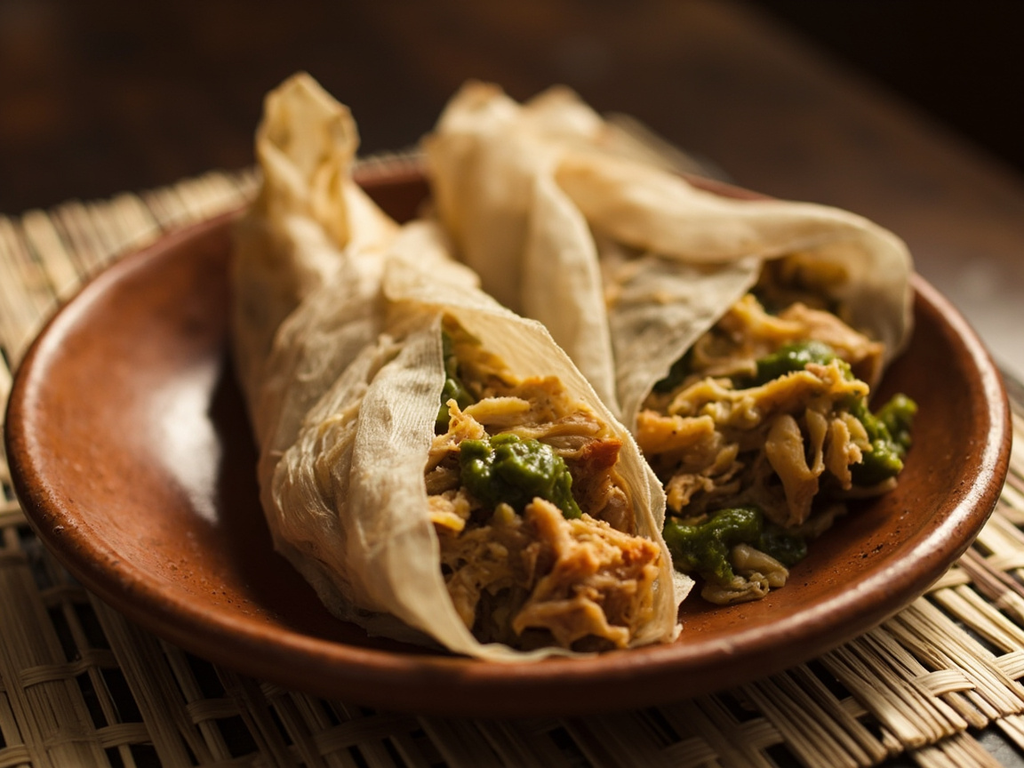
Small packets of masa filled, wrapped in a corn husk, and steamed. You unwrap them hot; the tender dough peels away from the husk like a page turning.
Let me tell you about a dish that my homeland kneaded long before the empires of Europe. In the morning, in the streets of Mexico City, you could hear the vendor singing her steaming tamales, and I, the minister, would stop like the child of Oaxaca that I remained. Unfold the corn husk with respect, for it is there, in this humble grain, that the soul of the cosmic race lives — not the food of lords, but that of the entire people. Eat it hot, and you will taste the very earth of Mexico.
- •Nixtamalized corn masa — a good bowlful (base dough)
- •Lard — a piece the size of an egg (binder, softness)
- •Dried corn husks — about twenty (cooking wrapper)
- •Shredded chicken or meat — according to budget (filling)
- •Chili and salt — to taste (seasoning)
Corn Tamales in Husks
Small packets of masa filled, wrapped in a corn husk, and steamed. You unwrap them hot; the tender dough peels away from the husk like a page turning.
Why this dish? Vasconcelos, a son of Oaxaca who later became minister in Mexico City, kept a tenderness for his country's cuisine that he claimed even during his European stays. The tamal, eaten standing early in the morning or shared with family, was the quintessential daily dish of every Mexican, from muleteer to scholar.
Let me tell you about a dish that my homeland kneaded long before the empires of Europe. In the morning, in the streets of Mexico City, you could hear the vendor singing her steaming tamales, and I, the minister, would stop like the child of Oaxaca that I remained. Unfold the corn husk with respect, for it is there, in this humble grain, that the soul of the cosmic race lives — not the food of lords, but that of the entire people. Eat it hot, and you will taste the very earth of Mexico.
Ingredients (period version)
- Nixtamalized corn masa — a good bowlful (base dough)
- Lard — a piece the size of an egg (binder, softness)
- Dried corn husks — about twenty (cooking wrapper)
- Shredded chicken or meat — according to budget (filling)
- Chili and salt — to taste (seasoning)
Ingredients
- Masa harina (nixtamalized corn flour) — 500 g (base dough)
- Warm chicken broth — about 350 ml (hydration)
- Lard (or butter) — 150 g (softness)
- Dried corn husks — 25, soaked 30 min (wrapper)
- Cooked shredded chicken — 300 g (filling)
- Green salsa (tomatillo + green chili) — 200 ml (savory filling)
- Salt, baking powder — 1 tsp each (seasoning, lightness)
Method
- Beat the lard until fluffy, then gradually incorporate the masa harina, broth, salt, and baking powder until a smooth dough that floats in a glass of water.
- Drain the soaked corn husks.
- Spread 2 tbsp of dough on the wide part of a husk, place chicken and green salsa in the center.
- Fold the edges of the husk to enclose the filling, then fold down the tip.
- Stand the tamales upright in a steamer and cook for 60 to 75 minutes, until the dough cleanly separates from the husk.
- Let rest 10 minutes before unwrapping.
How it was made : Before steamers, a large pot (olla) was lined with husks, tamales were arranged on a bed of stalks over boiling water, and covered with a cloth. The masa was ground by hand on the metate, a grinding stone inherited from pre-Hispanic times.
The contemporary twist : Serve two tamales unwrapped on a slate, husk opened like a fan, a drizzle of sour cream and some toasted pumpkin seeds: the humble packet becomes a chef's plate.
Sources : Josefina Velázquez de León, Platillos Regionales de la República Mexicana (1946) · Diana Kennedy, The Cuisines of Mexico (1972)
José Vasconcelos · Charactorium