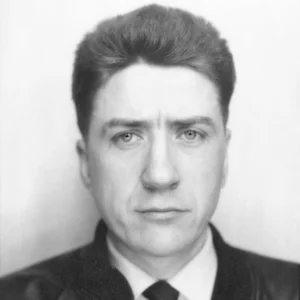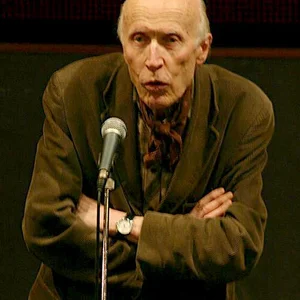

Éric Rohmer, whose real name was Maurice Schérer, was a French filmmaker, critic, and screenwriter, and a major figure of the French New Wave. He is famous for his cycles of films with finely crafted dialogue exploring the emotional and moral hesitations of his characters.
Éric Rohmer(1920 — 2010)
Éric Rohmer
France
6 min read
Frequently asked questions
Key Facts
- Born in 1920 in Tulle (or Nancy, depending on the source) under the name Maurice Schérer, died in 2010 in Paris.
- Editor-in-chief of the Cahiers du cinéma from 1957 to 1963, after co-founding the magazine La Gazette du cinéma.
- Directed the cycle of Six Moral Tales (1960s–1972), including 'My Night at Maud's' (1969), nominated for an Oscar.
- Golden Lion at the Venice Film Festival in 2001 for his lifetime achievement.
- Author of the cycles 'Comedies and Proverbs' (1980s) and 'Tales of the Four Seasons' (1990s).
Works & Achievements
A pioneering study that rehabilitated Alfred Hitchcock as a major artist and exemplified the “politique des auteurs” championed by the Cahiers du cinéma.
Rohmer's first feature film, the portrait of a penniless musician wandering through a deserted, summertime Paris.
The high point of the “Six Moral Tales,” this dialogue-driven film about faith and desire became a worldwide success and earned Oscar nominations.
A moral tale about desire and temptation on the shores of an Alpine lake, regarded as one of his masterpieces.
A carefully crafted adaptation of a novella by Kleist, awarded the Grand Prix of the Jury at Cannes.
A summer comedy of romantic misunderstandings that won Rohmer the Silver Bear for Best Director at Berlin.
An improvised portrait of a lonely young woman in search of happiness, crowned with the Golden Lion at Venice.
A reconstruction of the French Revolution using digital painted backdrops, a bold technical feat from an octogenarian filmmaker.
Anecdotes
Maurice Schérer invented the pen name "Éric Rohmer" by combining two names he admired: that of director Erich von Stroheim and that of Sax Rohmer, the author of the Fu Manchu novels. He was so attached to keeping his double life secret that his own mother died without ever knowing that her son was a famous filmmaker.
Before making films, Rohmer was a literature teacher, then editor-in-chief of the magazine *Cahiers du cinéma* from 1957 to 1963. Older than his young fellow critics — Godard, Truffaut, Chabrol, Rivette — who were moving into directing, he was affectionately nicknamed "le grand Momo."
Rohmer was famous for his frugality and discretion: he did not drive, got around by metro and bus, and shot his films with very small crews and tiny budgets. This economy of means allowed him to retain total artistic freedom.
For *The Green Ray* (1986), Rohmer let his actors improvise much of the dialogue from simple situations. This film, shot almost without a written screenplay, nevertheless won the Golden Lion at the Venice Film Festival.
For *The Lady and the Duke* (2001), Rohmer, then over 80 years old, recreated the Paris of the French Revolution using hand-painted sets that were then integrated digitally, blending classical painting with modern technology.
Primary Sources
Hitchcock is one of the greatest inventors of forms in the entire history of cinema.
Classical cinema is the kind that believes in both reality and fiction at once, making the screen the place of a truth.
It is not so much what my characters do that interests me as what they think while doing it.
I like my films to show people talking; for me, language is the very heart of the moral adventure.
Key Places
Birthplace of Maurice Schérer in 1920, in the heart of a provincial France he would leave for Paris.
City where Rohmer taught, edited the Cahiers du cinéma, built his life as a filmmaker, and died in 2010. The setting of many films such as “Love in the Afternoon.”
City in Auvergne where “My Night at Maud's” takes place, filmed in its real wintry setting and its cathedral.
Beaches and seaside resorts that serve as the backdrop for several of the “Tales of the Four Seasons” and for “Pauline at the Beach.”
Site of his crowning achievement: Rohmer received the Golden Lion there in 1986 for “The Green Ray.”
Typical Objects

A lightweight camera using a reduced, inexpensive film format that allowed the New Wave to shoot in real locations with small crews. Rohmer stayed loyal to it throughout his career out of a concern for economy and freedom.

A portable Swiss sound recorder that became the standard tool for “direct sound” in cinema. It allowed dialogue and ambient sounds to be captured right on the shooting location.

The working text where Rohmer chiseled the dialogue of his characters, the heart of his cinema. For some films, by contrast, he let his actors largely improvise them.

A critical magazine founded in 1951 where Rohmer wrote and later served as editor-in-chief. It forged the “auteur theory” and launched the filmmakers of the New Wave.

The photochemical medium onto which the film's images are printed. Its handling, developing, and editing set the rhythm of all the filmmaker's work before the digital era.

A metro ticket or season pass that Rohmer used to get around, refusing a car out of modesty. The symbol of his frugal and unassuming way of life.
School Curriculum
Vocabulary & Tags
Key Vocabulary
Daily Life
Morning
Rohmer often began his day with reading and writing, polishing the dialogue of his screenplays. An early riser and methodical, he liked to work in peace and quiet before his professional appointments.
Afternoon
The afternoon might be devoted to production meetings, scouting real locations, or preparing for shoots. He got around Paris by metro and on foot, a frugal man who refused to own a car.
Evening
In the evening, he frequented cinemas, film clubs, and the Cinémathèque, or wrote his critical articles. Watching films remained a daily nourishment for him.
Food
Renowned for his sobriety, Rohmer led a simple life without luxury, much like his film budgets. He avoided ostentation, preferring the modest habits of a discreet man.
Clothing
He dressed with great discretion, in simple, nondescript suits, shunning the image of the society filmmaker. This sartorial sobriety was part of the mystery he maintained around himself.
Housing
Rohmer lived modestly in Paris, dividing his time between his home and the offices of his production company, Les Films du Losange. He jealously kept his private life away from prying eyes.
Historical Timeline
Period Vocabulary
Liens externes & ressources
Références
Œuvres
Le Signe du lion
1959
Le Genou de Claire
1970
La Marquise d'O...
1976
Pauline à la plage
1983
Le Rayon vert
1986