 flip
flipPalm Wine for Libations
Palm Wine for Libations
Why this dish? The anchor states: palm wine was reserved for ceremonies among Pokou's people. Queen and sacred figure, she presides over libations where this sap is poured to the ancestors before any major decision — such as the one that led her people to the Comoé.
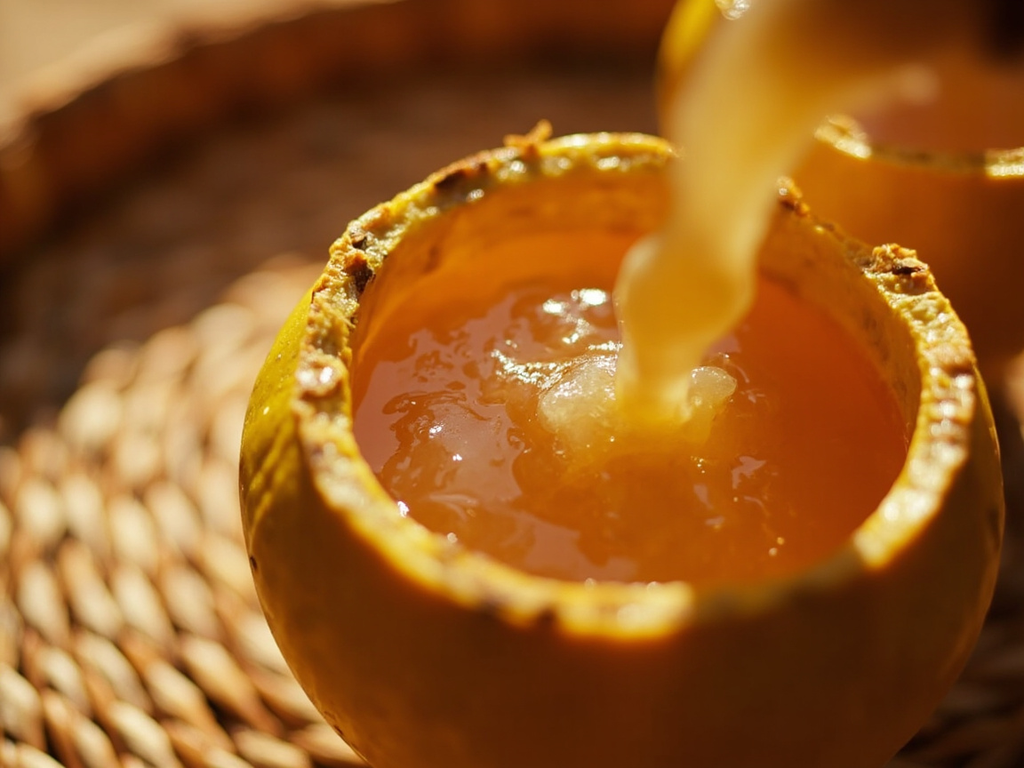
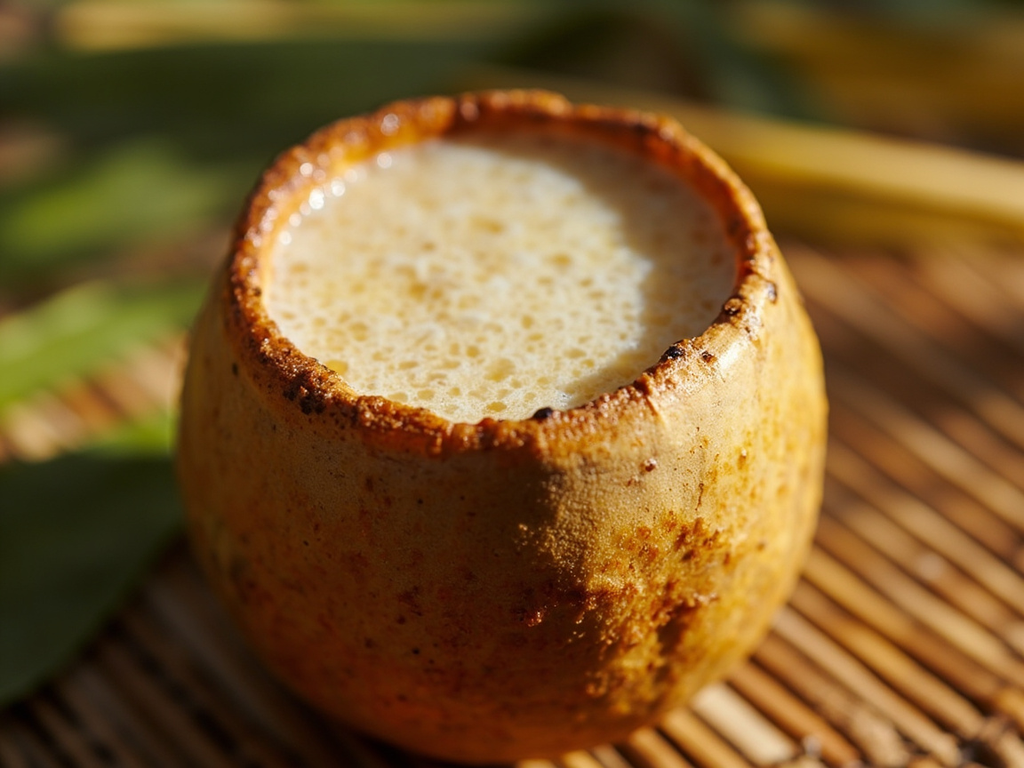
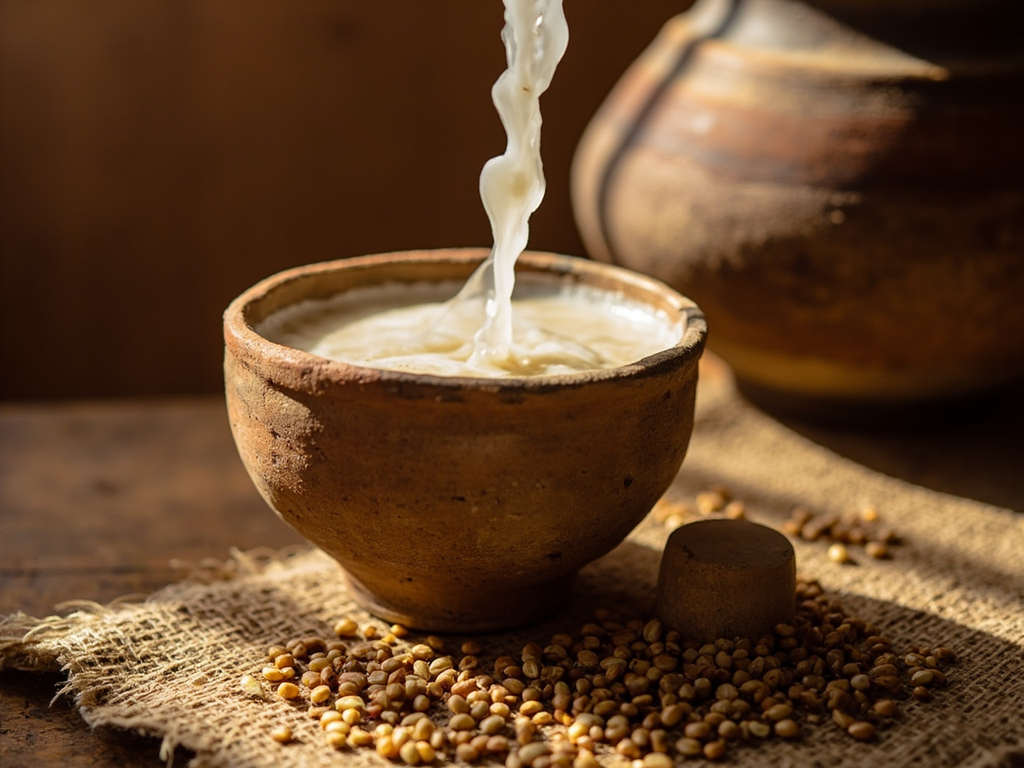
The milky sap of the palm tree, collected at dawn and left to ferment for a few hours: sweet and fizzy in the morning, livelier and more acidic by evening. A few drops are always poured on the ground for the ancestors before drinking. Inspired by the rite, not its reproduction.
Palm wine is not an everyday drink, mark that. The tapper climbs the palm before the cock crows, cuts the trunk and hangs the calabash; the sap flows, white as milk. In the morning it is sweet and tickles the tongue; if left until evening, it becomes sharp and turns the heads of the careless. Before my lips touch it, I always pour some to the earth, for those who have gone before us — and you know which little one I mourn. Drink after the ancestors, never before.
- •Fresh palm sap (raphia or oil palm) — one calabash (drink, fermentable base)
Palm Wine for Libations
The milky sap of the palm tree, collected at dawn and left to ferment for a few hours: sweet and fizzy in the morning, livelier and more acidic by evening. A few drops are always poured on the ground for the ancestors before drinking. Inspired by the rite, not its reproduction.
Why this dish? The anchor states: palm wine was reserved for ceremonies among Pokou's people. Queen and sacred figure, she presides over libations where this sap is poured to the ancestors before any major decision — such as the one that led her people to the Comoé.
Palm wine is not an everyday drink, mark that. The tapper climbs the palm before the cock crows, cuts the trunk and hangs the calabash; the sap flows, white as milk. In the morning it is sweet and tickles the tongue; if left until evening, it becomes sharp and turns the heads of the careless. Before my lips touch it, I always pour some to the earth, for those who have gone before us — and you know which little one I mourn. Drink after the ancestors, never before.
Ingredients (period version)
- Fresh palm sap (raphia or oil palm) — one calabash (drink, fermentable base)
Ingredients
- Fresh palm wine (African grocery) OR failing that, slightly cloudy white grape juice, not too sweet — 1 L (ceremonial drink (modern evocation))
- A slice of lime (optional) — 1 (to recall the acidic edge)
Method
- If you have real palm wine: serve it very fresh, the same day, noting that it becomes more acidic by the hour.
- Otherwise, for evocation: pour the cloudy grape juice into a calabash or wooden bowl.
- Optionally add a thin slice of lime for the characteristic acidic hint.
- Before serving, in the spirit of the rite, symbolically pour a few drops on the ground or at the foot of a plant.
- Serve fresh, in small quantities, as a drink of honor, not of thirst.
How it was made : Palm wine (bandji) is harvested by tapping the inflorescence or trunk of the palm; the sap ferments naturally thanks to wild yeasts, passing in a few hours from sweet and fizzy to sour and alcoholic. Reserved for ceremonies, weddings, and libations to ancestors, it was not an ordinary drink.
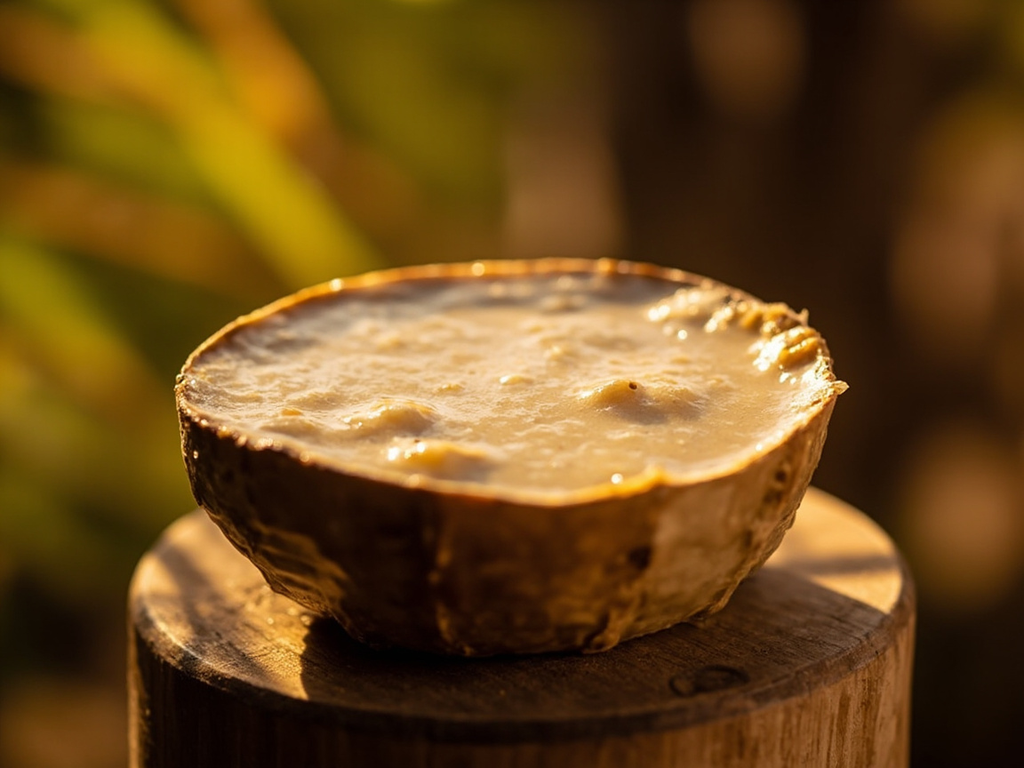
The contemporary twist : Serve in half a coconut or a light wood cup, just warmed by the sun, to recreate the temperature of a calabash in the early morning.
Abla Pokou II · Charactorium