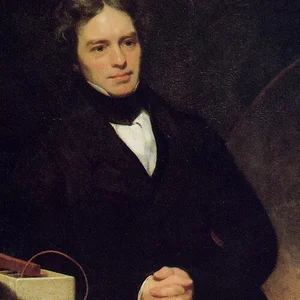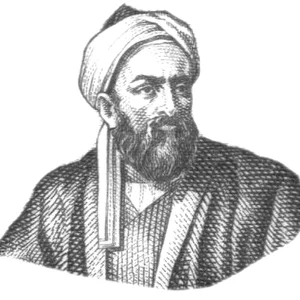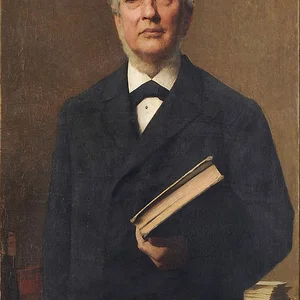

Nineteenth-century German librarian and linguist, regarded as a pioneer in the decipherment of Maya writing. He was the first to understand the calendar system and astronomical calculations of the Dresden Codex.
Ernst Förstemann(1822 — 1906)
Ernst Förstemann
royaume de Prusse
5 min read
Frequently asked questions
Key Facts
- Born in 1822 in Danzig and died in 1906 in Charlottenburg
- Head librarian of the Royal Saxon Library in Dresden
- Deciphered the calendar system of the Maya Dresden Codex in the 1880s-1890s
- Identified the Venus tables and Maya astronomical calculations
- Author of pioneering works on Germanic onomastics (Old German personal names)
Works & Achievements
A monumental collection of ancient Germanic personal and place names, a reference work of German philology.
A faithful color reproduction of the Maya manuscript, which opened the codex to international study.
Understanding of the Long Count, the ritual calendar, and the Maya numeral system with its zero.
Demonstration that the codex predicts the cycles of Venus and eclipses, revealing Maya astronomy.
A scholarly commentary synthesizing his discoveries about the Dresden Codex, foundational to Maya epigraphy.
A study of the Maya day and month signs, a lasting contribution to epigraphy.
Anecdotes
Förstemann never set foot in Central America and probably never saw a real Maya city with his own eyes. Yet, from his library in Dresden, he cracked one of the greatest mysteries of Maya writing: he was working on a reproduction of the Dresden Codex, whose edition he had himself supervised.
By studying the columns of dots and bars in the Dresden Codex, Förstemann understood that the Maya used a numeral system with a symbol for zero, long before that concept reached Europe. He was the first to demonstrate it for Maya writing.
Förstemann managed to decode the astronomical tables in the Dresden Codex that predict the movements of the planet Venus with astonishing accuracy, as well as eclipses. He thus revealed that Maya priests were remarkable astronomers capable of calculations spanning thousands of years.
A librarian by profession, Förstemann was first and foremost a specialist in ancient German names and medieval manuscripts. It was almost by chance, having the precious Maya codex held in Dresden close at hand, that he became a pioneer in the epigraphy of a distant civilization.
Förstemann understood how the Maya “Long Count” worked, the calendar that counts the days elapsed since a mythical starting date, located more than 3,000 years before our era. This discovery later made it possible to date Maya monuments precisely.
Primary Sources
Detailed commentary on the Dresden Codex in which Förstemann explains the Maya calendar system and the structure of the numerical tables on the “Venus page.”
Series of papers in which Förstemann sets out his progress in deciphering Maya writing and numeration, in particular the use of the zero value.
Vast collection of ancient Germanic personal and place names, Förstemann's major philological work before his Maya studies.
Study devoted to the Maya hieroglyphs in which Förstemann analyzes the signs for the days and months of the calendar.
Key Places
Baltic port city, then Prussian, where Ernst Förstemann was born in 1822.
University where Förstemann studied theology and classical philology, the training behind his scholarly rigor.
Institution where Förstemann served as head librarian and which held the Dresden Codex, central to his Maya research.
Town near Berlin where Förstemann died in 1906.
Town in Thuringia where Förstemann worked as a teacher and librarian before moving to Dresden.
Typical Objects

Maya manuscript made of fig-tree bark (amate paper) folded accordion-style, covered in glyphs and astronomical tables. It is the central object of study for Förstemann.

Color facsimile of the Dresden Codex that Förstemann had printed to circulate the manuscript. He worked mainly on this faithful reproduction.

Page of the codex calculating the cycles of the planet Venus as the morning and evening star. Förstemann unraveled how it worked mathematically.

Maya notation in which a dot equals one and a bar equals five, with a special sign for zero. Förstemann deciphered this vigesimal numeral system.

Working tools of the head librarian for inventorying and preserving the manuscripts of Dresden. Förstemann devoted most of his official career to them.

Tools of learned writing in the 19th century, used to copy glyphs and compose philological commentary. Förstemann filled notebooks with numerical tables.
School Curriculum
Vocabulary & Tags
Key Vocabulary
Daily Life
Morning
Förstemann began his day at the Royal Library of Dresden, opening the rooms and overseeing the preservation of the manuscripts. Part of the morning was devoted to the administrative duties of the chief librarian.
Afternoon
In the afternoon, he pored over the reproduction of the Dresden Codex, lining up the columns of dots and bars in his notebooks. He tirelessly compared the numbers to crack the logic of the Maya calendar.
Evening
In the evening, in the quiet of his study, he wrote his scholarly commentaries and corresponded with other Americanists across Europe. The oil lamp lit up pages covered with numerical tables.
Food
He shared the middle-class diet of 19th-century Germany: rye bread, potatoes, cured meats, soups, and locally brewed beer. Coffee accompanied the long hours of intellectual work.
Clothing
As a respectable scholar and civil servant, Förstemann wore a dark frock coat, a waistcoat, a stiff-collared shirt, and a necktie. Spectacles completed the look of the scholar bent over his manuscripts.
Housing
He lived in a middle-class dwelling in a German town, furnished with bookcases and a desk cluttered with books. His true intellectual home, however, remained the great library where he worked.
Historical Timeline
Period Vocabulary
Liens externes & ressources
Références
Œuvres
Altdeutsches Namenbuch
1856-1872
Édition chromolithographique du Codex de Dresde
1880
Déchiffrement du système calendaire maya
1887-1901
Interprétation de la table de Vénus
vers 1891
Erläuterungen zur Mayahandschrift
1901
Die Mayahieroglyphen
1902