 flip
flipLamb Tagine with Prunes and Saffron
Lamb Tagine with Prunes and Saffron
Why this dish? In 1832, Delacroix accompanied a diplomatic mission to Morocco and stayed in Meknès and Tangier. This trip transformed his vision of color and light. His Moroccan sketchbooks bear witness to tables where lamb simmered with honey and spices — a flavor that, like the light of the Maghreb, marked him for life.
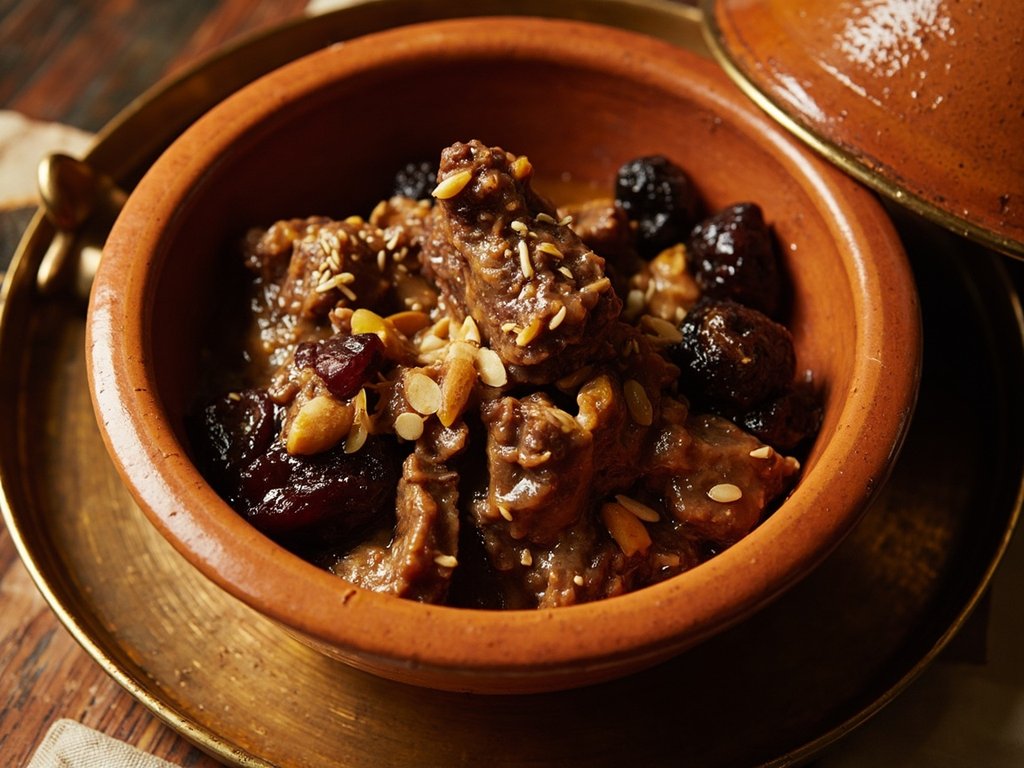
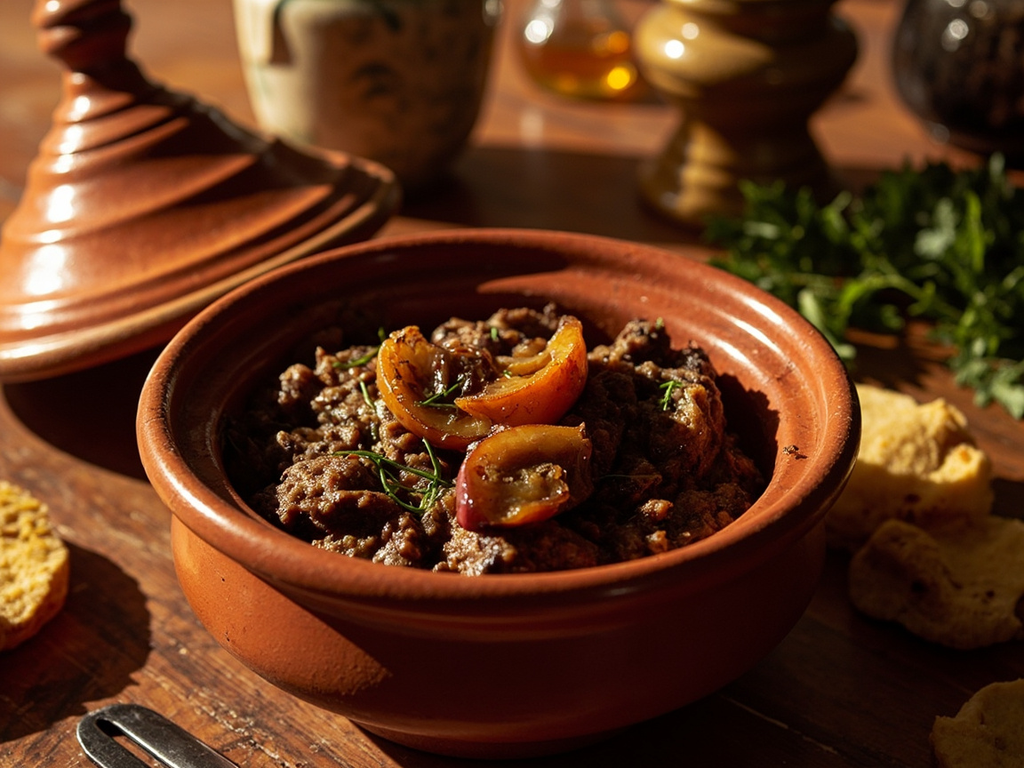
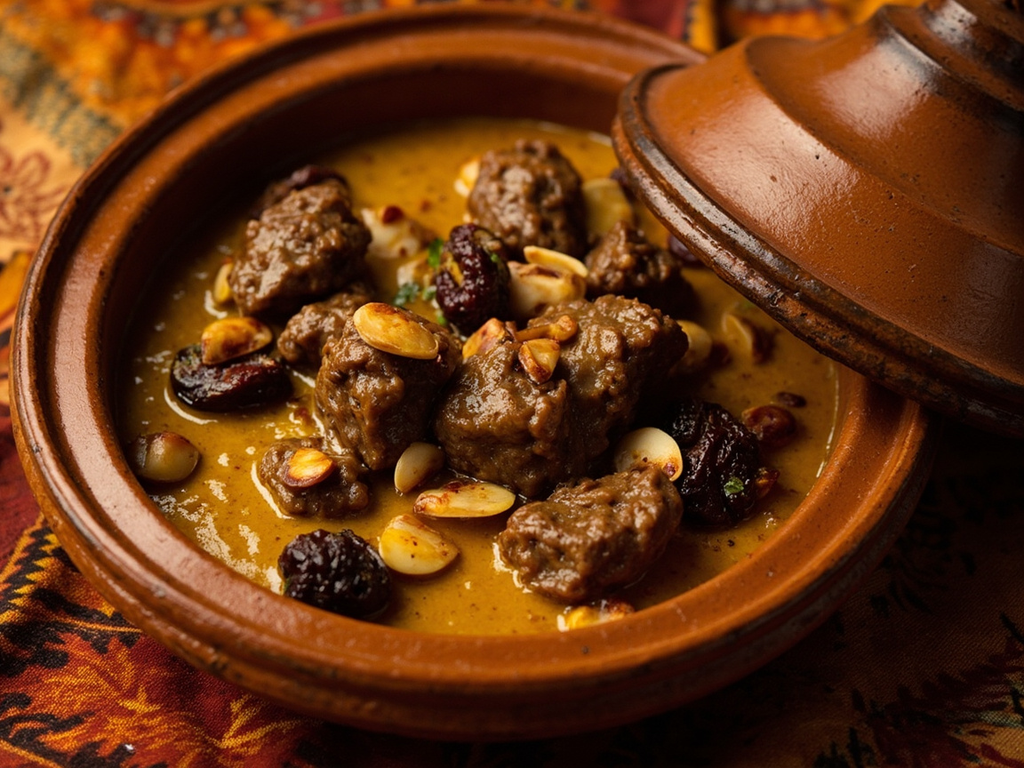
A melt-in-the-mouth lamb stew, coated in an amber sauce with saffron and cinnamon, sweetened by prunes and honey, perfumed with toasted almonds. The quintessential shared dish of Moroccan cuisine, served at the center of the table.
In Morocco, my friends, I saw color as never in France — and the palate tastes what the eye beholds. In Meknès, I was served a lamb meat mixed with prunes and honey, where saffron dyed the sauce a gold that no brush equals. I did not know that one could marry sweet and meat like that, and I was struck as before a living painting. Believe me: these people who sleep under the sun know, at their table, what our academies seek in vain — the perfect accord of hot and tender.
- •Lamb shoulder — a fine piece (stewed meat)
- •Prunes — a handful (fruity sweetness)
- •Honey — a drizzle (sweet binder)
- •Saffron — a few threads (signature color and perfume)
- •Cinnamon, ginger — to taste (warm spices)
- •Onions — several (melting base)
- •Almonds — a handful (crunchy garnish)
Lamb Tagine with Prunes and Saffron
A melt-in-the-mouth lamb stew, coated in an amber sauce with saffron and cinnamon, sweetened by prunes and honey, perfumed with toasted almonds. The quintessential shared dish of Moroccan cuisine, served at the center of the table.
Why this dish? In 1832, Delacroix accompanied a diplomatic mission to Morocco and stayed in Meknès and Tangier. This trip transformed his vision of color and light. His Moroccan sketchbooks bear witness to tables where lamb simmered with honey and spices — a flavor that, like the light of the Maghreb, marked him for life.
In Morocco, my friends, I saw color as never in France — and the palate tastes what the eye beholds. In Meknès, I was served a lamb meat mixed with prunes and honey, where saffron dyed the sauce a gold that no brush equals. I did not know that one could marry sweet and meat like that, and I was struck as before a living painting. Believe me: these people who sleep under the sun know, at their table, what our academies seek in vain — the perfect accord of hot and tender.
Ingredients (period version)
- Lamb shoulder — a fine piece (stewed meat)
- Prunes — a handful (fruity sweetness)
- Honey — a drizzle (sweet binder)
- Saffron — a few threads (signature color and perfume)
- Cinnamon, ginger — to taste (warm spices)
- Onions — several (melting base)
- Almonds — a handful (crunchy garnish)
Ingredients
- Boneless lamb shoulder — 1 kg cut into pieces (stewed meat)
- Pitted prunes — 250 g (fruity sweetness)
- Honey — 2 tablespoons (sweet binder)
- Saffron — 1 generous pinch of threads (signature color and perfume)
- Cinnamon — 1 stick + 1 tsp ground (warm spice)
- Ground ginger — 1 teaspoon (warm spice)
- Onions — 3 large (melting base)
- Blanched almonds — 80 g (crunchy garnish)
- Sesame seeds — 1 tablespoon (finishing)
- Olive oil, salt, pepper — to taste (cooking and seasoning)
Method
- Infuse the saffron in a little warm water. Slice the onions.
- Sear the lamb pieces in oil in a heavy pot, remove them, then melt the onions in the same pot.
- Return the meat, add saffron, cinnamon, ginger, salt, and pepper; cover with water and simmer covered for 1 hour 30 minutes over low heat.
- Add the prunes and honey; continue for 20-30 minutes until the meat is tender and the sauce syrupy.
- Toast the almonds in a dry pan. Sprinkle the tagine with almonds and sesame seeds before serving, at the center of the table.
How it was made : The sweet-and-savory lamb tagine with prunes and honey is a great classic of Moroccan tables, served especially at receptions. Saffron, cinnamon, and honey mark the sweet-savory balance typical of Maghreb cuisine, of which Delacroix was an amazed witness in 1832.
The contemporary twist : Served in a clay tagine dish, golden mirror sauce and almonds arranged in a fan — a direct homage to the painter's Moroccan sketchbooks.
Eugène Delacroix · Charactorium