 flip
flipPotage Crécy à la Parisienne
Potage Crécy à la Parisienne
Why this dish? Delacroix, of fragile health, followed a light diet supervised by his housekeeper Jenny Le Guillou. This sweet and nourishing carrot soup, classic opening of any Parisian bourgeois meal, exactly matches the simple and moderate cuisine he often ate alone in his studio on Place Furstenberg.
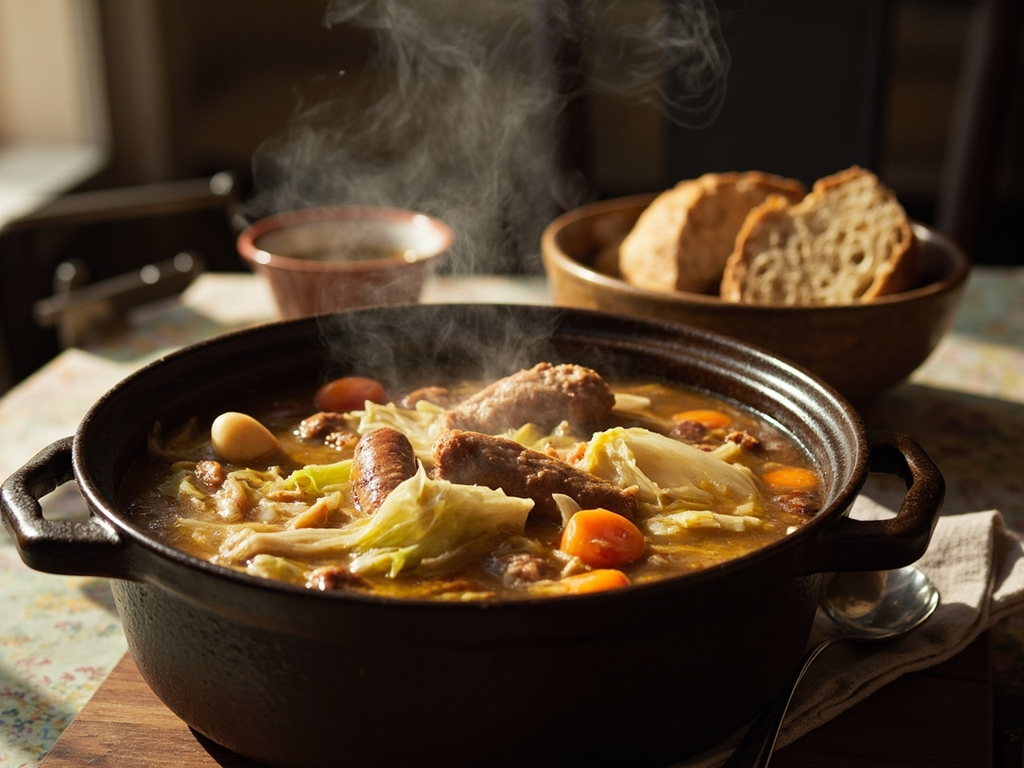
A carrot velouté thickened with rice, both sweet and comforting, served very hot at the start of the meal. Potage Crécy is one of the great classics of 19th-century bourgeois cuisine, modest but refined.
You see, my health does not suffer excesses, and Jenny, who watches over me better than a mother, serves me nothing that could weigh on the stomach of a man wholly devoted to his work. This carrot soup, I take it alone at dusk, when the light leaves me and I finally set down my brushes. One chooses well-ripened carrots, lets them melt gently in butter before drowning them in broth — the secret is patience, as in painting. A spoonful, and I feel ready again for my decorations at Saint-Sulpice.
- •Carrots — a good bunch (sweet base and color)
- •Butter — a generous knob (fat for sautéing)
- •Rice — a handful (thickening for the soup)
- •Pot-au-feu broth — enough to cover (savory base)
- •Salt, pinch of sugar — to taste (seasoning)
Potage Crécy à la Parisienne
A carrot velouté thickened with rice, both sweet and comforting, served very hot at the start of the meal. Potage Crécy is one of the great classics of 19th-century bourgeois cuisine, modest but refined.
Why this dish? Delacroix, of fragile health, followed a light diet supervised by his housekeeper Jenny Le Guillou. This sweet and nourishing carrot soup, classic opening of any Parisian bourgeois meal, exactly matches the simple and moderate cuisine he often ate alone in his studio on Place Furstenberg.
You see, my health does not suffer excesses, and Jenny, who watches over me better than a mother, serves me nothing that could weigh on the stomach of a man wholly devoted to his work. This carrot soup, I take it alone at dusk, when the light leaves me and I finally set down my brushes. One chooses well-ripened carrots, lets them melt gently in butter before drowning them in broth — the secret is patience, as in painting. A spoonful, and I feel ready again for my decorations at Saint-Sulpice.
Ingredients (period version)
- Carrots — a good bunch (sweet base and color)
- Butter — a generous knob (fat for sautéing)
- Rice — a handful (thickening for the soup)
- Pot-au-feu broth — enough to cover (savory base)
- Salt, pinch of sugar — to taste (seasoning)
Ingredients
- Carrots — 600 g (sweet base and color)
- Butter — 30 g (fat for sautéing)
- Short-grain rice — 40 g (thickening)
- Chicken or pot-au-feu broth — 1 liter (savory base)
- Onion — 1 small (aromatic base)
- Salt, 1 pinch of sugar — to taste (seasoning)
Method
- Slice the onion and cut the carrots into rounds.
- Melt the butter in a pot, add onion and carrots, and sweat for 10 minutes over low heat without browning.
- Pour in the broth, add the rice, salt, and the pinch of sugar.
- Simmer covered for 30 minutes, until carrots and rice are very tender.
- Blend until smooth, adjust seasoning, and serve very hot, optionally with a pat of fresh butter.
How it was made : In the 19th century, soup invariably opened the meal, from the humblest to the richest. Rice, more economical than cream, was used to thicken soups in bourgeois kitchens. The broth often came from the previous day's pot-au-feu meat — nothing was wasted.
The contemporary twist : A swirl of unsweetened whipped cream and a few toasted cumin seeds on top, a nod to Morocco that haunted the painter's imagination.
Eugène Delacroix · Charactorium