 flip
flipCriollo Puchero
Criollo Puchero
Why this dish? Puchero is the everyday meal of modest Argentine families like Eva's in Junín: a single pot where meat, marrow bones and seasonal vegetables simmer, from which you first draw a broth, then the dish. Economical and nourishing, it is exactly the simple, criollo cooking that the file describes as her own.
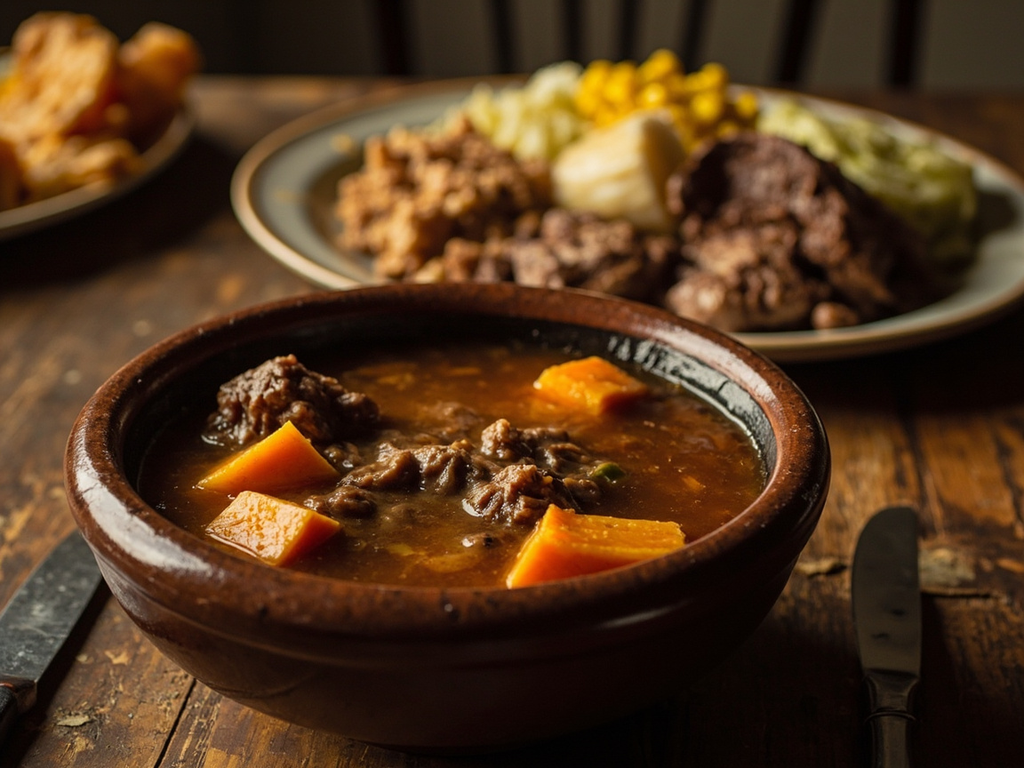
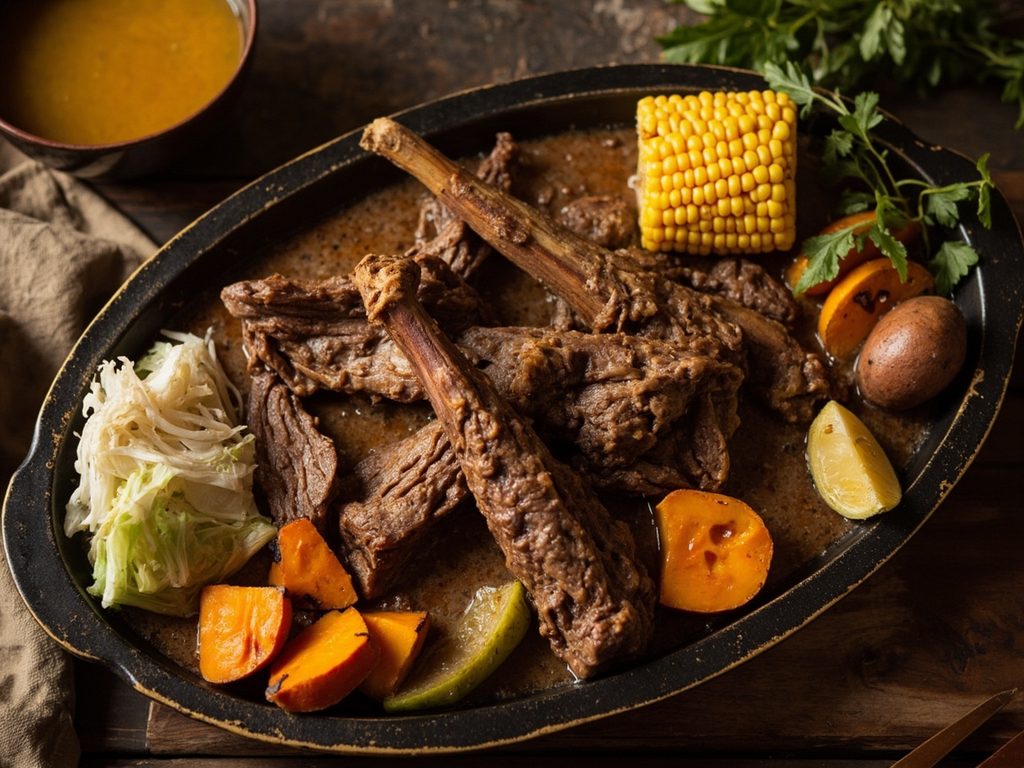
Argentine pot-au-feu where beef, marrow bones, sweet potato, squash, cabbage and corn cook together; the broth is served first with small pasta, then the meats and vegetables.
When I was little, in Junín, puchero was the whole meal—there was only one pot, but it fed the whole table. You put in what you had: a cheap piece of meat, a bone for flavor, the squash, the cabbage from the garden. First you drink the broth with little pasta, and only then do you share the meat. Nothing is wasted, my dear ones, nothing is thrown away: that's the cooking of working people, and it's the one I've never disowned.
- •Stewing beef and marrow bones — according to the household (meat and broth)
- •Sweet potato, squash, cabbage — seasonal (vegetables)
- •Ear of corn — 1 or 2 (vegetable)
- •Small pasta for the broth — a handful (first course)
Criollo Puchero
Argentine pot-au-feu where beef, marrow bones, sweet potato, squash, cabbage and corn cook together; the broth is served first with small pasta, then the meats and vegetables.
Why this dish? Puchero is the everyday meal of modest Argentine families like Eva's in Junín: a single pot where meat, marrow bones and seasonal vegetables simmer, from which you first draw a broth, then the dish. Economical and nourishing, it is exactly the simple, criollo cooking that the file describes as her own.
When I was little, in Junín, puchero was the whole meal—there was only one pot, but it fed the whole table. You put in what you had: a cheap piece of meat, a bone for flavor, the squash, the cabbage from the garden. First you drink the broth with little pasta, and only then do you share the meat. Nothing is wasted, my dear ones, nothing is thrown away: that's the cooking of working people, and it's the one I've never disowned.
Ingredients (period version)
- Stewing beef and marrow bones — according to the household (meat and broth)
- Sweet potato, squash, cabbage — seasonal (vegetables)
- Ear of corn — 1 or 2 (vegetable)
- Small pasta for the broth — a handful (first course)
Ingredients
- Beef chuck or blade — 600 g (meat)
- Marrow bones — 2 (broth)
- Sweet potato — 2 (vegetable)
- Squash — 400 g (vegetable)
- Cabbage — 1/4 (vegetable)
- Carrots, leek — 2 + 1 (aromatics)
- Ear of corn — 2, cut into pieces (vegetable)
- Small pasta (like cabello / vermicelli) — 80 g (broth garnish)
Method
- Cover the meat and bones with cold water, bring to a simmer and skim; add leek, carrots and salt, then cook for 1 hour 30 minutes at a gentle boil.
- Add sweet potato, squash, cabbage and corn pieces; continue for 30–40 minutes until tender.
- Ladle out some broth, cook the small pasta in it and serve this soup first.
- Then serve the meat and vegetables drained on a platter, accompanied by coarse salt and a criolla sauce.
How it was made : Puchero, descendant of the Spanish cocido, was the Sunday and daily dish of Argentine households; two meals were drawn from it—the broth (caldo) and the boiled meats—making it the archetype of waste-free cooking among the working classes before the war.
The contemporary twist : Reserve the strained broth for a risotto the next day, and turn leftover shredded meat into empanada filling.
Eva Perón · Charactorium