 flip
flipÑoquis del 29
Ñoquis del 29
Why this dish? The Buenos Aires of Gardel's childhood was a city of Italian immigrants, and pasta was part of daily life in the suburbs where he grew up. The 'ñoquis del 29' (gnocchi of the 29th) is a well-lived porteño tradition of his time: a simple and filling dish, symbol of the blended Italian-Argentine culture that also infuses tango.
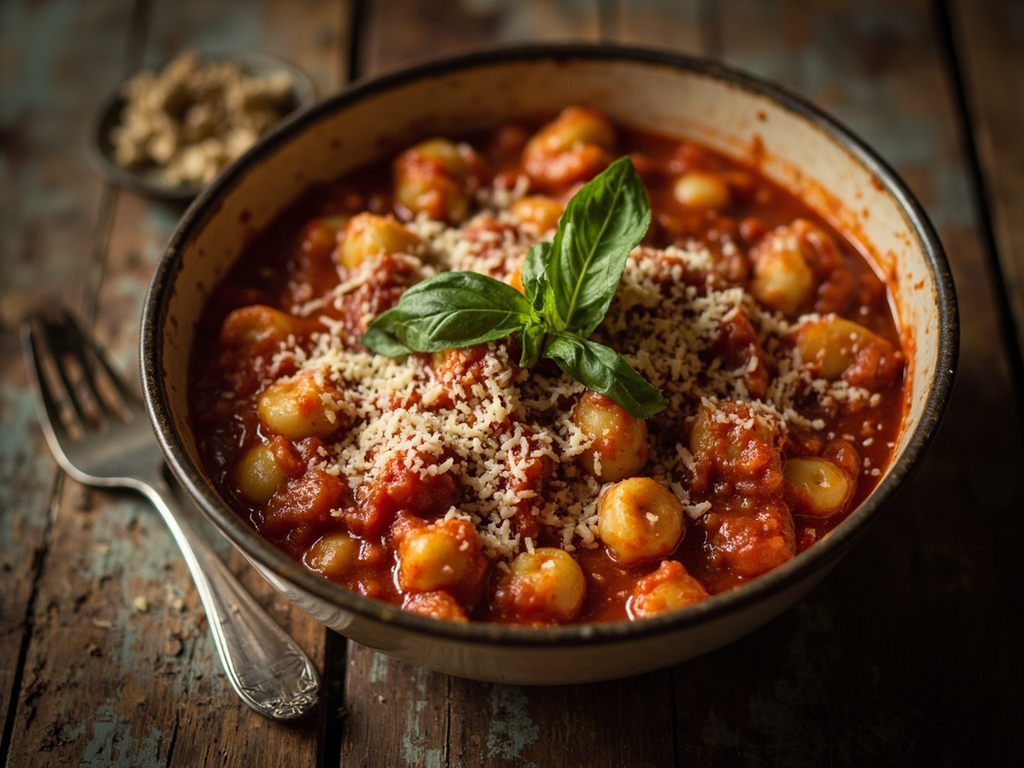
Small potato and flour dumplings, served with a long-simmered tomato sauce. They are traditionally eaten on the 29th of each month, slipping a bill under the plate to call for prosperity.
Today's the 29th, kid, so we make ñoquis, that's the rule! My old lady mashed the potatoes while they were still hot, added just enough flour — not too much, or they'd be heavy as stones — and rolled little sausages that we cut with a knife. We ran them over the back of a fork to make grooves, so the sauce would stick. And don't forget to put a coin under your plate, so money will come to you in the coming month; I don't really believe it, but it doesn't hurt, and the table laughs about it.
- •Potatoes — in generous portions (gnocchi base)
- •Wheat flour — just enough to bind (binder)
- •Egg — 1 (binder)
- •Ripe tomatoes or canned — for the sauce (sauce)
- •Onion, garlic, basil, oil — to taste (sauce)
- •Grated cheese (sardo/parmesan type) — for serving (finish)
Ñoquis del 29
Small potato and flour dumplings, served with a long-simmered tomato sauce. They are traditionally eaten on the 29th of each month, slipping a bill under the plate to call for prosperity.
Why this dish? The Buenos Aires of Gardel's childhood was a city of Italian immigrants, and pasta was part of daily life in the suburbs where he grew up. The 'ñoquis del 29' (gnocchi of the 29th) is a well-lived porteño tradition of his time: a simple and filling dish, symbol of the blended Italian-Argentine culture that also infuses tango.
Today's the 29th, kid, so we make ñoquis, that's the rule! My old lady mashed the potatoes while they were still hot, added just enough flour — not too much, or they'd be heavy as stones — and rolled little sausages that we cut with a knife. We ran them over the back of a fork to make grooves, so the sauce would stick. And don't forget to put a coin under your plate, so money will come to you in the coming month; I don't really believe it, but it doesn't hurt, and the table laughs about it.
Ingredients (period version)
- Potatoes — in generous portions (gnocchi base)
- Wheat flour — just enough to bind (binder)
- Egg — 1 (binder)
- Ripe tomatoes or canned — for the sauce (sauce)
- Onion, garlic, basil, oil — to taste (sauce)
- Grated cheese (sardo/parmesan type) — for serving (finish)
Ingredients
- Floury potatoes — 800 g (base)
- Flour — about 200 g (binder)
- Egg — 1 (binder)
- Crushed tomatoes — 400 g (sauce)
- Onion — 1 (sauce)
- Garlic — 2 cloves (sauce)
- Fresh basil — a few leaves (sauce)
- Olive oil — 3 tbsp (sauce)
- Grated hard cheese — 60 g (finish)
Method
- Cook potatoes in their skins, peel and mash them while still hot.
- Mix in the egg, then gradually add flour until you get a soft dough, without overworking it.
- Roll into ropes, cut into 2 cm pieces, and roll each piece over the back of a fork to mark grooves.
- Prepare the sauce: sauté onion and garlic, add tomatoes and basil, simmer for 30 minutes over low heat.
- Poach the gnocchi in salted boiling water; they are ready as soon as they float to the surface.
- Drain, top with sauce, sprinkle with grated cheese and serve (slipping a coin under the plate, if you feel like it).
How it was made : The tradition of 'ñoquis del 29' is said to have originated in modest Italian immigrant families: at the end of the month, when money was tight, they cooked an inexpensive potato and flour dish, and placed a bill under the plate as a wish for abundance. The ritual spread throughout Buenos Aires at the turn of the 20th century.
The contemporary twist : Serve the gnocchi pan-fried for a minute in butter after poaching for slightly golden edges, and garnish with a fresh basil leaf and a twist of black pepper.
Carlos Gardel · Charactorium