 flip
flipThe Family Table Puchero
The Family Table Puchero
Why this dish? Borges described his diet as modest, consisting of simple family meals; puchero, an economical and nourishing domestic dish, is the very type of everyday cuisine of the porteño middle class of his childhood.
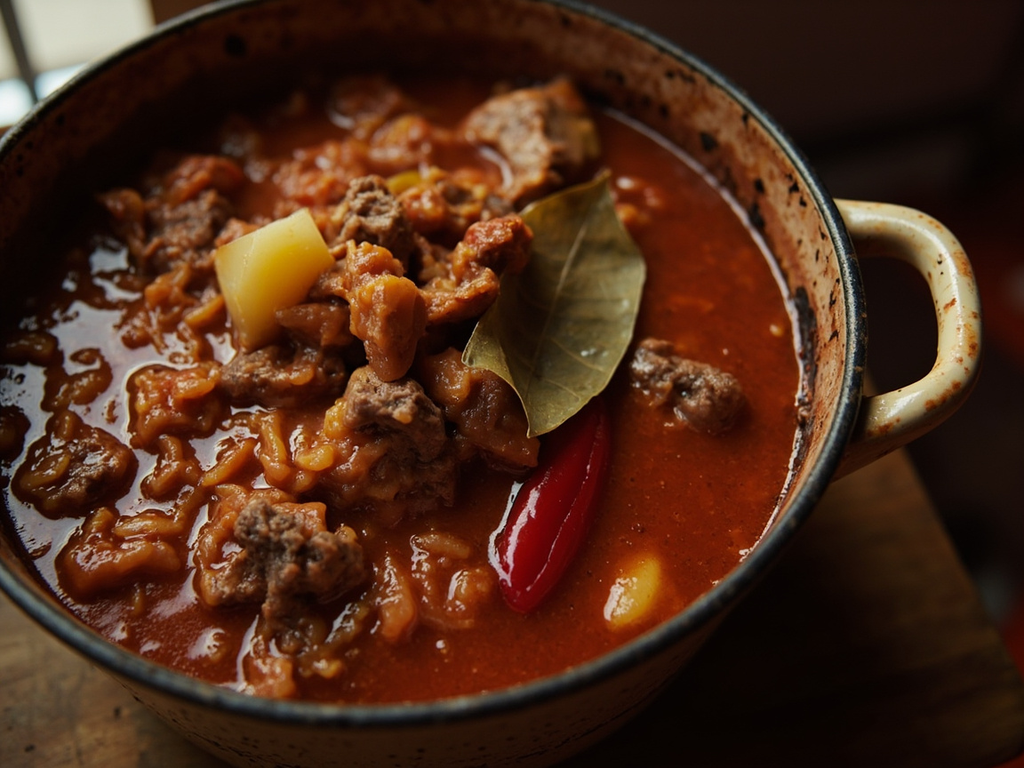
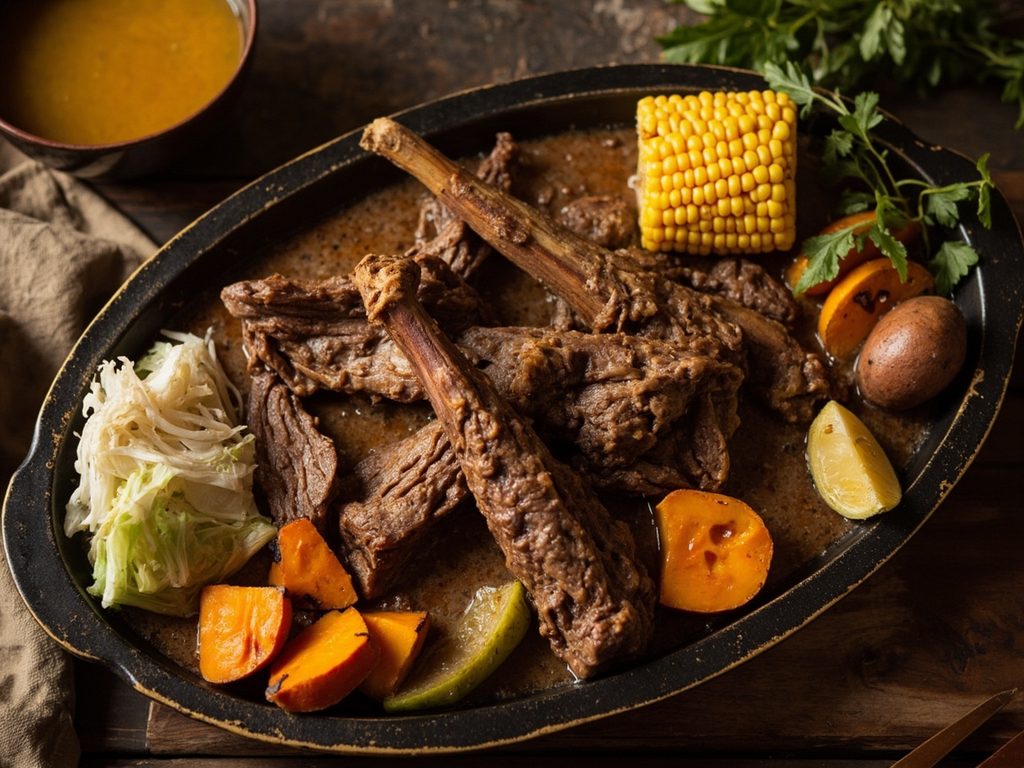
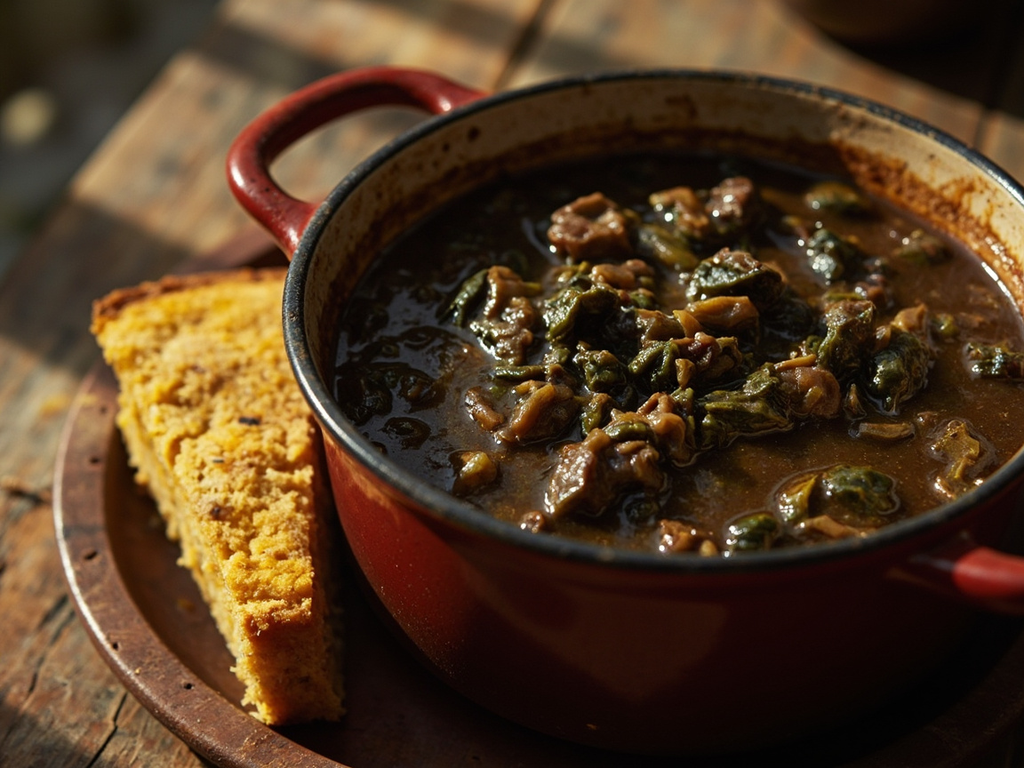
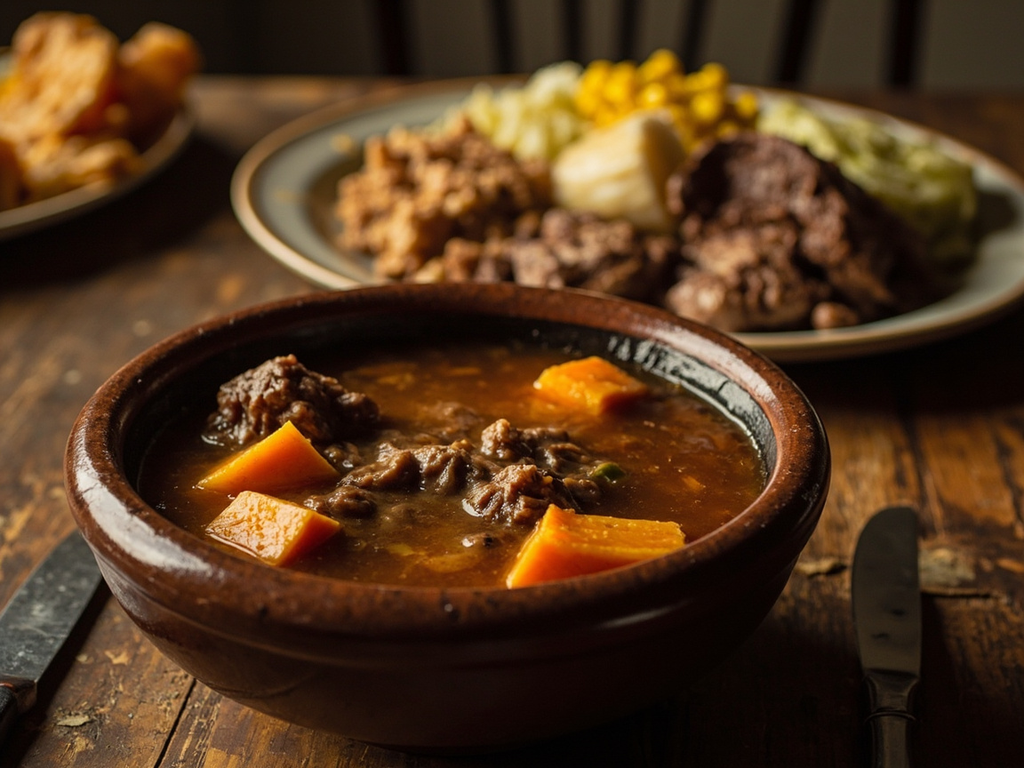
A broth simmered for a long time with meat, bones, and root vegetables; first the broth is served, then the meat and vegetables. A humble, comforting weekday meal.
There are dishes without glory that keep you company all your life; puchero is one of them. My mother, who read me so many books when my eyes began to betray me, would watch over its broth for hours, patiently skimming the pot. You eat it in two stages, like a story-within-a-story: first the clear caldo in the soup plate, then the meat and vegetables. Nothing ostentatious about it — and that is precisely why I loved it, I who mistrust overly ornate things.
- •Beef cuts for boiling and marrow bones — according to the number of diners (meat and broth)
- •Squash (zapallo) — a few slices (sweet vegetable (native to the Americas, attested in Argentina))
- •Sweet potato, carrot, leek, cabbage — in proportion (base vegetables)
- •Corn on the cob — 1 or 2 (Creole vegetable)
The Family Table Puchero
A broth simmered for a long time with meat, bones, and root vegetables; first the broth is served, then the meat and vegetables. A humble, comforting weekday meal.
Why this dish? Borges described his diet as modest, consisting of simple family meals; puchero, an economical and nourishing domestic dish, is the very type of everyday cuisine of the porteño middle class of his childhood.
There are dishes without glory that keep you company all your life; puchero is one of them. My mother, who read me so many books when my eyes began to betray me, would watch over its broth for hours, patiently skimming the pot. You eat it in two stages, like a story-within-a-story: first the clear caldo in the soup plate, then the meat and vegetables. Nothing ostentatious about it — and that is precisely why I loved it, I who mistrust overly ornate things.
Ingredients (period version)
- Beef cuts for boiling and marrow bones — according to the number of diners (meat and broth)
- Squash (zapallo) — a few slices (sweet vegetable (native to the Americas, attested in Argentina))
- Sweet potato, carrot, leek, cabbage — in proportion (base vegetables)
- Corn on the cob — 1 or 2 (Creole vegetable)
Ingredients
- Beef chuck or blade + one marrow bone — 700 g + 1 bone (meat and broth)
- Butternut squash — 300 g, large cubes (soft vegetable)
- Sweet potato and potatoes — 2 + 2 (base vegetables)
- Carrots, leek, quarter cabbage — 3 + 1 + 1/4 (aromatics and vegetables)
- Corn on the cob — 1, cut into sections (Creole garnish)
Method
- Cover the meat and bone with cold water, bring gently to a simmer and skim carefully.
- Add carrots, leek, and a little salt; let simmer covered for 1 h 30 over low heat.
- Add potatoes, sweet potato, squash, and corn; continue for 30–40 min until tender.
- Add the cabbage at the end of cooking so it stays green and firm (10 min).
- Serve first the strained broth in a soup plate, then the meat and vegetables on a platter, with a little coarse salt on the side.
How it was made : Puchero is the Creole heir of the Spanish cocido, adapted to the products of the Río de la Plata. In the 20th century, it was the economical weekday dish for families: one pot gives two services, the broth then the boiled meat. It was cooked for a long time on the gas or coal stove, skimming with a ladle.
The contemporary twist : Reduce some of the broth to a strong consommé and serve it in a small aperitif bowl before the main dish, a minimalist 'Borgesian amuse-bouche' style.
Jorge Luis Borges · Charactorium