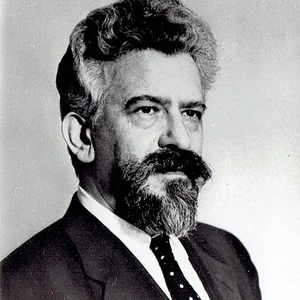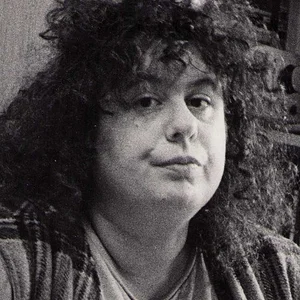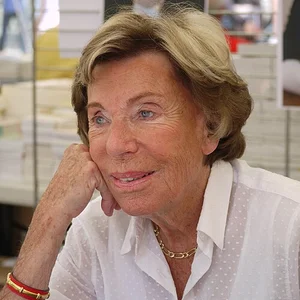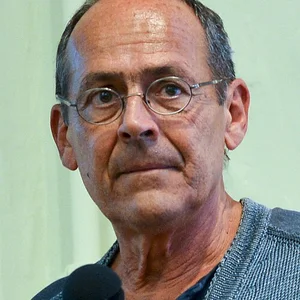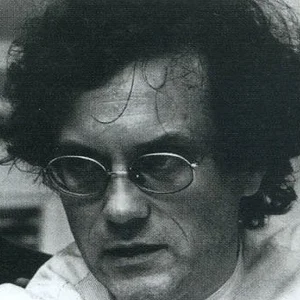

French philosopher, psychoanalyst and activist, a leading figure of antipsychiatric thought. He is famous for his collaboration with Gilles Deleuze, with whom he co-authored the two volumes of *Capitalism and Schizophrenia*. His work at the La Borde clinic profoundly renewed institutional psychotherapy.
Félix Guattari(1930 — 1992)
Félix Guattari
France
6 min read
Frequently asked questions
Famous Quotes
« There is no seizure of power by slogans, there is a collective assemblage of enunciation.»
Key Facts
- Born on 30 April 1930 in Villeneuve-lès-Sablons and died on 29 August 1992 in Cour-Cheverny
- Worked from 1955 at the La Borde psychiatric clinic, a laboratory of institutional psychotherapy
- Published with Gilles Deleuze *Anti-Oedipus* (1972), the first volume of *Capitalism and Schizophrenia*
- Co-wrote *A Thousand Plateaus* (1980), introducing the concepts of the rhizome and deterritorialization
- Developed ecosophy in *The Three Ecologies* (1989), connecting the environmental, the social and the psyche
Works & Achievements
A collection of his writings on institutional psychotherapy, with a preface by Deleuze. In it, he develops the concept of “transversality” within groups.
A resounding critique of psychoanalysis and capitalism, a major work of post-May 1968 thought.
An essay on the writer Franz Kafka and the idea of a “minor literature” that carries a political force.
A teeming work introducing the concept of the “rhizome,” which has become a key reference in the humanities.
An essay in which Guattari rethinks the unconscious as a productive “machine,” outside the classic Freudian frameworks.
An early ecological manifesto linking nature, society, and subjectivity around the concept of “ecosophy.”
The last book co-written with Deleuze, a reflection on the very nature of philosophical activity.
Guattari's final work, a synthesis of his thought on subjectivity and creation.
Anecdotes
From the age of twenty, Guattari joined the La Borde psychiatric clinic, founded by Jean Oury in 1953. He would spend his entire life there, convinced that madness is not cured by locking patients away, but by transforming the institution itself: here, patients and caregivers share the daily chores and the theater.
For years Guattari attended the seminar of Jacques Lacan and became one of his analysands, but he eventually distanced himself from the master of French psychoanalysis. His decisive encounter would be with Gilles Deleuze in 1969: two very different men, one restless and militant, the other calm and academic, who would write together for more than twenty years.
In 1972, his book written with Deleuze, *Anti-Oedipus*, dropped like a bomb in the climate following May 1968. The work criticized classical psychoanalysis and became a resounding success among students, to the point of turning this discreet psychoanalyst into an intellectual star against his will.
Passionate about freedom of speech, Guattari supported the “free radios” of the 1970s that broadcast without authorization, such as Radio Alice in Bologna. He saw in these pirate microphones a way for ordinary people to make their voices heard, at a time when radio and television were a state monopoly.
Near the end of his life, Guattari coined the word “ecosophy” and published *The Three Ecologies* (1989). Long before ecology became fashionable, he argued that we must protect nature, social relationships, and each person's inner life all at the same time.
Primary Sources
It works everywhere, sometimes without stopping, sometimes in fits and starts. It breathes, it heats, it eats. It shits, it fucks. What a mistake it was to ever have said the id.
A rhizome has no beginning or end; it is always in the middle, between things, interbeing, intermezzo.
The only acceptable goal of human activities is the production of a subjectivity that continually self-enriches its relationship with the world.
How do we produce, gather and, above all, reinvent subjectivities — that will be the essential question of tomorrow.
Key Places
Village in the Oise department where Félix Guattari was born on 30 April 1930, in the north-western suburbs of Paris.
Psychiatric clinic in the Loir-et-Cher department founded by Jean Oury, where Guattari worked his whole life and died in 1992. A landmark of institutional psychotherapy.
Capital where Guattari attended Lacan's seminar, engaged in activism and moved in post-war intellectual circles, notably around the Freudian School of Paris.
Italian city where Radio Alice broadcast, a free radio station that Guattari supported. There he forged ties with the Italian autonomist movement in the 1970s.
Parisian university where Guattari, drawn early to philosophy, enrolled in pharmacy and then philosophy in the early 1950s.
Typical Objects

Guattari wrote prolifically, alone or in collaboration: notebooks, militant articles, manuscripts sent to Deleuze. The typewriter was the everyday tool of this abundant intellectual output.

As a psychoanalyst trained under Lacan, Guattari received patients lying on the couch. This object symbolizes the psychoanalytic treatment that he both practiced and deeply criticized.

Guattari constantly filled notebooks with ideas, diagrams, and concepts in the making. These notes fed his discussions and the books he co-authored with Deleuze.

A symbol of the 1970s pirate radio stations he supported, the transmitter made it possible to broadcast without state authorization. For Guattari, it was a tool of collective expression and freedom.

A work co-written with Deleuze in 1972 that became a manifesto of intellectual dissent after May 68. Its cover has remained an icon of 20th-century critical thought.
School Curriculum
Vocabulary & Tags
Key Vocabulary
Daily Life
Morning
At the La Borde clinic, mornings blended care with communal life: Guattari took part in meetings where caregivers and patients organized the day together. Tireless, he moved seamlessly between activist correspondence, reading, and his first notes.
Afternoon
Afternoons might be devoted to talks with patients, to the clinic's workshop or theater activities, and then to sessions of intellectual work. Guattari also juggled countless political meetings and gatherings with activist groups.
Evening
In the evening he would write, rework his concepts, and prepare his exchanges with Deleuze, sometimes late into the night. Sociable and talkative, he loved to stretch the evening out in lively discussions with friends and collaborators.
Food
Guattari led the life of a twentieth-century French intellectual, gladly sharing the convivial meals of the La Borde community. The table was a place of exchange as much as of nourishment, between caregivers and patients.
Clothing
He wore the ordinary clothes of an intellectual of his time: a shirt, a plain jacket, far from any academic solemnity. His tousled appearance and relaxed manner stood in contrast to the stiffness of the academic world.
Housing
Much of his life unfolded at the La Borde clinic, a vast château surrounded by parkland in the countryside of the Loir-et-Cher. He also kept ties to Paris, where he was politically active and frequented intellectual circles.
Historical Timeline
Period Vocabulary
Liens externes & ressources
Références
Œuvres
Psychanalyse et transversalité
1972
L'Anti-Œdipe. Capitalisme et schizophrénie (avec Gilles Deleuze)
1972
Kafka. Pour une littérature mineure (avec Gilles Deleuze)
1975
Mille Plateaux. Capitalisme et schizophrénie 2 (avec Gilles Deleuze)
1980
L'Inconscient machinique
1979
Les Trois Écologies
1989
Qu'est-ce que la philosophie ? (avec Gilles Deleuze)
1991