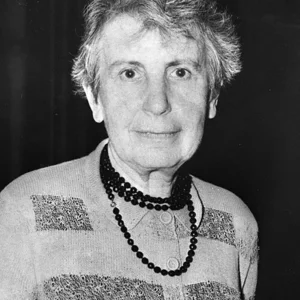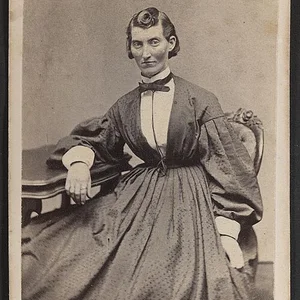

American psychologist and partner of the African American poet and activist Audre Lorde for nearly twenty years. The couple raised Lorde's two children together on Staten Island, a figure in 20th-century lesbian and feminist history.
Frances Clayton(1830 — 1863)
Frances Clayton
États-Unis
5 min read
Frequently asked questions
Key Facts
- From around 1968, shared her life with the poet Audre Lorde, a relationship that would last nearly two decades
- The couple settled on Staten Island and raised Lorde's two children, Elizabeth and Jonathan, together
- A psychology professor by training, within the American academic context of the 1960s-1970s
- Their relationship, lived openly, came to an end in the late 1980s
- A figure associated with the history of lesbian couples and second-wave American feminism in the 20th century
Works & Achievements
Frances Clayton worked as a professor of psychology, at a time when women still struggled to gain access to academic positions.
Together with Lorde, she raised Elizabeth and Jonathan on Staten Island, embodying the model of the chosen lesbian family championed by feminism.
Her presence at Lorde's side, from the 1978 diagnosis onward, runs through the journals “The Cancer Journals” and “A Burst of Light.”
Photographed by Robert Giard, she became part of the visual memory of the American lesbian and gay literary community.
Anecdotes
A psychology professor of white background, Frances Clayton shared the life of African American poet Audre Lorde for nearly twenty years, from the late 1960s to the late 1980s. Their interracial, lesbian relationship was highly visible at a time when such a partnership faced both racial and homophobic discrimination.
In Staten Island, Frances and Audre raised together the two children Lorde had from her marriage: Elizabeth and Jonathan. This blended family — lesbian and biracial — was a concrete embodiment of the “chosen family” model championed by feminist activists of the 1970s.
Frances Clayton's daily life alongside Audre Lorde runs through several of the poet's autobiographical books, notably *The Cancer Journals* and *A Burst of Light*: she appears in them as the companion who supported Lorde through her battle against breast cancer, which began in 1978.
The couple was photographed by Robert Giard, who devoted part of his work to documenting the faces of the American lesbian, gay, and literary community. These portraits are among the few surviving images of Frances Clayton, whose life remains known chiefly through Lorde's writings.
Primary Sources
Private journal in which Lorde recalls the presence of her partner and loved ones during her mastectomy and recovery, bearing witness to the supportive role played by Frances Clayton.
Collection of journals in which Lorde describes her daily life, her family, and her activist struggles as her cancer progresses, a period shared with Frances Clayton.
Series of portraits of American lesbian and gay literary figures, among them Audre Lorde and Frances Clayton, held notably at Yale's Beinecke Library.
Definitive biography that traces the nearly twenty-year relationship between Audre Lorde and Frances Clayton and their family life on Staten Island.
Key Places
Neighborhood where Frances Clayton and Audre Lorde lived together and raised Lorde's two children. The heart of their family life for nearly twenty years.
Metropolis where the couple's intellectual, academic, and activist life flourished, at the heart of the American feminist and LGBTQ movements.
City where Audre Lorde stayed regularly from the 1980s onward to receive treatment and teach; an important chapter in the couple's shared life during this period.
New England university city associated with Frances Clayton's academic career in psychology.
Typical Objects

Working tool of the intellectual household shared with Audre Lorde, where poems, essays, and journals were written. A symbol of the couple's literary and activist life.

Books by Frances Clayton's partner, a daily presence in their Staten Island home. They spread the Black feminist and lesbian thought of the era.

A print made by the photographer Robert Giard, who documented figures of the American lesbian and gay community. One of the rare visual records of Frances Clayton.

An everyday object for an academic specializing in psychology, who spent long hours reading and grading work. A marker of her profession as a teacher-researcher.

Academic works tied to Frances Clayton's teaching and research in psychology. A reflection of the growing place of women in the academic world.

A small pin worn during the marches and rallies of the 1970s and 1980s. It displayed membership in the feminist and LGBTQ liberation movements.
School Curriculum
Vocabulary & Tags
Key Vocabulary
Tags
Daily Life
Morning
In the house on Staten Island, mornings revolve around the children: making breakfast and heading off to school. As an academic, Frances Clayton also devotes the early part of her day to preparing her psychology lectures.
Afternoon
Afternoons are divided between teaching, research, and grading students' work. The home remains a place of intense intellectual labor, where Audre Lorde writes her poems and essays.
Evening
Evenings bring the blended family together around the meal and the children's homework. The couple also hosts fellow activists, writers, and intellectuals, making the house a meeting point for feminist and lesbian circles.
Food
The diet is that of a middle-class intellectual American family of the 1970s-1980s, marked by shared meals and conviviality. Activist and friendly gatherings are often accompanied by home-cooked dishes.
Clothing
Frances Clayton wears the plain, practical attire of an academic of the era. The dress style of feminists in the 1970s-1980s favored comfort and rejected imposed codes of femininity.
Housing
The family lives in a house on Staten Island, away from the bustle of Manhattan. This stable home, where Lorde's children grow up, forms the lasting setting of their shared life.
Historical Timeline
Period Vocabulary
Liens externes & ressources
Références
Œuvres
Carrière universitaire en psychologie
années 1960-1980
Co-éducation des enfants d'Audre Lorde
vers 1968-1989
Soutien durant les combats d'Audre Lorde contre le cancer
1978-1989
Figure des portraits de Robert Giard
années 1980