 flip
flipFettunta with new oil
Fettunta with new oil
Why this dish? Francesco built his fortune on silks, but like any Tuscan he lived on bread, wine, and olive oil from the Florentine countryside. At the autumn press, the new oil was tasted on a slice of grilled bread: the simplest and most Tuscan gesture there is, within reach of both merchant and peasant.
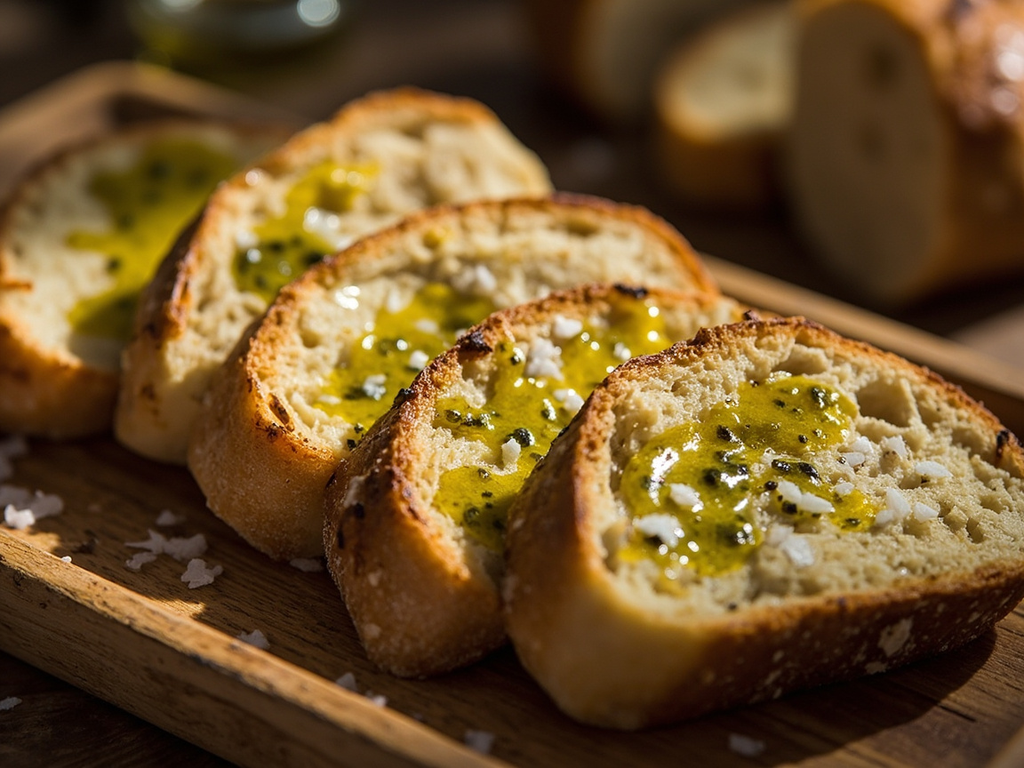
A large slice of Tuscan bread grilled over embers, rubbed with garlic and drenched in a stream of freshly pressed olive oil, finished with a pinch of salt. The quintessential everyday snack, celebrating the new oil of Tuscany.
Messer, do not disdain the simplicity of this mouthful. At pressing time, when the oil flows still cloudy and green from the millstones, I have a slice of our good bread grilled over the embers, rub it with a clove of garlic, and bathe it in this liquid gold. A pinch of salt, and there: no silk brocade is worth the contentment of a Florentine before his new oil.
- •Saltless Tuscan bread, one day old — large slices (support)
- •New Tuscan olive oil — generously (star)
- •Garlic — 1 clove (flavor)
- •Salt — a pinch (seasoning)
Fettunta with new oil
A large slice of Tuscan bread grilled over embers, rubbed with garlic and drenched in a stream of freshly pressed olive oil, finished with a pinch of salt. The quintessential everyday snack, celebrating the new oil of Tuscany.
Why this dish? Francesco built his fortune on silks, but like any Tuscan he lived on bread, wine, and olive oil from the Florentine countryside. At the autumn press, the new oil was tasted on a slice of grilled bread: the simplest and most Tuscan gesture there is, within reach of both merchant and peasant.
Messer, do not disdain the simplicity of this mouthful. At pressing time, when the oil flows still cloudy and green from the millstones, I have a slice of our good bread grilled over the embers, rub it with a clove of garlic, and bathe it in this liquid gold. A pinch of salt, and there: no silk brocade is worth the contentment of a Florentine before his new oil.
Ingredients (period version)
- Saltless Tuscan bread, one day old — large slices (support)
- New Tuscan olive oil — generously (star)
- Garlic — 1 clove (flavor)
- Salt — a pinch (seasoning)
Ingredients
- Sourdough country bread — 4 thick slices (support)
- Extra virgin Tuscan olive oil — 6 tbsp (star)
- Garlic — 1 clove (flavor)
- Sea salt flakes — to taste (seasoning)
Method
- Grill the bread slices over embers, on a grill, or in a very hot oven until the edges are charred and crispy.
- Immediately rub each slice with a cut clove of garlic — the heat releases the aroma.
- Generously drizzle with the best quality olive oil, without skimping.
- Sprinkle with a few salt flakes and serve immediately, while the bread is hot.
How it was made : In the Renaissance, Tuscan bread was already made without salt (a legacy of ancient salt taxes) and accompanied every meal. Olive oil, abundant in the hills around Florence, was at once food, currency, and a marker of rural wealth. Dipping bread in new oil was a seasonal ritual shared by all classes.
The contemporary twist : Today it is called fettunta in Florence (elsewhere: bruschetta). A chic version: mono-varietal oil, fleur de sel, and a twist of black pepper.
Francesco del Giocondo · Charactorium