 flip
flipMeatless Day Khichri
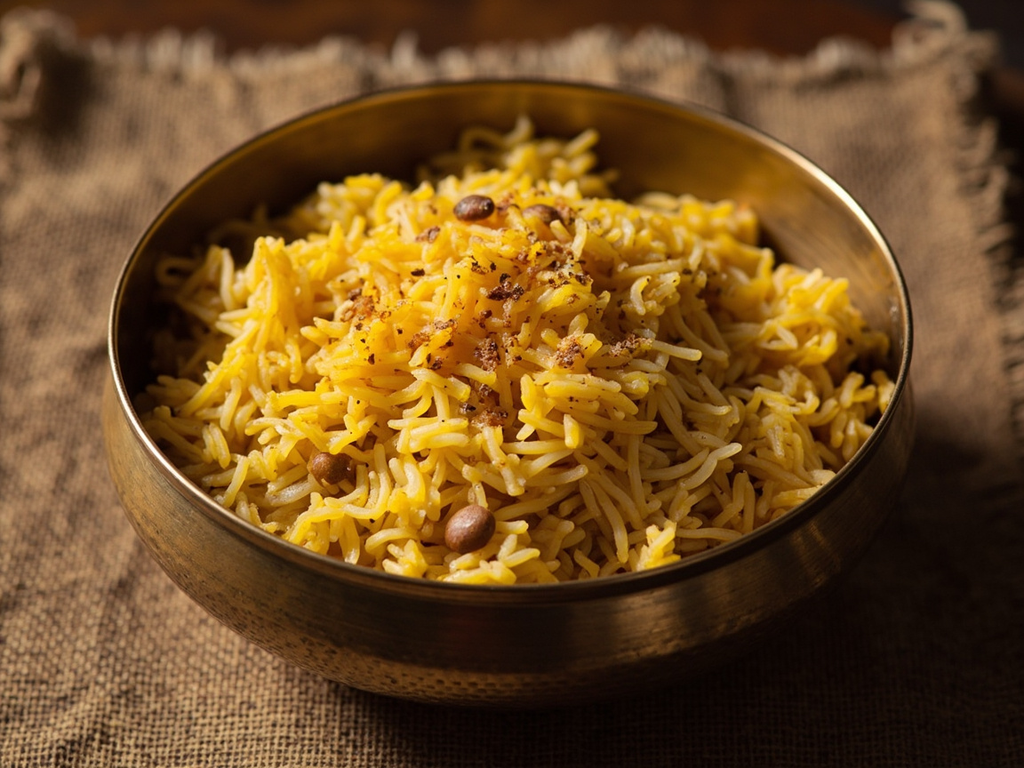
Meatless Day Khichri
Why this dish? The Ain-i-Akbari lists khichri among the sufiyana dishes of Akbar's kitchen. The emperor, influenced by Jain and Hindu ideas, abstained from meat on certain days and reduced his consumption with age: this humble marriage of rice and lentils was the companion of his abstinence days.
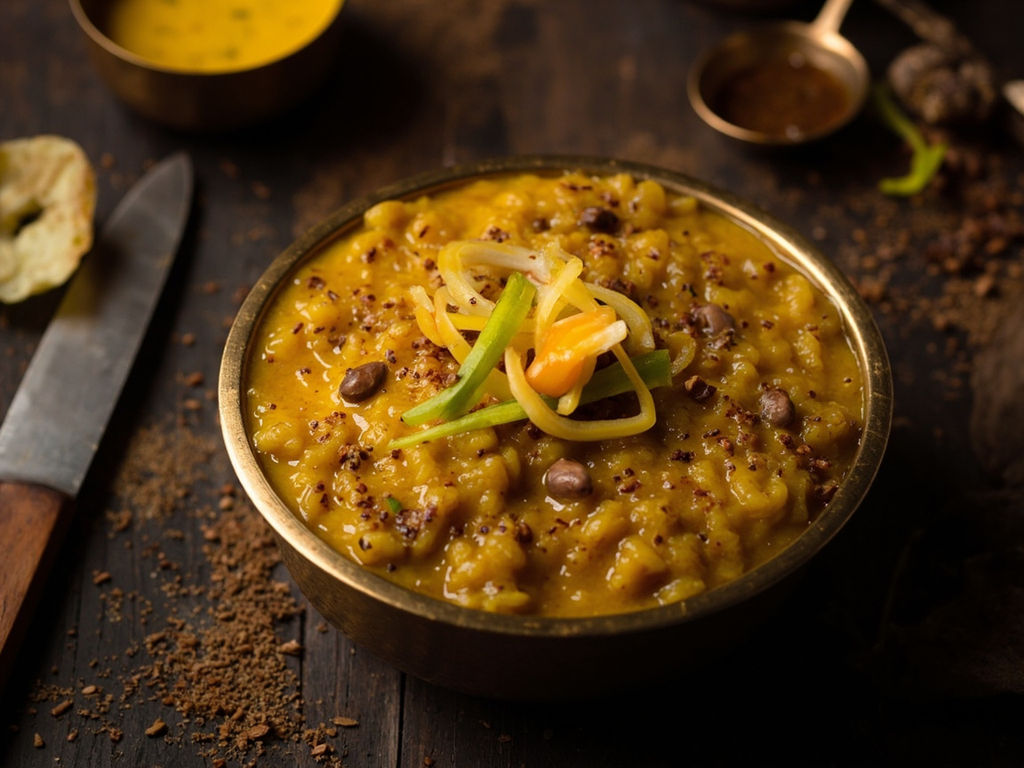
Rice and mung beans melted together in ghee, brightened with turmeric, cumin, and ginger. A mild, nourishing, and comforting dish, both common food and a chosen meal of an emperor devoted to temperance.
You wonder to see an emperor content with rice and lentils? Learn this: the more I ruled, the less flesh I wanted on my table. The wise Jains taught me respect for all living things, and I lent them my ear. My khichri, I want it soft, almost melting, golden with turmeric and perfumed with clarified butter poured hot at the end. It is a humble dish, yes — but it fills the body without weighing down the spirit, and that is what I seek.
- •Rice — one measure (base)
- •Split mung beans (without skin) — half the rice (protein, binder)
- •Ghee — generous (fat)
- •Turmeric — a pinch (color and mild heat)
- •Cumin — a few seeds (perfume)
- •Fresh ginger — a piece (spicy freshness)
- •Asafoetida (hing) — a pinch (umami flavor, digestion)
- •Black pepper and salt — to hand (seasoning)
Meatless Day Khichri
Rice and mung beans melted together in ghee, brightened with turmeric, cumin, and ginger. A mild, nourishing, and comforting dish, both common food and a chosen meal of an emperor devoted to temperance.
Why this dish? The Ain-i-Akbari lists khichri among the sufiyana dishes of Akbar's kitchen. The emperor, influenced by Jain and Hindu ideas, abstained from meat on certain days and reduced his consumption with age: this humble marriage of rice and lentils was the companion of his abstinence days.
You wonder to see an emperor content with rice and lentils? Learn this: the more I ruled, the less flesh I wanted on my table. The wise Jains taught me respect for all living things, and I lent them my ear. My khichri, I want it soft, almost melting, golden with turmeric and perfumed with clarified butter poured hot at the end. It is a humble dish, yes — but it fills the body without weighing down the spirit, and that is what I seek.
Ingredients (period version)
- Rice — one measure (base)
- Split mung beans (without skin) — half the rice (protein, binder)
- Ghee — generous (fat)
- Turmeric — a pinch (color and mild heat)
- Cumin — a few seeds (perfume)
- Fresh ginger — a piece (spicy freshness)
- Asafoetida (hing) — a pinch (umami flavor, digestion)
- Black pepper and salt — to hand (seasoning)
Ingredients
- Rice — 200 g (base)
- Split mung beans (moong dal) — 100 g (protein)
- Ghee — 3 tbsp (cooking and finishing)
- Turmeric powder — 1/2 tsp (color)
- Cumin seeds — 1 tsp (perfume)
- Fresh grated ginger — 1 tsp (spice)
- Asafoetida — 1 pinch (umami and digestion)
- Black pepper, salt — to taste (seasoning)
- Water — about 1 liter (cooking)
Method
- Rinse rice and mung beans together until water runs clear.
- In a pot, heat half the ghee, add cumin seeds, then ginger, asafoetida, and turmeric.
- Add rice and lentils, stir to coat, salt, cover with water (about 4 volumes to 1).
- Simmer covered for 25–30 min, stirring occasionally, until soft, almost melting texture.
- Pepper, then pour the remaining melted ghee hot just before serving.
How it was made : Khichri was cooked in a single pot over the fire, with ghee poured hot at the end (tadka technique). It was accompanied by curd or pickled vegetables. It was a dish of all classes, from countryside to palaces — which made it the ideal meal for an emperor cultivating sobriety.
The contemporary twist : Serve in a simple bowl with a drizzle of nutty ghee and a few fried ginger slivers — modesty embraced as a luxury of taste.
Sources : Abu'l-Fazl, Ain-i-Akbari, sufiyana dishes of imperial cuisine · K.T. Achaya, A Historical Dictionary of Indian Food
Akbar the Great · Charactorium