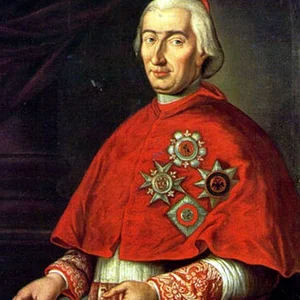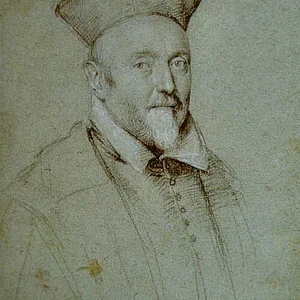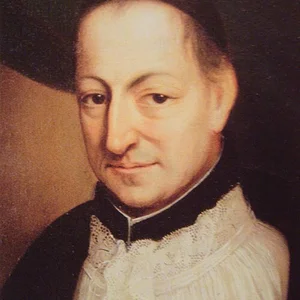

French Jesuit (1624–1709), confessor to Louis XIV for 34 years. His influence at court was considerable, particularly during the revocation of the Edict of Nantes (1685). The Père-Lachaise cemetery, opened in 1804 on land that had once belonged to the Jesuits, bears his name.
François d'Aix de La Chaise(1624 — 1709)
François d'Aix de La Chaise
France
8 min read
Frequently asked questions
Key Facts
- Born in 1624 in Aix (Forez), died in 1709 in Versailles
- Confessor to Louis XIV from 1675 until his death — 34 years of continuous influence
- A supporter of the revocation of the Edict of Nantes (1685), which stripped Protestants of their rights
- The Jesuit retreat house he frequented on the hill of Charonne gave its name to the future Père-Lachaise cemetery (1804)
- Involved in the disputes between Jesuits and Jansenists, defending the positions of the Society of Jesus
Works & Achievements
For 34 years, Father La Chaise guided the religious conscience of the most powerful sovereign in Europe. This informal yet pivotal mission influenced numerous decisions at the intersection of religion and state power.
Father La Chaise approved Louis XIV's decision to revoke the Edict of Nantes as an act of Catholic faith, while reportedly seeking to temper the excesses of the dragonnades, according to several accounts.
As regional superior, he oversaw the development of Jesuit colleges in France and defended his order's interests amid fierce tensions with Gallicans and Jansenists.
True to Jesuit tradition, Father La Chaise firmly opposed Jansenism, a theological movement that challenged Jesuit doctrine on grace and free will — the dominant controversy in the intellectual and religious life of the Grand Siècle.
Anecdotes
For 34 years, from 1675 to 1709, François de La Chaise served as the confessor of Louis XIV, making him one of the most influential people in France without ever holding an official title. Each week, the king entrusted him with his sins, and the father could refuse absolution if the sovereign failed to show sincere contrition — a formidable power over the conscience of the Sun King.
The revocation of the Edict of Nantes in 1685, which forced hundreds of thousands of Protestants to flee France, was supported by Father La Chaise as a measure of Catholic piety. Yet historians note that he reportedly attempted to moderate some of the violence of the *dragonnades* — those brutal military operations designed to force conversions.
The Père-Lachaise Cemetery, opened in Paris in 1804, bears his name because it was built on land belonging to a country retreat owned by the Jesuits at Charonne, where Father La Chaise liked to withdraw. And so a 17th-century confessor gave his name to one of the world's most famous cemeteries, the final resting place of Molière, Chopin, Oscar Wilde, and Jim Morrison.
Despite his influence, Father La Chaise was frequently criticized by Jansenists and Gallicans, who saw him as an instrument of Rome. Saint-Simon, the court's merciless chronicler, described him as a gentle and moderate man but one too accommodating toward the powerful, sometimes turning a blind eye to the sins of the mighty in order to maintain his position.
At the death of Father La Chaise in January 1709, Louis XIV was already 70 years old and France was enduring a terrible period: famine, military defeats, and a brutal winter. The king, who had always held a sincere faith despite his dissolute life, was deeply affected by the loss of his lifelong confessor.
Primary Sources
Father de La Chaise was a gentle, moderate man, averse to scenes, who wished to preserve his position and influence, and who was more occupied with the general affairs of the Company than with particular ones. He was not without kindness or fairness.
Having considered that the best and surest means to entirely erase the memory of the troubles caused by the progress of this false religion in our kingdom… we have resolved that nothing would serve better than to entirely revoke the said Edict of Nantes.
Father La Chaise governs the king's conscience and, through it, many of the kingdom's affairs. They say he is a good man, but he is a Jesuit above all else and never forgets the interests of his Company.
His Majesty, having heard Mass, received the sacraments in the presence of Father de La Chaise, his confessor, who never left the king's side during his devotions on Good Friday and Holy Saturday.
Key Places
Birthplace of François de La Chaise in 1624, into a noble family from the Forez region. This part of the Massif Central then belonged to the province of Lyonnais.
The main residence of Louis XIV, which Père La Chaise visited regularly to hear the king's confession. He held a central place in the spiritual life of the court without ever residing there permanently.
Père La Chaise's Parisian residence and the seat of the Jesuit province of France. It was from this house that he managed the affairs of his order while fulfilling his mission to the king.
A country retreat for the Jesuits on the outskirts of Paris where Père La Chaise liked to rest. The land was purchased by the City of Paris and converted into a cemetery in 1804, which still bears his name.
A Jesuit institution in Lyon where Père La Chaise taught philosophy and theology before being summoned to court. He also completed a significant part of his intellectual formation there.
Typical Objects

A daily prayer book indispensable to any clergyman, which Père La Chaise recited morning and evening according to the Ignatian rule. He carried it on his journeys between Paris and Versailles.

The distinctive habit of the Society of Jesus worn by Père La Chaise at the court of Versailles, contrasting sharply with the gold-embroidered garments of the courtiers. This black cassock marked his membership in an order of international stature.

A wooden piece of furniture in which Louis XIV knelt to confess his sins to Père La Chaise. This weekly ritual was one of the most intimate — and most politically sensitive — moments in royal life.

An object of daily devotion, the rosary accompanied Père La Chaise in his prayers and meditation. Seventeenth-century Jesuits placed great importance on the rosary in their spiritual practice.

As regional superior of the Jesuits, Père La Chaise maintained regular correspondence with Rome. These letters concerned the religious affairs of the kingdom and the defense of Jesuit positions against Gallicanism.

As the king's confessor, Père La Chaise enjoyed exceptional privileges, including the use of carriages for his regular journeys between the Jesuit house in Paris and the Palace of Versailles.
School Curriculum
Vocabulary & Tags
Key Vocabulary
Daily Life
Morning
Père La Chaise rose before dawn for the morning office and prayer according to the Ignatian rule of the Jesuits. He celebrated or attended daily Mass, then devoted time to correspondence and spiritual reading before preparing his meetings with the king.
Afternoon
Afternoons were often spent traveling by carriage between Paris and Versailles. At court, he met not only the king for weekly confession, but also other notable figures to whom he offered spiritual direction and discreet counsel.
Evening
In the evening, Père La Chaise took part in Compline with his Jesuit brothers and practiced the examination of conscience, a daily Ignatian exercise. He also devoted time to writing letters to the Superior General of his order in Rome and to theological reading.
Food
The Jesuit table was simple and proper, in keeping with the rules of the Society. Fast days and days of abstinence were scrupulously observed. At the court of Versailles, Père La Chaise generally did not take part in the lavish royal banquets.
Clothing
He wore at all times the characteristic black cassock of the Jesuits, a symbol of humility and belonging to his order. At Versailles, this austere habit stood in stark contrast to the gold- and silk-embroidered court dress worn by the great lords of the realm.
Housing
Père La Chaise resided mainly at the Jesuit Professed House on the rue Saint-Antoine in Paris. He had use of the Charonne property as a retreat and was provided with apartments during his extended stays at Versailles.
Historical Timeline
Period Vocabulary
Liens externes & ressources
Références
Œuvres
Direction spirituelle de Louis XIV
1675-1709
Soutien à la révocation de l'édit de Nantes
1685
Gestion de la province jésuite de France
1675-1709
Opposition au jansénisme
1680-1709