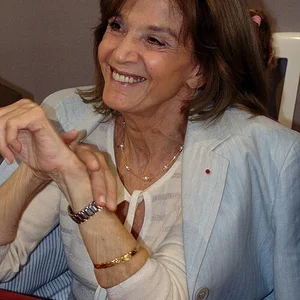

A Franco-Tunisian lawyer and feminist activist, Gisèle Halimi championed the rights of women and colonized peoples throughout the twentieth century. She is best known for the Bobigny trial (1972) and her fight to decriminalize abortion in France.
Gisèle Halimi(1927 — 2020)
Gisèle Halimi
France, Tunisie, protectorat français de Tunisie
8 min read
Frequently asked questions
Famous Quotes
« The cause of women is not a lost cause.»
« I never accepted injustice. I never could.»
Key Facts
- 1927: born in Tunis
- 1972: defense attorney in the Bobigny trial, arguing for the decriminalization of abortion
- 1971: signatory of the Manifesto of the 343 Women demanding the right to abortion
- 1971: co-founder of the association Choisir la cause des femmes
- 2020: died in Paris on July 28
Works & Achievements
A book co-written with Simone de Beauvoir recounting the case of a young Algerian woman tortured by the French army. The work sparked an international scandal and helped shed light on the crimes committed during the Algerian War.
A transcription of her plea in the landmark trial for the legalization of abortion. Considered a foundational text of French legal feminism, it is still studied in law schools today.
A militant essay in which Halimi sets out her vision of a radical and concrete feminism, rooted in courtroom experience and the political struggles of her time.
An autobiography in which she revisits her childhood in Tunisia, her early acts of rebellion, and the deep roots of her feminist and anti-colonialist commitment.
A disillusioned assessment of her experience in parliament and of French politics, analyzing the structural obstacles to true gender equality despite legislative victories.
An autobiographical novel devoted to her mother — an ambivalent figure caught between cultural submission and quiet strength — illuminating the tensions between tradition and female emancipation.
Anecdotes
At the age of ten, Gisèle Halimi, born Zeiza Taïeb into a Jewish family in La Goulette, Tunisia, decided to go on hunger strike to protest against the inequalities between boys and girls in her own family. She refused to keep serving her brothers at the table when they alone had the right to study. This early act of rebellion foreshadowed the fighter she would become.
In 1960, she agreed to defend Djamila Boupacha, a young Algerian FLN activist who had been arrested and tortured by French soldiers in Algeria. Together with Simone de Beauvoir, she brought the case before international public opinion, forcing the government to order a change of jurisdiction. This landmark trial earned her both widespread admiration and death threats.
In November 1972, at the Bobigny trial, Halimi defended a 16-year-old schoolgirl prosecuted for having an abortion after being raped. Rather than pleading for leniency, she turned the courtroom into a political platform, calling doctors, feminists, and public figures to the stand to demand the legalization of abortion. The public emotion generated by this trial directly contributed to the passage of the Veil law three years later.
Co-founder in 1971 of the association 'Choisir la cause des femmes' with Simone de Beauvoir, Gisèle Halimi had persuaded hundreds of prominent women to sign the ‘Manifesto of the 343,’ in which they publicly declared they had undergone illegal abortions, exposing themselves to prosecution. This text, published in *Le Nouvel Observateur*, caused a sensation and changed the course of the political debate in France.
Elected to the National Assembly in 1981, Gisèle Halimi quickly found herself at odds with the Socialist Party over the issue of women's rights. She chose not to stand for re-election in 1986, feeling that campaign commitments on genuine equality had not been honored. She continued her fight through writing and activism until the end of her life.
Primary Sources
One million women have abortions every year in France. They do so in dangerous conditions because of the secrecy to which they are condemned, even though this procedure, when performed under medical supervision, is among the simplest. I declare that I am one of them.
Djamila Boupacha is accused of having planted a bomb in an Algiers café. She claims to have been tortured and raped while in custody by French soldiers. Her only crime, according to her defense, was wanting her country to be free.
It is not Marie-Claire you are judging today. It is a law. An unjust law that condemns hundreds of thousands of women every year to secrecy, to danger, sometimes to death.
To be a woman and a lawyer in this country is to be doubly suspect in a world built by and for men. I will never plead for clemency on behalf of what is a fundamental right.
I was ten years old when I understood that rebellion was not only permitted, but necessary. My mother served my brothers before me. That day, I decided it would be the last time.
Key Places
A coastal town near Tunis where Gisèle Halimi was born on July 27, 1927, into a Sephardic Jewish family. It was here that, from childhood, she became aware of gender inequalities and staged her first act of rebellion.
The main setting of her professional life, where she argued cases for more than fifty years, defending both anti-colonial activists and women prosecuted for abortion.
It was in this court on the outskirts of Paris that the landmark trial took place in November 1972, bringing the fight for the legalization of abortion in France into the national spotlight.
The city where Djamila Boupacha had been active before her arrest. Halimi traveled there to prepare her client's defense and gather testimony about the torture carried out by the French army.
The neighborhood where Halimi had her office and spent much of her working life, at the heart of the Parisian intellectual world of Saint-Germain-des-Prés and close to the Palais de Justice.
Typical Objects

The symbolic professional garment of the French bar. Halimi wore it in the most significant political trials of her era, turning each hearing into an act of activism as much as of law.

Thick folders of notes and case law forming the backbone of her arguments. For the Bobigny trial, she had assembled medical, social, and feminist testimonies rarely seen in a courtroom.

An essential work tool for drafting her pleas, articles, and activist books. Halimi was as prolific a writer as she was a frontline lawyer.
📷 Wikimedia · Wikimedia Commons ↗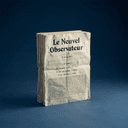
The landmark issue containing the Manifesto of the 343, to which Halimi actively contributed. Read across France, the magazine became a landmark document in the history of feminism.

A legal reference work she meticulously annotated to identify provisions that discriminated against women and to build her defence strategies.
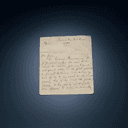
Years of letters exchanged between the two women illustrate the intellectual and activist collaboration that produced decisive texts and actions for women's rights in France.
School Curriculum
Vocabulary & Tags
Key Vocabulary
Daily Life
Morning
Gisèle Halimi started her days very early, combing through legal publications and daily newspapers in search of news items or trials that might become feminist causes. She would then prepare her case files, meticulously annotating statutes and case law before heading to the courthouse.
Afternoon
Her afternoons were divided between courtroom hearings, meetings of her association 'Choisir la cause des femmes' (Choose the Women's Cause), and consultations with her clients. During major trials, entire afternoons were devoted to coordinating expert witnesses — doctors, sociologists, feminist thinkers — whose testimony her defense strategies made indispensable.
Evening
In the evenings, she wrote: closing arguments, press articles, book chapters. Her Parisian apartment served as a salon where feminists, intellectuals, and political activists gathered, with Simone de Beauvoir and Jean-Paul Sartre among the regulars.
Food
Born into a Sephardic family from Tunisia, she retained a lifelong attachment to Mediterranean flavors. Meals shared with family or fellow activists were for her moments of renewal as much as occasions for political discussion.
Clothing
In the courtroom, she invariably wore the black robe of the French bar, often paired with the white collar and insignia of her barrister's rank. Outside the courtroom, she favored a sober, understated French elegance, pointedly rejecting the dress codes of submission or seduction imposed on women.
Housing
She lived primarily in the 6th arrondissement of Paris, in an apartment that gave her easy access to the Palais de Justice and the intellectual world of Saint-Germain-des-Prés. Her office was overrun with law books, active case files, and correspondence with activists from around the world.
Historical Timeline
Period Vocabulary
Liens externes & ressources
Références
Œuvres
Djamila Boupacha
1962
Le Procès de Bobigny (plaidoirie publiée)
1973
La Cause des femmes
1973
Le Lait de l'oranger
1988
Une embellie perdue
1995