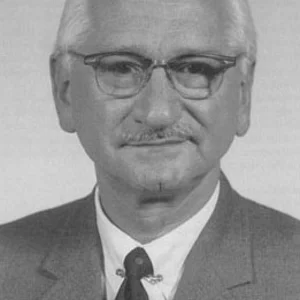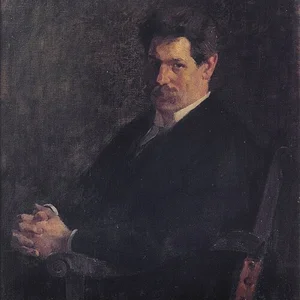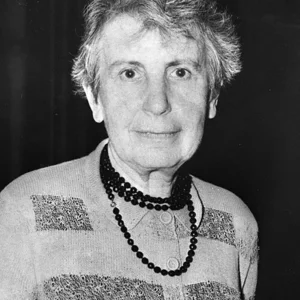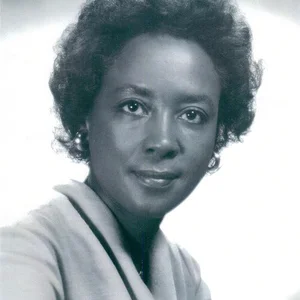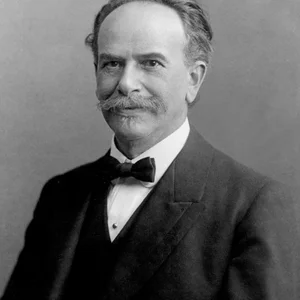

Franz Boas (1858-1942) was a German-born American anthropologist, considered the father of modern cultural anthropology. He fought scientific racism by demonstrating that the differences between peoples stem from culture and not from biology.
Franz Boas(1858 — 1942)
Franz Boas
États-Unis, Allemagne, royaume de Prusse, Empire allemand
5 min read
Frequently asked questions
Key Facts
- Born in 1858 in Minden (Germany), he emigrated to the United States in 1887
- Conducted field research among the Inuit of Baffin Island (1883-1884) and then among the Native American peoples of the Pacific Northwest coast
- A professor at Columbia University from 1899, he trained a generation of anthropologists there (Margaret Mead, Ruth Benedict)
- Published 'The Mind of Primitive Man' (1911), refuting racial hierarchies
- Died in 1942, after denouncing Nazi racism and defending cultural relativism
Works & Achievements
A pioneering study born of his stay among the Inuit, based on direct observation and on learning their language.
A major work demonstrating that no 'race' is superior to another and that differences are a matter of culture.
A statistical study proving that skull shape changes with environment, demolishing the idea of fixed racial types.
A vast collection documenting Native American languages, which he wanted to save from oblivion.
Boas created the first doctoral program in anthropology in the United States and trained Mead, Benedict, Kroeber, and others.
A collection of his major articles, summing up his fight against racism and his scientific method.
Anecdotes
As a child in Germany, Franz Boas received a slash to the face during a student duel: he remained proud of it all his life, for such scars were a mark of honor in the German universities of the 19th century.
In 1883-1884, Boas went to live for a whole year among the Inuit of Baffin Island, in the Canadian Arctic. It was there that he understood that to understand a people, one had to learn their language and share their daily life rather than judge them from afar.
To prove that 'race' did not determine the shape of the skull, Boas measured the heads of thousands of immigrants and their children born in the United States. He showed that the shape of the skull changed from one generation to the next according to the environment: a heavy blow to the racial theories of the time.
Boas trained a whole generation of great anthropologists, including Margaret Mead and Ruth Benedict. He was affectionately nicknamed 'Papa Franz,' so deep was his influence on his students.
In 1933, when the Nazis came to power, they burned the books of Boas, who was Jewish and denounced racism. He answered them publicly that their ideas about 'superior races' had no scientific basis whatsoever.
Primary Sources
Cultural differences between human groups cannot be explained by hereditary differences; they are the product of each people's history and living conditions.
I lived with the Eskimos, shared their food and their sledge journeys, in order to understand their thinking from the inside rather than describe it as an outsider.
The measurements show that the physical type of immigrants changes in their American-born children: the form of the body is therefore not a fixed racial trait.
There is no evidence that any race is, by nature, intellectually superior to another; what we take to be innate gifts is the fruit of education and environment.
Key Places
Town in Westphalia where Franz Boas was born in 1858, into a liberal and cultured Jewish family.
Land of the Inuit where Boas spent a decisive year in 1883-1884, which won him over to fieldwork anthropology.
Region of the Kwakiutl peoples that Boas studied for decades, gathering languages, myths, and artifacts.
University where Boas taught from 1896 onward and shaped modern American anthropology.
City where Boas lived, worked, and died in 1942, at the heart of his fight against racism.
Typical Objects

Small notebook in which Boas jotted down the languages, myths and customs he observed from day to day. It is the basic tool of anthropological fieldwork.

Instruments used to measure skulls and bodies. Boas used them to prove, against the racists, that these measurements were not fixed.

Sound-recording device that Boas used to preserve the songs and languages of Native American peoples. One of the first ethnographic sound archives.

Ceremonial mask from the Pacific Northwest Coast, which Boas studied and collected for museums. A witness to the art and rituals he wanted to preserve.

Boas photographed peoples, objects and landscapes to document his research. Photography became a central instrument of the emerging field of anthropology.
School Curriculum
Vocabulary & Tags
Key Vocabulary
Tags
Daily Life
Morning
In the field, Boas got up early to join the inhabitants of the Inuit or Kwakiutl village. He recorded languages and customs in his notebook, sharing the morning chores with those he was studying.
Afternoon
At Columbia University, his afternoons were devoted to teaching and discussion with his students. He urged them to observe the facts before building theories.
Evening
In the evening, Boas worked through his notes, sorting measurements, photographs and sound recordings. He wrote articles and letters, notably to publicly denounce racism.
Food
On Arctic expeditions, he ate like his Inuit hosts: seal meat, fish and travel provisions. In New York, he shared the middle-class diet of the late 19th century.
Clothing
In the icy field, Boas wore furs and warm clothing lent by the Inuit. In the city, he dressed like an academic: dark suit, stiff collar and tie.
Housing
During his fieldwork, he lived in a tent, in igloos or in village houses. The rest of the year, he resided in a New York apartment, near Columbia.
Historical Timeline
Period Vocabulary
Liens externes & ressources
Références
Œuvres
The Central Eskimo
1888
The Mind of Primitive Man
1911
Changes in Bodily Form of Descendants of Immigrants
1912
Handbook of American Indian Languages
1911
Fondation de l'anthropologie à Columbia
1896-1942
Race, Language and Culture
1940