 flip
flipRugbrød og spegesild — Sour Rye Bread and Salted Herring
Rugbrød og spegesild — Sour Rye Bread and Salted Herring
Why this dish? King of the Øresund Strait through which all Baltic herring passed, Frederick II derived his wealth from the Sound Dues and fish trade. On his table as on his subjects', dense rye bread and salted herring were the daily bread of the kingdom — the food that sustained both his ship crews and his own household.
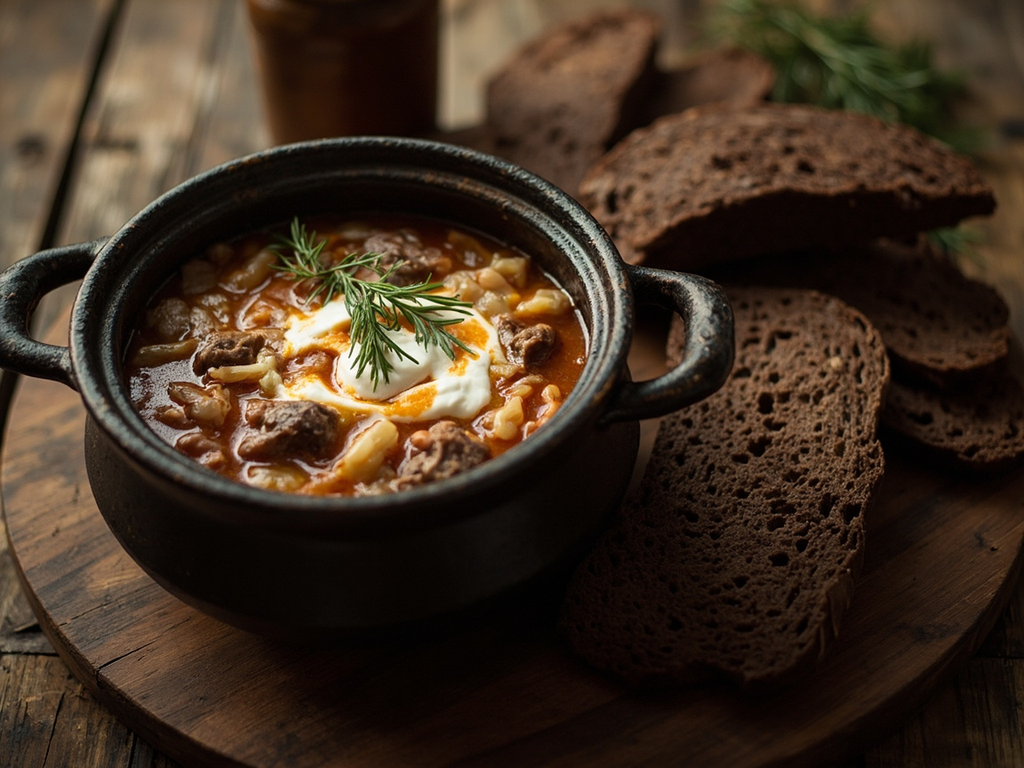
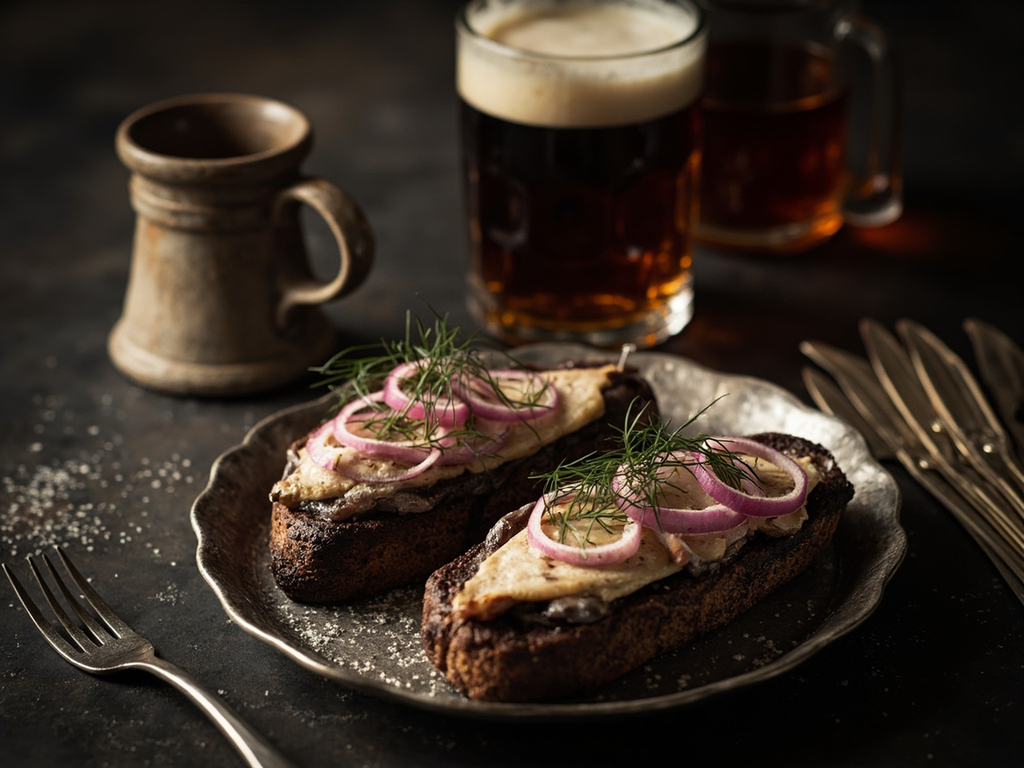
A thick slice of sourdough rye bread, buttered, topped with a fillet of salted herring and a little onion. This is the foundational bite of Denmark: hearty, direct, salty-tangy, eaten from morning to night.
Know, reader, that no one sits at Our table without first breaking rye bread, black and dense as the soil of Sjælland. We let it sour for several days before baking, for hasty rye is worthless and causes colic. On top, a herring drawn from the barrels of the Sound, which enriches Us as much as it satisfies you: consider that every ship passing Our strait pays Us good silver for this same fish! Eat it with an onion and a tankard of dark beer, and you will have dined like a man of the North.
- •Rye flour — the bulk of the dough (basic northern cereal)
- •Sour rye starter — a good portion from the day before (long fermentation, preservation)
- •Baltic herring salted in barrels — a few fillets (topping, Øresund signature)
- •Onion — a few rings (bite)
- •Butter — as desired (binding, richness)
- •Dark beer — a tankard (accompanying drink)
Rugbrød og spegesild — Sour Rye Bread and Salted Herring
A thick slice of sourdough rye bread, buttered, topped with a fillet of salted herring and a little onion. This is the foundational bite of Denmark: hearty, direct, salty-tangy, eaten from morning to night.
Why this dish? King of the Øresund Strait through which all Baltic herring passed, Frederick II derived his wealth from the Sound Dues and fish trade. On his table as on his subjects', dense rye bread and salted herring were the daily bread of the kingdom — the food that sustained both his ship crews and his own household.
Know, reader, that no one sits at Our table without first breaking rye bread, black and dense as the soil of Sjælland. We let it sour for several days before baking, for hasty rye is worthless and causes colic. On top, a herring drawn from the barrels of the Sound, which enriches Us as much as it satisfies you: consider that every ship passing Our strait pays Us good silver for this same fish! Eat it with an onion and a tankard of dark beer, and you will have dined like a man of the North.
Ingredients (period version)
- Rye flour — the bulk of the dough (basic northern cereal)
- Sour rye starter — a good portion from the day before (long fermentation, preservation)
- Baltic herring salted in barrels — a few fillets (topping, Øresund signature)
- Onion — a few rings (bite)
- Butter — as desired (binding, richness)
- Dark beer — a tankard (accompanying drink)
Ingredients
- Sourdough rye bread (rugbrød) — 4 thick slices (base)
- Salted herring fillets (matjes or spegesild) — 4 fillets, desalted if needed (topping)
- Red onion — 1 small, thinly sliced (fresh bite)
- Salted butter (demi-sel) — 30 g (spread)
- Fresh dill — a few sprigs (freshness (optional))
Method
- If the herring is very salty, soak it in cold water for 1–2 hours, then pat dry.
- Generously butter the rye bread slices.
- Place one herring fillet on each slice.
- Top with thin onion rings and a few sprigs of dill.
- Serve fresh, with a low-hop dark beer.
How it was made : In the 16th century, rye bread was made with long sourdough fermentation (surdej), the only method to make rye digestible and durable for weeks. Herring, caught in massive quantities in the Sound and Baltic, was salted in oak barrels immediately upon landing: it was a strategic commodity, taxed and exported throughout Northern Europe.
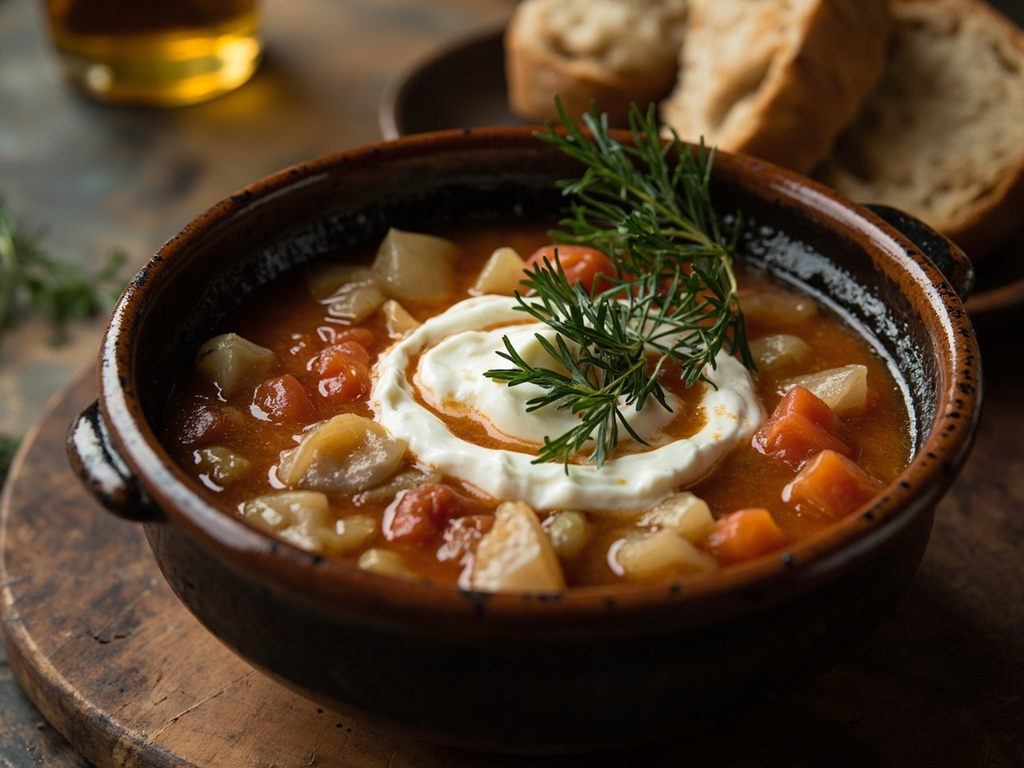
The contemporary twist : A smørrebrød for the table: rye bread, herring, onion pickled in mild vinegar, and a dollop of sour cream with dill — the direct ancestor of the famous Danish open-faced sandwich.
Sources : Koge Bog, Salomone Sartor, Copenhagen, 1616 · Libellus de arte coquinaria (Nordic culinary manuscript)
Frederick II of Denmark · Charactorium