 flip
flipStegt kronvildt — Roast Venison Haunch from the Kronborg Table
Stegt kronvildt — Roast Venison Haunch from the Kronborg Table
Why this dish? Builder of Kronborg Castle at Elsinore, Frederick II held lavish banquets worthy of a Nordic Renaissance court. Game from the royal forests — deer, boar, swan — crowned these tables, roasted on the spit and served with a Rhenish wine sauce, those same Rhine wines reserved for the high table on grand occasions.
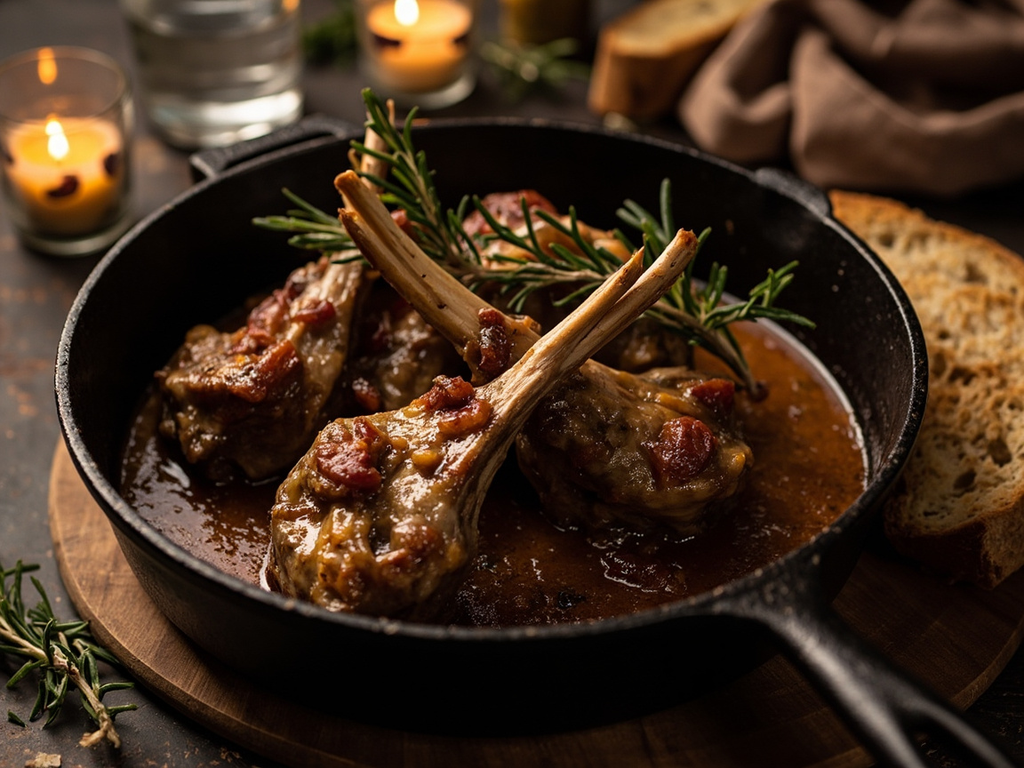
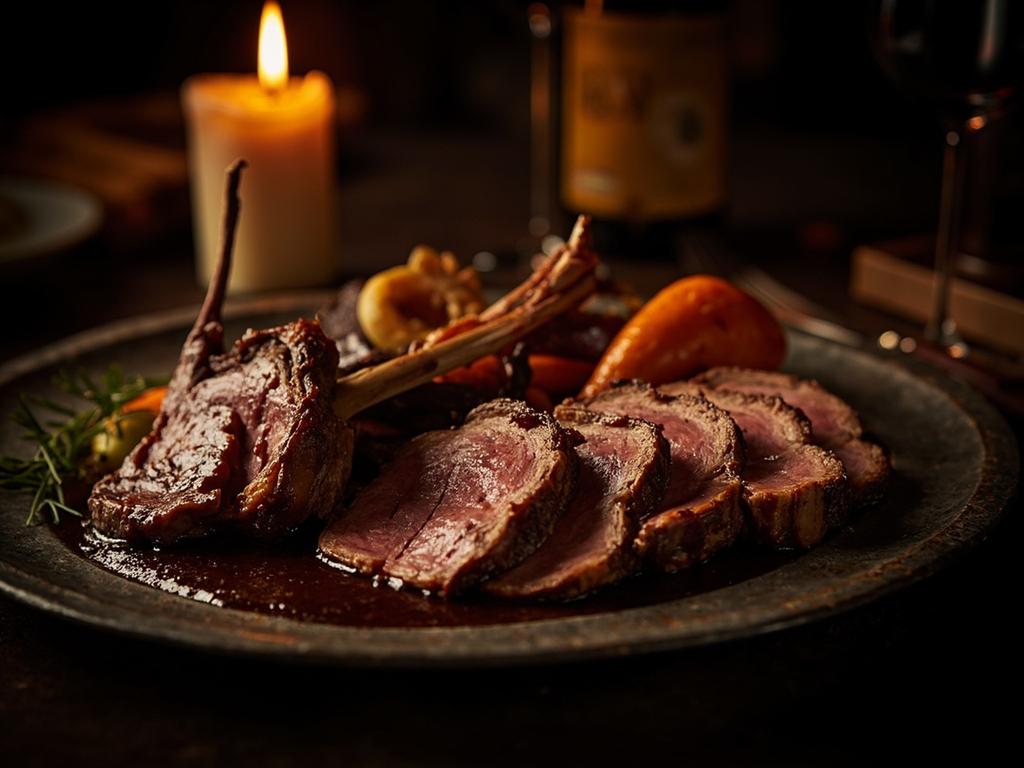
A haunch of venison larded with bacon and juniper berries, slow-roasted then coated in a dark sauce of Rhenish wine and spices. The showpiece dish of the royal banquet: noble meat, scent of boreal forest, depth of imported wine.
When We receive at the table of Kronborg, which We had built facing the strait, the whole deer from Our royal forests is dressed, larded and rubbed with juniper as befits northern game. The spit turns for hours, and the master cook bastes it with good Rhenish wine — the very same that We keep for Our high table, for beer suffices for the rest of the hall. Let the meat be served still bleeding, under its black sauce, and let the minstrels play: a king is known by his hunt as by his table.
- •Haunch of venison (kronvildt) — a fine piece (noble royal game meat)
- •Larding bacon — a few strips (tenderness, fat)
- •Juniper berries — a handful (resinous northern flavor)
- •Rhenish wine — a good glass (sauce, mark of the royal table)
- •Spices (ginger, clove, pepper) — to taste (imported spices, luxury)
- •Stale rye bread — a crumb (sauce thickener)
Stegt kronvildt — Roast Venison Haunch from the Kronborg Table
A haunch of venison larded with bacon and juniper berries, slow-roasted then coated in a dark sauce of Rhenish wine and spices. The showpiece dish of the royal banquet: noble meat, scent of boreal forest, depth of imported wine.
Why this dish? Builder of Kronborg Castle at Elsinore, Frederick II held lavish banquets worthy of a Nordic Renaissance court. Game from the royal forests — deer, boar, swan — crowned these tables, roasted on the spit and served with a Rhenish wine sauce, those same Rhine wines reserved for the high table on grand occasions.
When We receive at the table of Kronborg, which We had built facing the strait, the whole deer from Our royal forests is dressed, larded and rubbed with juniper as befits northern game. The spit turns for hours, and the master cook bastes it with good Rhenish wine — the very same that We keep for Our high table, for beer suffices for the rest of the hall. Let the meat be served still bleeding, under its black sauce, and let the minstrels play: a king is known by his hunt as by his table.
Ingredients (period version)
- Haunch of venison (kronvildt) — a fine piece (noble royal game meat)
- Larding bacon — a few strips (tenderness, fat)
- Juniper berries — a handful (resinous northern flavor)
- Rhenish wine — a good glass (sauce, mark of the royal table)
- Spices (ginger, clove, pepper) — to taste (imported spices, luxury)
- Stale rye bread — a crumb (sauce thickener)
Ingredients
- Venison roast (leg or fillet) — 1 kg (main piece)
- Smoked bacon lardons — 80 g for larding (tenderness)
- Juniper berries — 12, crushed (marinade and flavor)
- Dry white Rhenish wine (Riesling) — 25 cl (deglazing and sauce)
- Ground ginger and clove — 1 pinch each (spices)
- Stale rye bread — 1 slice, crumbled (thicken sauce)
- Butter — 40 g (cooking and binding)
Method
- The day before, rub the meat with crushed juniper, salt, and a little wine; refrigerate.
- Lard the roast with smoked bacon lardons.
- Sear the piece in butter on all sides, then roast at 160°C, basting regularly (about 20 min per 500 g for pink meat).
- Keep the meat warm. Deglaze the pan with Rhenish wine, add spices and crumbled bread, let reduce and thicken.
- Slice the roast, coat with dark sauce, serve with roasted root vegetables (turnip, carrot).
How it was made : In 16th-century Nordic courts, spit-roasted game was the pinnacle of the banquet, a sign of the sovereign's hunting wealth. Sauces were thickened with bread (not roux), spiced with costly Eastern imports — ginger, clove, pepper — and Rhenish wine marked the hall's hierarchy: wine for the nobles, beer for the rest.
The contemporary twist : "Royal Hunt" plating: venison medallions fanned out, mirror-smooth wine-juniper sauce, rye bread chips, and a compote of Nordic lingonberries (tyttebær) for a tangy touch.
Sources : Libellus de arte coquinaria (Nordic culinary manuscript) · Koge Bog, Copenhagen, 1616
Frederick II of Denmark · Charactorium