Frederick II the Great(1712 — 1786)
Frederick II of Prussia
royaume de Prusse
6 min read
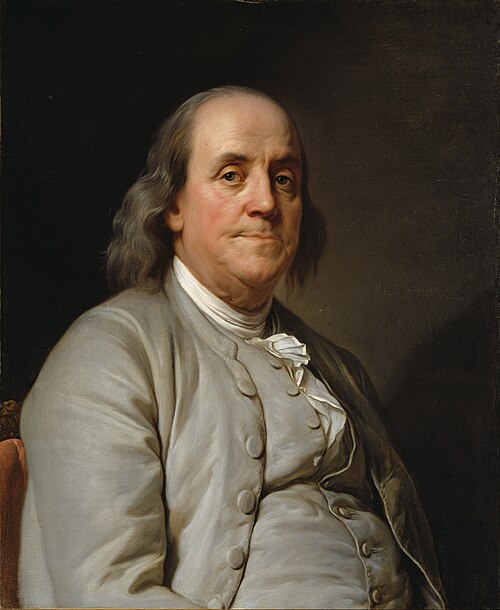
Frederick II, known as Frederick the Great, was King of Prussia from 1740 to 1786. An enlightened ruler and a leading military strategist, he turned Prussia into a major European power while corresponding with Enlightenment philosophers, including Voltaire.
Frequently asked questions
Famous Quotes
« I am the first servant of the State.»
Key Facts
- Came to the throne of Prussia in 1740 upon the death of his father Frederick William I
- Triggered the War of the Austrian Succession by invading Silesia (1740-1748)
- Led Prussia through the Seven Years' War (1756-1763) and kept Silesia
- Took part in the First Partition of Poland in 1772, gaining West Prussia
- Had the Sanssouci Palace built at Potsdam (1745-1747) and welcomed Voltaire there
Works & Achievements
Political treatise refuting Machiavelli's *The Prince*, in which Frederick defends the idea of a sovereign in the service of his people.
Acquisition of a rich and populous province that transformed Prussia into a leading power in Europe.
A masterpiece of rococo architecture that he designed as a philosophical and artistic retreat in Potsdam.
Historical account in which Frederick analyzes his wars and the European politics of his era.
Foundational text setting out his conception of the king as the “first servant of the State” and the organization of the kingdom.
Modernization of the law, abolition of judicial torture, and promotion of religious tolerance — a legacy of enlightened despotism.
The complex musical theme proposed by Frederick inspired Bach to compose one of his most famous works.
Anecdotes
As a teenager, Frederick struggled to cope with the military discipline imposed by his father, the “sergeant king” Frederick William I. In 1730, at the age of 18, he tried to flee to England with his friend Hans Hermann von Katte. Caught, the two young men were arrested: the king forced Frederick to witness his friend's execution, an ordeal that scarred him for life.
Frederick II was passionate about music and played the transverse flute remarkably well. He composed many sonatas and concertos himself, and organized concerts every evening at his palace of Sanssouci. In 1747, he received the composer Johann Sebastian Bach, to whom he proposed a complex musical theme that gave rise to *The Musical Offering*.
The king maintained a long correspondence with Voltaire, whom he admired and invited to his court at Potsdam from 1750 onward. But the two strong personalities eventually fell out in 1753, after quarrels over money and pride. Despite the break, they resumed their written correspondence until the end of their lives.
Frederick II adored dogs, especially his Italian greyhounds, whose company he often preferred to that of humans. He explicitly asked to be buried beside them on his estate of Sanssouci, simply and without pomp. This wish was not granted until 1991, more than two centuries after his death.
Nicknamed “the philosopher king,” Frederick II worked tirelessly and slept little, often rising before dawn. He called himself “the first servant of the State” and believed that the sovereign should devote himself entirely to the common good, the ideal of enlightened despotism.
Primary Sources
The sovereign, far from being the absolute master of the peoples under his rule, is himself only the first servant of the State.
I thank you for the trouble you have taken to polish my poor verses; a king who writes verse must expect to be corrected.
A prince is the first servant and the first magistrate of the State; he owes it an account of how he uses the taxes.
The possession of Silesia put us in a position to counterbalance the power of the House of Austria.
Key Places
Capital of the Kingdom of Prussia, where Frederick was born in 1712 and royal power was centered.
Rococo summer residence built from 1745, where Frederick lived, played the flute, and entertained philosophers. He died there in 1786.
Wealthy province seized from Austria in 1740, a major prize in his wars and a key factor in Prussia's rise to power.
Site of the 1757 battle where Frederick crushed a vastly superior Austrian army — widely regarded as a masterpiece of tactical warfare.
Fortress where the young Frederick was imprisoned in 1730 after his attempted escape, and where he was forced to witness the execution of von Katte.