 flip
flipPan de Muerto for the Casa Azul Ofrenda
Pan de Muerto for the Casa Azul Ofrenda
Why this dish? The Casa Azul set warm ofrendas; Frida, deeply attached to the Mexican imagery of death, placed on the altar the foods loved by the departed. Bread inspired by this living tradition, without reproducing the rite.
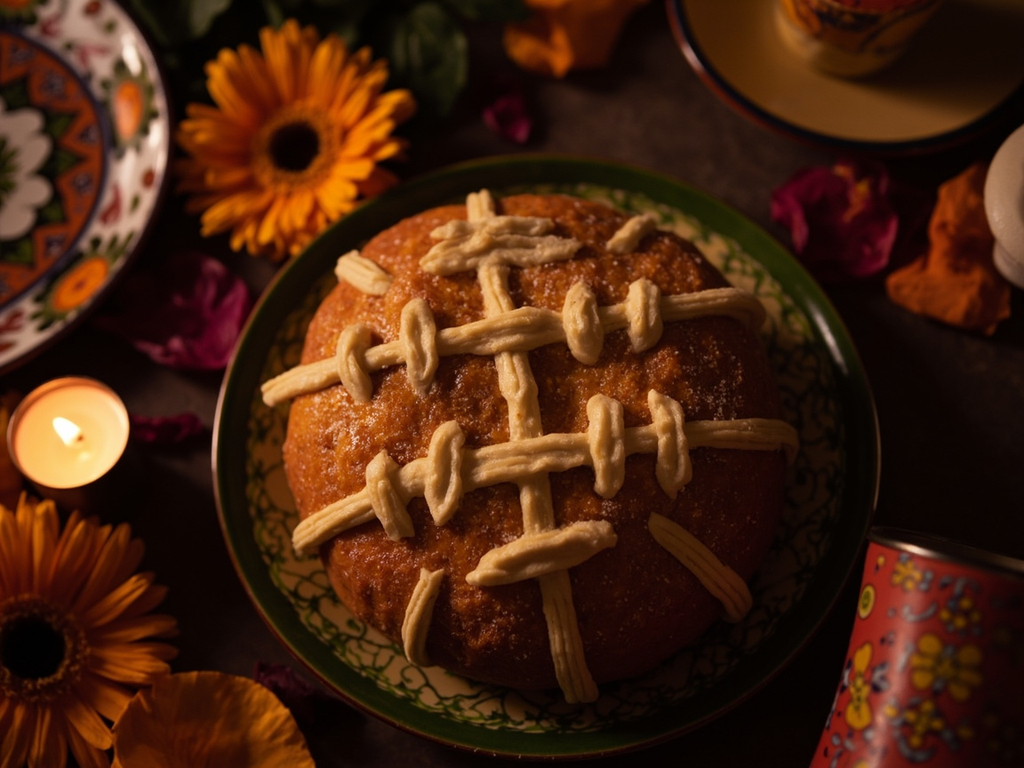
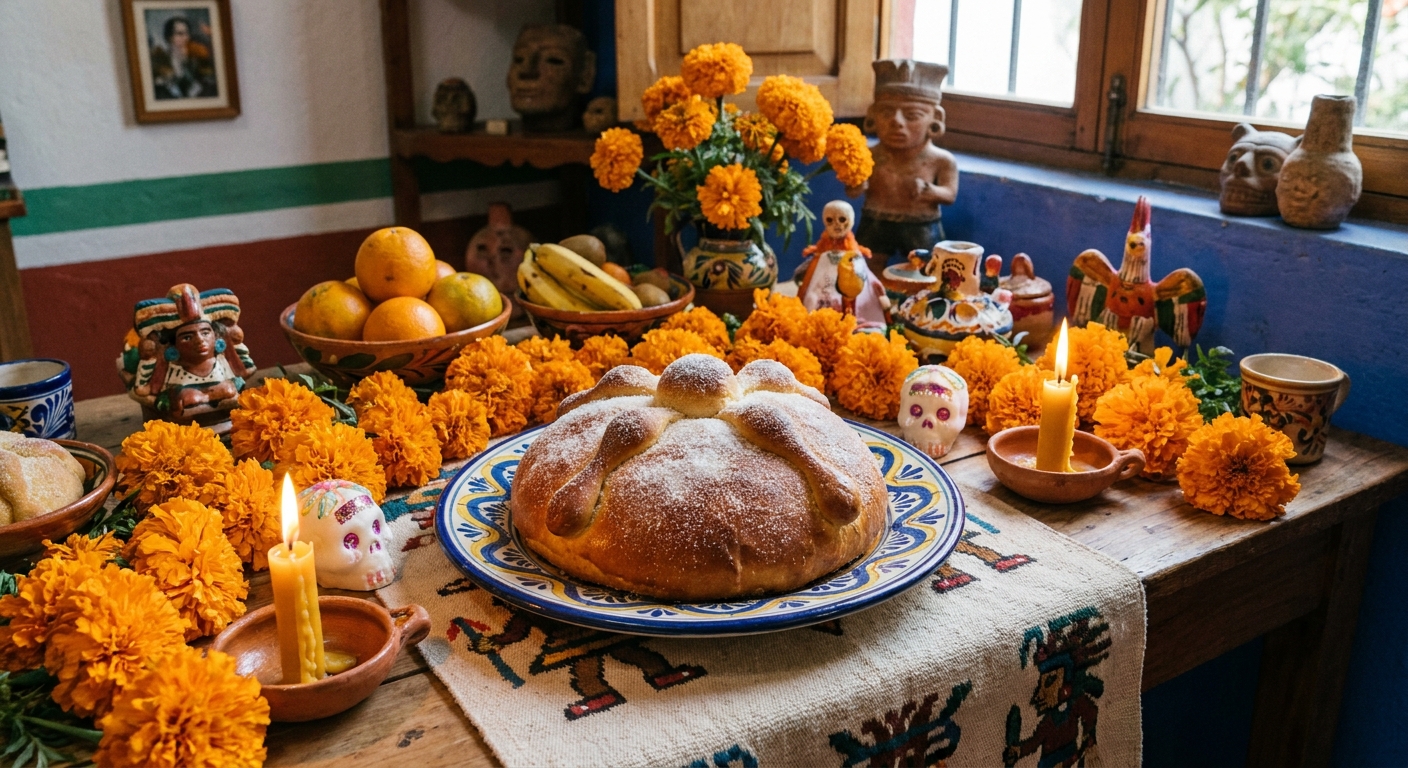
A soft brioche flavored with orange blossom water and zest, decorated with little dough 'bones' and dusted with sugar. It is placed on the Day of the Dead altar, then shared among the family.
In our house, death is not sad, it dances and eats! For Día de Muertos, I set the ofrenda with orange cempasúchil flowers, candles, and this round bread scented with orange blossom water that I shape with little bones on top, for those who have gone. We place it near their photo, let them breathe its soul, and afterward we eat it with hot chocolate, talking about them as if they were here. La Calavera and I are old friends.
- •Wheat flour — a large bowl (brioche base)
- •Eggs and butter — to taste (tenderness)
- •Orange blossom water — to taste (ritual fragrance)
- •Orange zest — to taste (aroma)
- •Sugar — to taste (sweetness and decoration)
Pan de Muerto for the Casa Azul Ofrenda
A soft brioche flavored with orange blossom water and zest, decorated with little dough 'bones' and dusted with sugar. It is placed on the Day of the Dead altar, then shared among the family.
Why this dish? The Casa Azul set warm ofrendas; Frida, deeply attached to the Mexican imagery of death, placed on the altar the foods loved by the departed. Bread inspired by this living tradition, without reproducing the rite.
In our house, death is not sad, it dances and eats! For Día de Muertos, I set the ofrenda with orange cempasúchil flowers, candles, and this round bread scented with orange blossom water that I shape with little bones on top, for those who have gone. We place it near their photo, let them breathe its soul, and afterward we eat it with hot chocolate, talking about them as if they were here. La Calavera and I are old friends.
Ingredients (period version)
- Wheat flour — a large bowl (brioche base)
- Eggs and butter — to taste (tenderness)
- Orange blossom water — to taste (ritual fragrance)
- Orange zest — to taste (aroma)
- Sugar — to taste (sweetness and decoration)
Ingredients
- All-purpose flour (T45) — 500 g (base)
- Eggs — 4 (richness)
- Soft butter — 120 g (tenderness)
- Sugar — 120 g (sweetness)
- Fresh baker's yeast — 20 g (leavening)
- Orange blossom water + orange zest — 2 tbsp + 1 orange (signature fragrance)
- Sugar for dusting — to taste (finish)
Method
- Dissolve yeast in a little warm milk. Mix flour, sugar, salt, eggs, orange blossom water, and zest.
- Knead 10 minutes, gradually incorporate soft butter until smooth and elastic. Let rise until doubled (1 h 30).
- Reserve a little dough for the 'bones'; form a ball with the rest, place bone strips on top and a small ball at the peak.
- Let rise another 45 minutes, brush with egg wash, bake at 180°C for 25 minutes.
- Brush with warm melted butter and roll in sugar.
How it was made : Pan de muerto has roots in the syncretism between pre-Hispanic traditions of offerings to the dead and the wheat bread brought after the Conquest. Mexican bakeries baked mountains of it in late October, and each household decorated its altar with cempasúchil flowers, sugar, and the favorite dishes of the departed.
The contemporary twist : Dust half white sugar, half bright pink sugar: the color of the paper flowers in her paintings.
Frida Kahlo · Charactorium