 flip
flipPan de Muerto — The Offering Bread, Inspired by Leonora's Mexico
Pan de Muerto — The Offering Bread, Inspired by Leonora's Mexico
Why this dish? Settled in Mexico City from 1942, Carrington absorbed the Mexican imaginary of death and the afterlife, which resonated with her own esoteric symbolism. Pan de muerto, a brioche perfumed with orange blossom and placed on Day of the Dead altars, is the bread of this offering culture that she adopted throughout her life in exile.
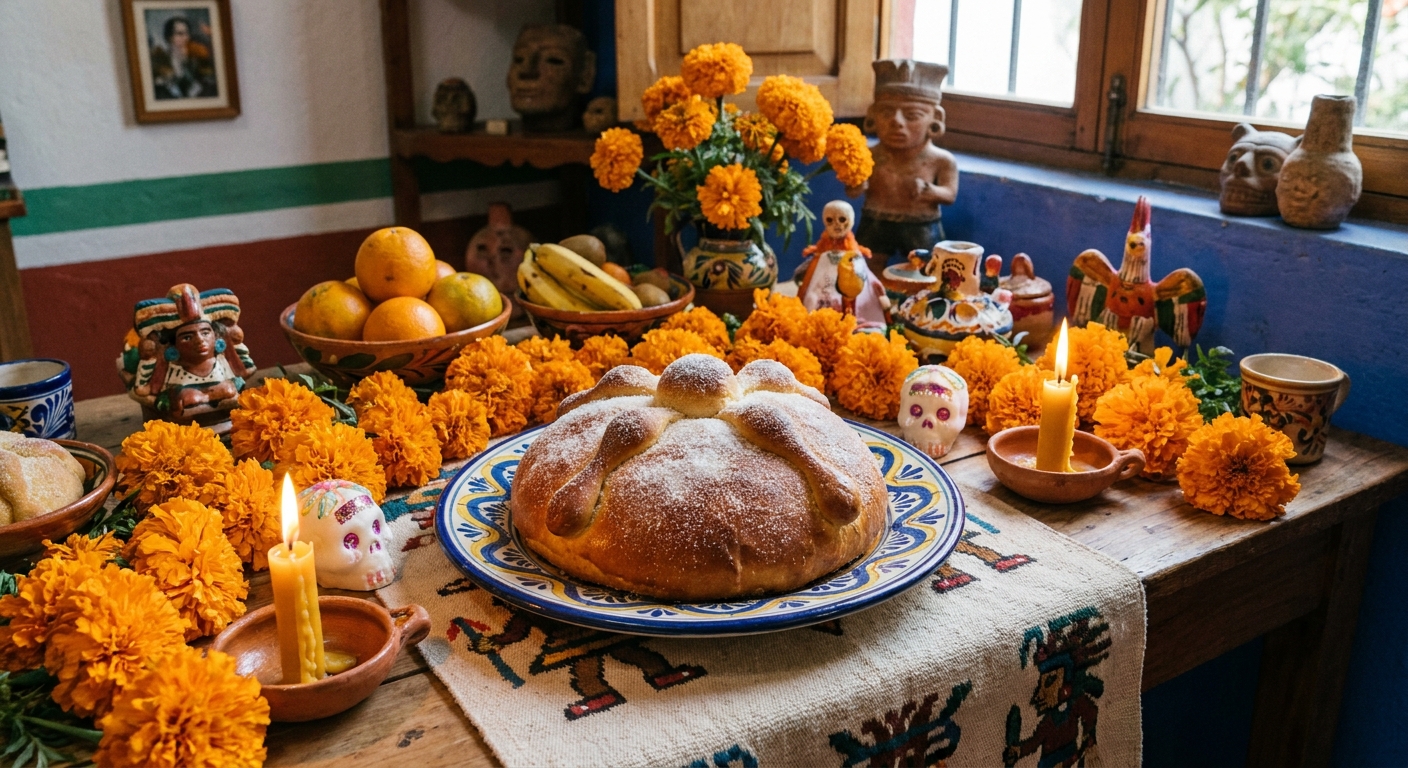
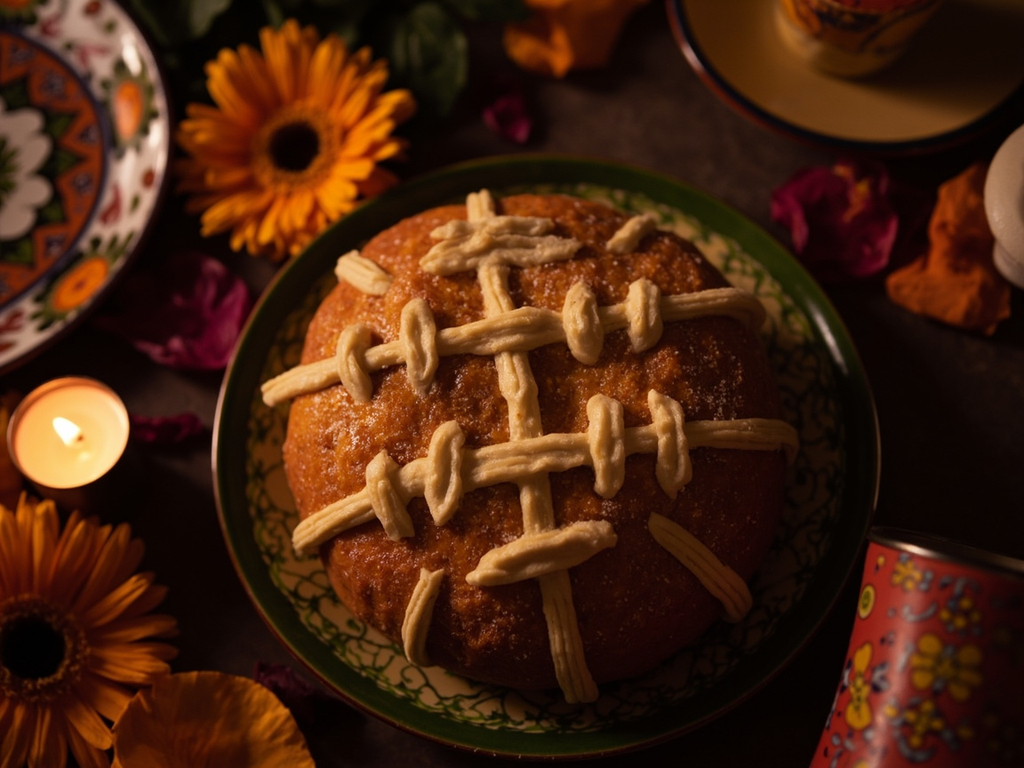
A round, soft brioche perfumed with orange blossom water and orange zest, decorated with 'little bones' of dough and dusted with sugar. A bread of offering and memory, set out for the departed before being shared by the living.
In Mexico, they don't just mourn the dead — they invite them to dinner! I learned to knead this round bread like a planet, to perfume it with orange blossom until the whole kitchen smells of paradise, then to lay little crossed dough bones on top. It is placed on the altar for those who have left, with a cup for their thirst. I, who have always known that the border between worlds is thin as a sheet of paper, found here a people who knew it before me.
- •Wheat flour — a large amount (structure)
- •Eggs — several (softness, color)
- •Butter — generously (richness)
- •Sugar — to taste (sweetness)
- •Orange blossom water — a splash (signature flavor)
- •Orange zest — from one orange (flavor)
- •Yeast — a piece (leavening)
Pan de Muerto — The Offering Bread, Inspired by Leonora's Mexico
A round, soft brioche perfumed with orange blossom water and orange zest, decorated with 'little bones' of dough and dusted with sugar. A bread of offering and memory, set out for the departed before being shared by the living.
Why this dish? Settled in Mexico City from 1942, Carrington absorbed the Mexican imaginary of death and the afterlife, which resonated with her own esoteric symbolism. Pan de muerto, a brioche perfumed with orange blossom and placed on Day of the Dead altars, is the bread of this offering culture that she adopted throughout her life in exile.
In Mexico, they don't just mourn the dead — they invite them to dinner! I learned to knead this round bread like a planet, to perfume it with orange blossom until the whole kitchen smells of paradise, then to lay little crossed dough bones on top. It is placed on the altar for those who have left, with a cup for their thirst. I, who have always known that the border between worlds is thin as a sheet of paper, found here a people who knew it before me.
Ingredients (period version)
- Wheat flour — a large amount (structure)
- Eggs — several (softness, color)
- Butter — generously (richness)
- Sugar — to taste (sweetness)
- Orange blossom water — a splash (signature flavor)
- Orange zest — from one orange (flavor)
- Yeast — a piece (leavening)
Ingredients
- All-purpose flour (T45) — 500 g (structure)
- Eggs — 4 (softness)
- Softened butter — 120 g (richness)
- Sugar — 120 g (sweetness)
- Orange blossom water — 2 tbsp (signature flavor)
- Zest of 1 orange — 1 (flavor)
- Fresh baker's yeast — 20 g (leavening)
- Warm milk — 10 cl (hydration)
- Melted butter + sugar for finishing — 30 g + 40 g (decoration)
Method
- Dissolve the yeast in warm milk with a pinch of sugar, let foam for 10 minutes.
- Mix flour, sugar, orange zest; add eggs, yeast, and orange blossom water; knead.
- Gradually incorporate the softened butter and knead until smooth and elastic; let double in volume, about 2 hours.
- Set aside a little dough for the 'bones' and the central 'tear'; shape a ball, place the crossed bone strips on top.
- Let rise for 1 hour, then bake at 180°C for about 25-30 minutes.
- When out of the oven, brush with melted butter and roll in sugar.
How it was made : Pan de muerto descends from festive breads blending indigenous traditions and European wheat and sugar brought after the Conquest. Its dough 'bones' and central ball evoke the deceased; it is placed on *ofrendas* on November 1-2. Here it is presented 'inspired by' this living, respected tradition, not as a reproduction of a sacred rite.
The contemporary twist : Glaze half the loaves with orange blossom icing and the other half with colored sugar, and arrange them in a circle like a round of creatures — very close to Carrington's circular compositions.
Leonora Carrington · Charactorium