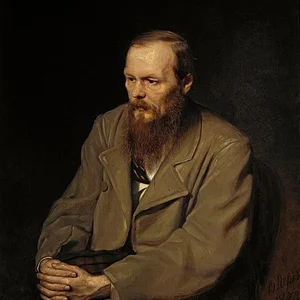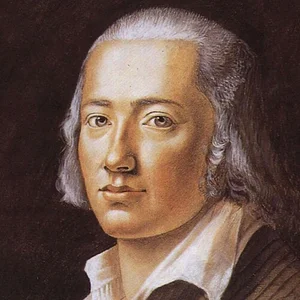

German poet, a major figure of German Romanticism and Idealism, and a fellow student of Hegel and Schelling. His work, suffused with a longing for ancient Greece and the divine, was rediscovered in the 20th century. He spent the second half of his life as a recluse, lost in madness.
Friedrich Hölderlin(1770 — 1843)
Friedrich Hölderlin
Royaume du Wurtemberg
7 min read
Frequently asked questions
Famous Quotes
« But where danger is, grows the saving power also.»
« Poetically, man dwells on this earth.»
« What has always made the State a hell on earth has been precisely that man has tried to make it his heaven.»
Key Facts
- Born in 1770 in Lauffen am Neckar, in the Duchy of Württemberg.
- Studied theology at the seminary (Stift) in Tübingen alongside Hegel and Schelling from 1788.
- Published the epistolary novel *Hyperion* between 1797 and 1799.
- Descended into mental illness from 1806 and lived as a recluse in a tower in Tübingen until his death.
- Died in 1843; his work was fully rediscovered in the early 20th century.
Works & Achievements
Epistolary novel in two volumes, a masterpiece of German lyricism blending love, longing for Greece, and the quest for the divine.
Unfinished tragedy, written in three versions, about the Greek philosopher who throws himself into Mount Etna: a meditation on humanity, nature, and the sacred.
A great elegy questioning the time of distress when the ancient gods withdrew from the world, a central poem of his work.
Hymn dedicated to the Landgrave of Homburg, famous for its lines “But where danger is, grows the saving power also.”
Bold translations of the Greek tragedies, long considered strange, now admired for their power and their faithfulness to the Greek.
A short poem that became emblematic, in which the radiant summer tips over into winter and silence, on the threshold of his illness.
Great river and patriotic hymns that established his reputation as the greatest hymnic poet of the German language.
Anecdotes
While a student at the Protestant seminary in Tübingen, Hölderlin shared his room with two classmates destined for greatness: the future philosophers **Hegel** and **Schelling**. Thrilled by the French Revolution, the young men are said to have planted a “liberty tree” together and sang *La Marseillaise* in the hallways.
Hired as a tutor by the wealthy banker **Gontard** in Frankfurt, Hölderlin fell head over heels in love with his employer's wife, **Susette**. He transformed her into an ideal figure in his poems under the Greek name “Diotima.” Their impossible love ended with his dismissal from the household.
In **1802**, Hölderlin abruptly left his tutoring post in **Bordeaux** and crossed France on foot to return to Germany. He arrived exhausted and already troubled in mind, and soon after learned of Susette Gontard's death, a shock from which he never truly recovered.
For the last 36 years of his life, Hölderlin lived as a recluse in a tower on the banks of the **Neckar**, in **Tübingen**, taken in by a carpenter named **Ernst Zimmer** who, moved by his novel *Hyperion*, had given him shelter. There he played the piano and the flute for hours on end.
Late in life, Hölderlin signed his short poems with the imaginary name “Scardanelli” and dated them to fanciful centuries, such as “24 May 1748” or “1940.” Curious visitors would come to see him and leave with these verses scribbled on request.
Primary Sources
“You walk up there in the light, on soft ground, blessed spirits! […] But to us it is given to find rest in no place.”
“Near is the god, and hard to grasp. But where the danger is, there grows also that which saves.”
“With its yellow pears and full of wild roses, the land leans into the lake. […] Alas, where shall I find, when winter comes, the flowers?”
“We learn nothing with more difficulty than the free use of what is our own.”
Key Places
Small town in Württemberg where Hölderlin was born in 1770, on the banks of the Neckar, the river that would run through his whole life and work.
The Protestant seminary where Hölderlin studied theology alongside Hegel and Schelling, a cradle of the young German idealist generation.
Home of the banker where Hölderlin worked as a tutor and met Susette Gontard, the “Diotima” of his poems.
Hölderlin was a tutor here in 1802; he left abruptly on foot, and this journey marked the turning point toward his illness.
Town where Hölderlin secured a librarian's post and composed several of his great late hymns, under the protection of the landgrave.
Tower on the banks of the Neckar where the poet lived in seclusion for 36 years, taken in by the family of the carpenter Zimmer, until his death in 1843.
Typical Objects

The poet's daily instrument, with an inkwell and paper, for composing hymns, elegies, and letters. Hölderlin tirelessly crossed out and reworked his drafts.

The epistolary novel that made Hölderlin's reputation, told through the letters of a young idealistic Greek. It was this book that touched the carpenter Zimmer.

During his seclusion in Tübingen, Hölderlin spent hours at the keyboard, improvising and playing for his rare visitors. Music had become his principal language.

An instrument the poet had practiced since his youth and continued to play in the tower. A testament to the place of music in the education of the learned of his time.

Greek edition of the ancient tragedies that Hölderlin translated into German (Antigone, Oedipus Rex). The Greek world was at the heart of all his work.

Correspondence was the great mode of connection of the era; Hölderlin exchanged letters with Schiller, Hegel, his mother, and Susette “Diotima”. Several of his poems were born from letters.
School Curriculum
Vocabulary & Tags
Key Vocabulary
Daily Life
Morning
As a young man, Hölderlin rose early for prayers and classes at the seminary, studying Greek, Latin and theology. In the tower at Tübingen, grown old, he would wake before dawn, pace his room talking to himself and greet passers-by through the window.
Afternoon
As a tutor, he devoted the afternoon to instructing his employers' children and reading the Ancients. Later, a recluse, he walked in the little garden by the Neckar and sometimes picked flowers that he wore in his buttonhole.
Evening
In the evening, he composed his poems by candlelight or wrote long letters. In the tower, he played the piano and the flute for hours, sometimes until he wore down the keys.
Food
Hölderlin ate simply, in the manner of Württemberg: bread, soups, vegetables, fruit from the orchard like the pears of his poems. As a recluse, he ate the modest meals prepared by the Zimmer family.
Clothing
As a theology student, he wore the dark, sober dress of the Protestant seminarian. As a tutor, he dressed like a cultivated gentleman; in the tower, his appearance grew unkempt, and he often kept the same old suit.
Housing
He lived in turn in the austere dormitory of the Stift, in the fine bourgeois homes of his employers in Frankfurt, then in the modest round tower of the carpenter Zimmer, a simple room opening onto the Neckar.
Historical Timeline
Period Vocabulary
Liens externes & ressources
Références
Œuvres
Hyperion ou l'Ermite en Grèce
1797-1799
La Mort d'Empédocle (Der Tod des Empedokles)
1797-1800
Pain et Vin (Brot und Wein)
vers 1800-1801
Traductions de Sophocle (Antigone, Œdipe roi)
1804
La Moitié de la vie (Hälfte des Lebens)
1805
Le Rhin, L'Archipel, Célébration de la paix
1800-1803