 flip
flipTarichos, Salted Preserved Small Fish
Tarichos, Salted Preserved Small Fish
Why this dish? The Mediterranean is the domain of the Nereids, and Sicily lived from its fisheries. Salted fish (*tarichos*) allowed the sea to be kept in a jar all year: it is the daily food of the coastal cities that Galatea protects, the portion of the waves preserved for days without fishing.
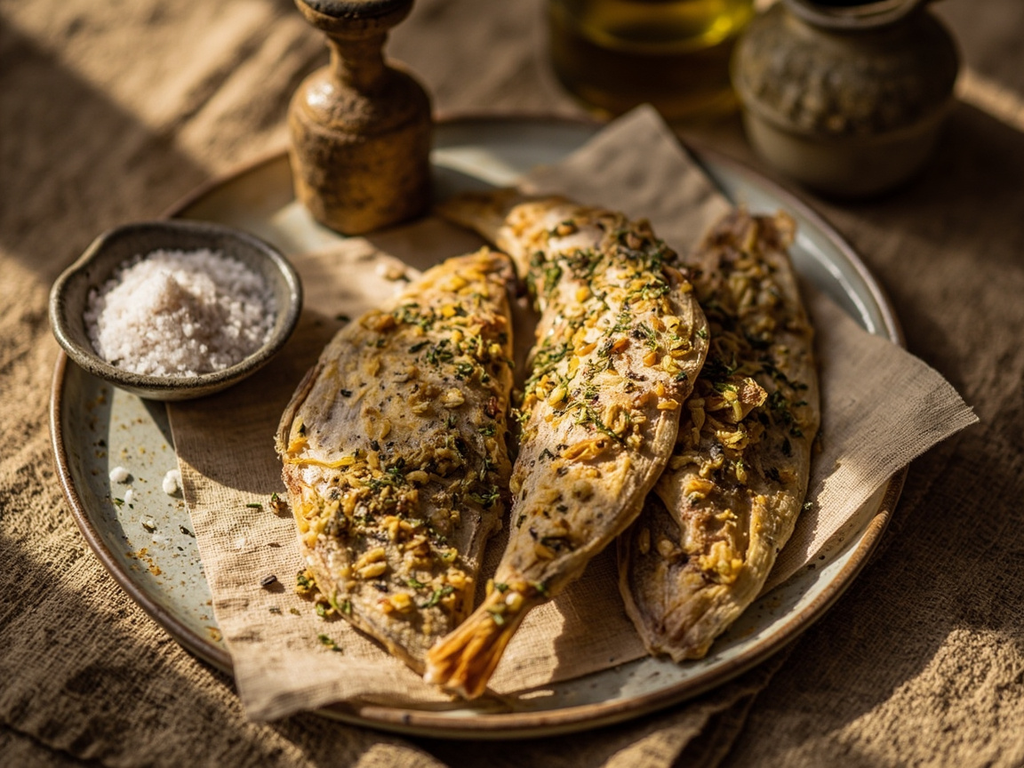
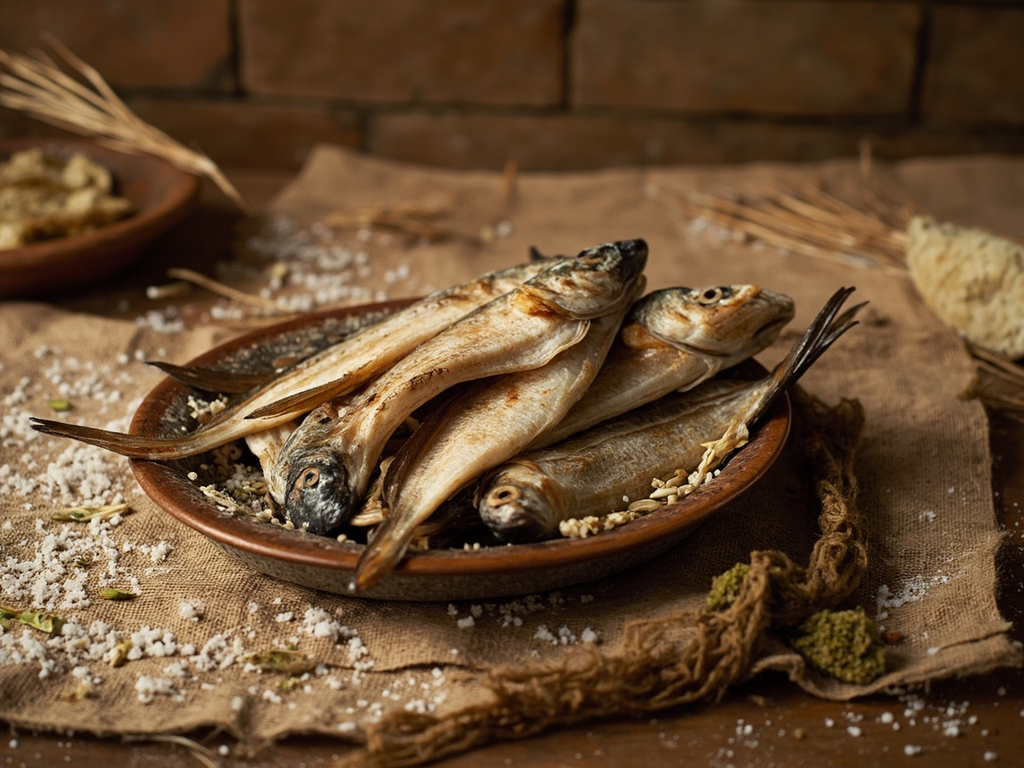
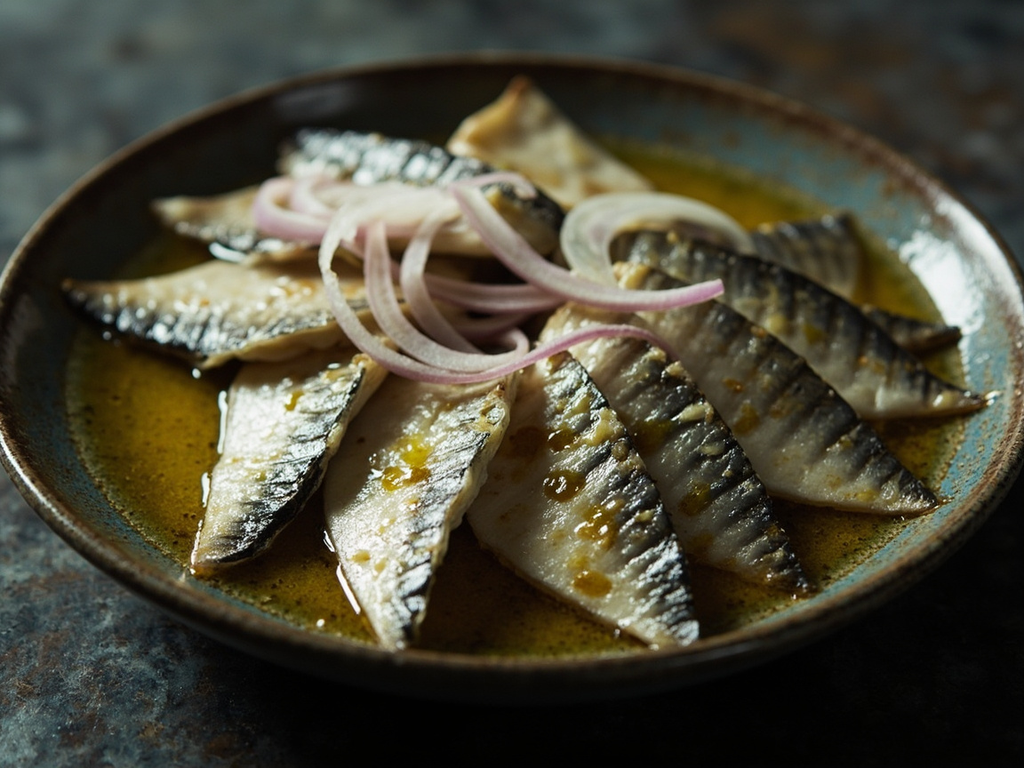
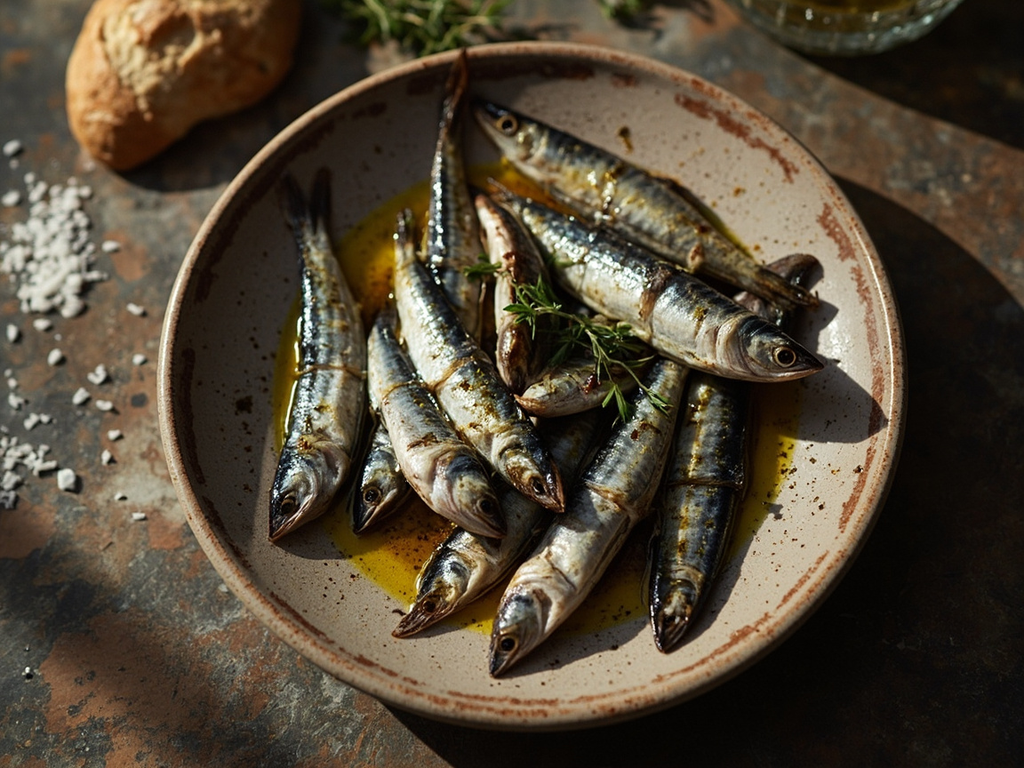
Small fish (anchovies, sardines) salted and left to mature, to nibble with bread and oil. Saline, powerful, deeply marine: the sea concentrated to last through winter.
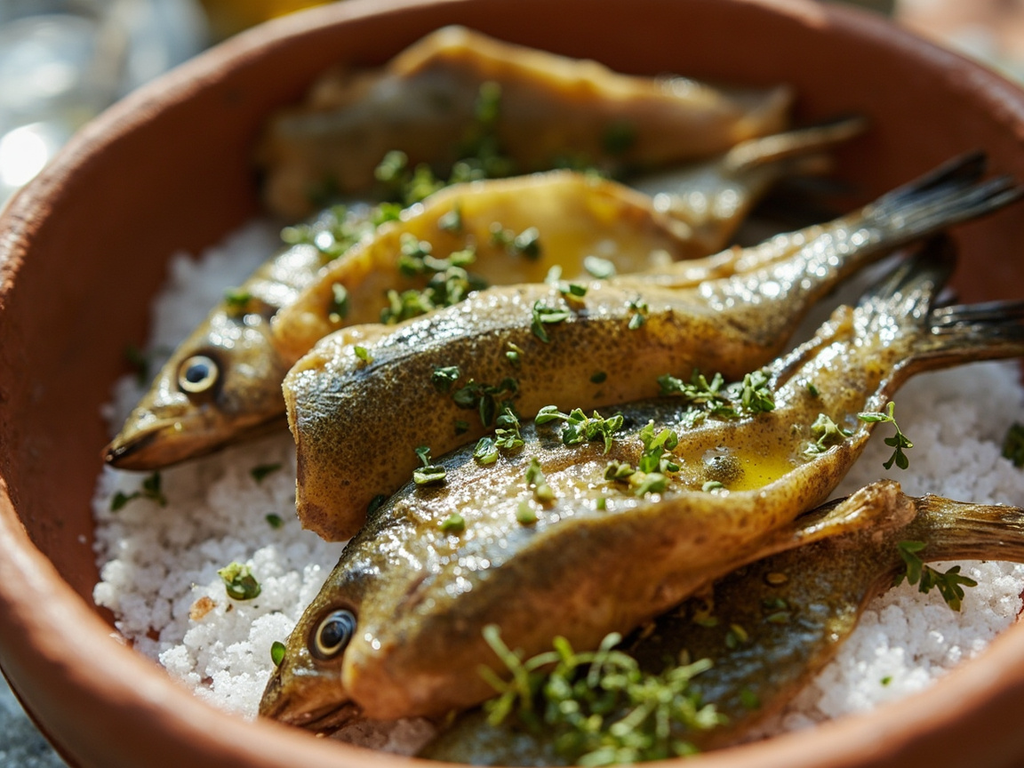
The sea is not always generous, mortal, and the wise fisherman puts aside. See these small silver fish: arrange them in layers in the jar, salt on top, more salt, and let time do its work. When winter closes the waves and no boat goes out, you will open the jar and the sea will be there, salted and alive, with a little bread and oil. Thus my domain feeds you even when my waves drive you back.
- •Small fish (anchovies, sardines) — what the catch yields (material to salt)
- •Sea salt — in abundance (preserving agent)
- •Olive oil — for serving (binder and softener)
- •Herbs (oregano, fennel) — to taste (flavor)
Tarichos, Salted Preserved Small Fish
Small fish (anchovies, sardines) salted and left to mature, to nibble with bread and oil. Saline, powerful, deeply marine: the sea concentrated to last through winter.
Why this dish? The Mediterranean is the domain of the Nereids, and Sicily lived from its fisheries. Salted fish (*tarichos*) allowed the sea to be kept in a jar all year: it is the daily food of the coastal cities that Galatea protects, the portion of the waves preserved for days without fishing.
The sea is not always generous, mortal, and the wise fisherman puts aside. See these small silver fish: arrange them in layers in the jar, salt on top, more salt, and let time do its work. When winter closes the waves and no boat goes out, you will open the jar and the sea will be there, salted and alive, with a little bread and oil. Thus my domain feeds you even when my waves drive you back.
Ingredients (period version)
- Small fish (anchovies, sardines) — what the catch yields (material to salt)
- Sea salt — in abundance (preserving agent)
- Olive oil — for serving (binder and softener)
- Herbs (oregano, fennel) — to taste (flavor)
Ingredients
- Fresh anchovies or sardines — 500 g (material)
- Coarse sea salt — 250 to 300 g (preservation)
- Extra virgin olive oil — for serving (softener)
- Dried oregano and fennel seeds — 1 tsp each (flavor)
- Barley bread — to accompany (support)
Method
- Clean the fish (head and gut sardines; leave anchovies whole if very small).
- Spread a layer of coarse salt at the bottom of a jar or container, then alternate layers of fish and salt.
- Finish with a good layer of salt, cover, and let mature in a cool place: a few days for a mild version, several weeks for a true salting.
- When serving, rinse the fish of excess salt, pat dry.
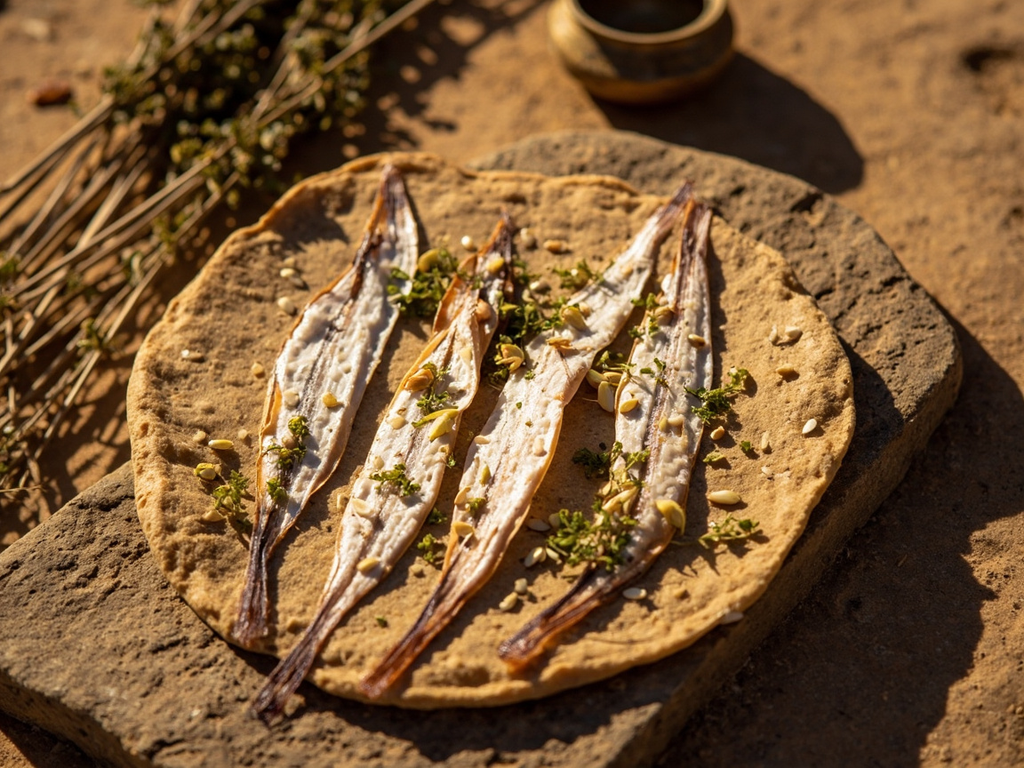
- Drizzle with olive oil, sprinkle with oregano and fennel seeds, and enjoy with barley bread.
How it was made : *Tarichos* (salted/dried fish) was a pillar of Mediterranean diet and trade: salting allowed fish to be preserved and transported far from the coasts. Sicily and Magna Graecia had important fisheries and salting works. These workshops also produced fermented fish sauces (Greek *garos*, ancestor of Roman *garum*). It was a popular, cheap *opson*, eaten with bread.
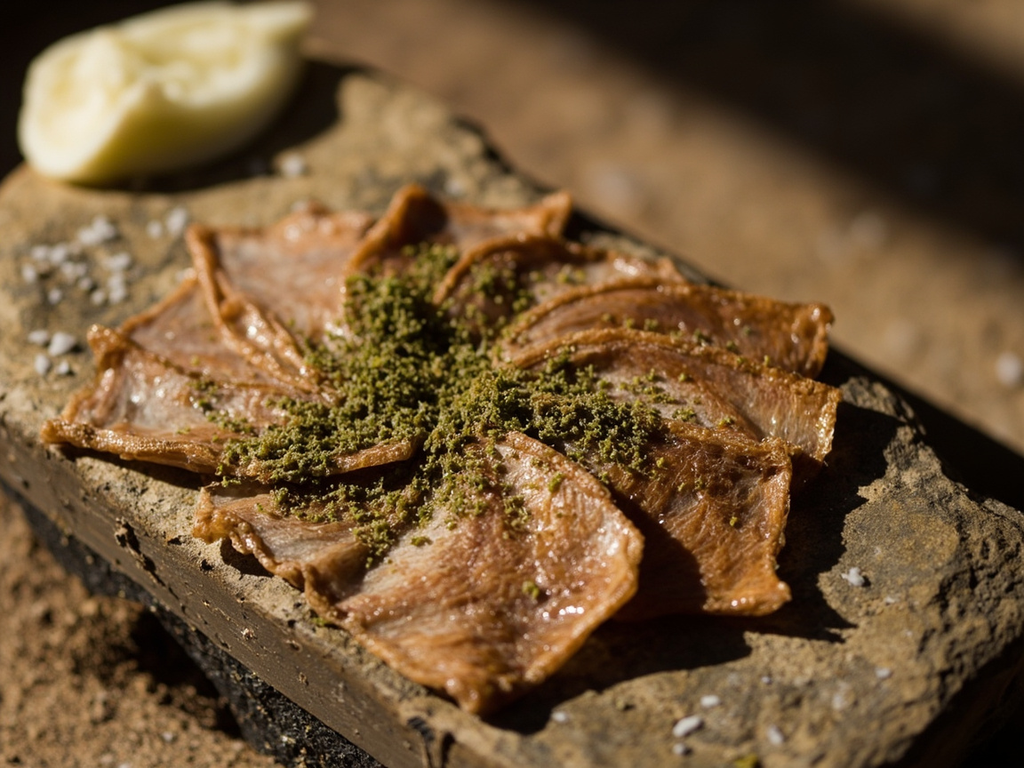
The contemporary twist : Served on a 'Nereid's board': rinsed salted fillets, lemon-infused olive oil, oregano, on grilled barley bread — a Mediterranean tapas version.
Sources : Athenaeus of Naucratis, Deipnosophists (tarichos and salted fish) · Pliny the Elder, Natural History (salted fish and garum)
Galatea · Charactorium