 flip
flipMish — Cheese for Lean Days
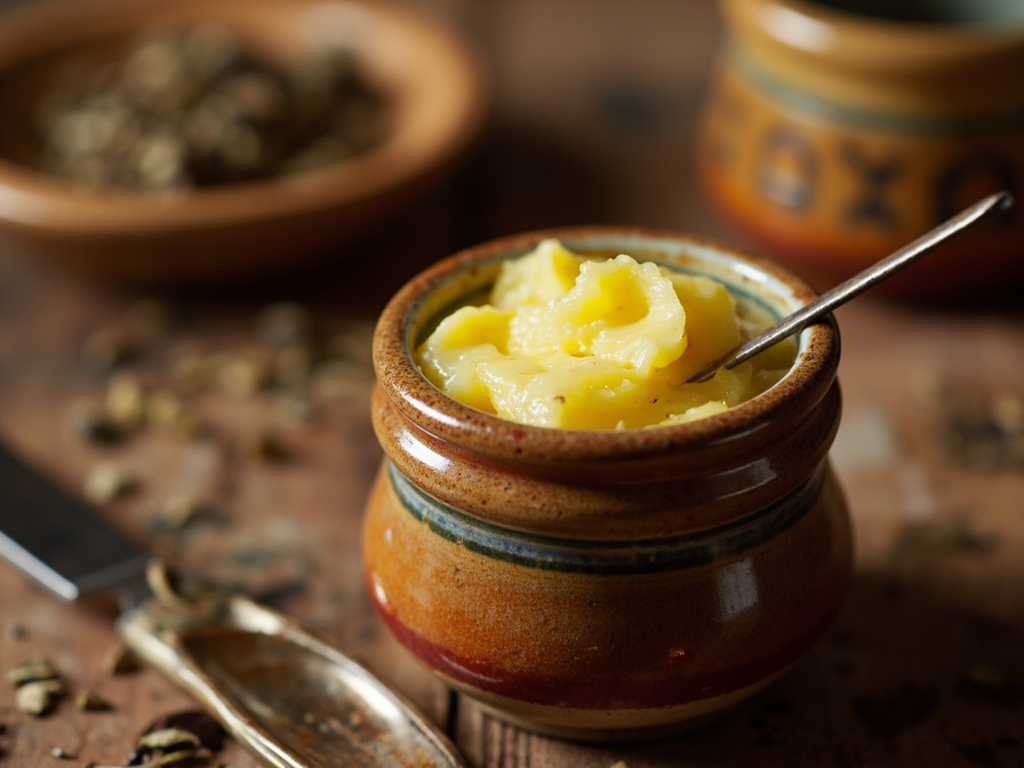
Mish — Cheese for Lean Days
Why this dish? Mish is the fermented cheese of modest families in the Egyptian countryside, where Nasser came from. A jar was kept in every home in Upper Egypt, aged for months, to get through lean seasons — a taste of the future president's village childhood.
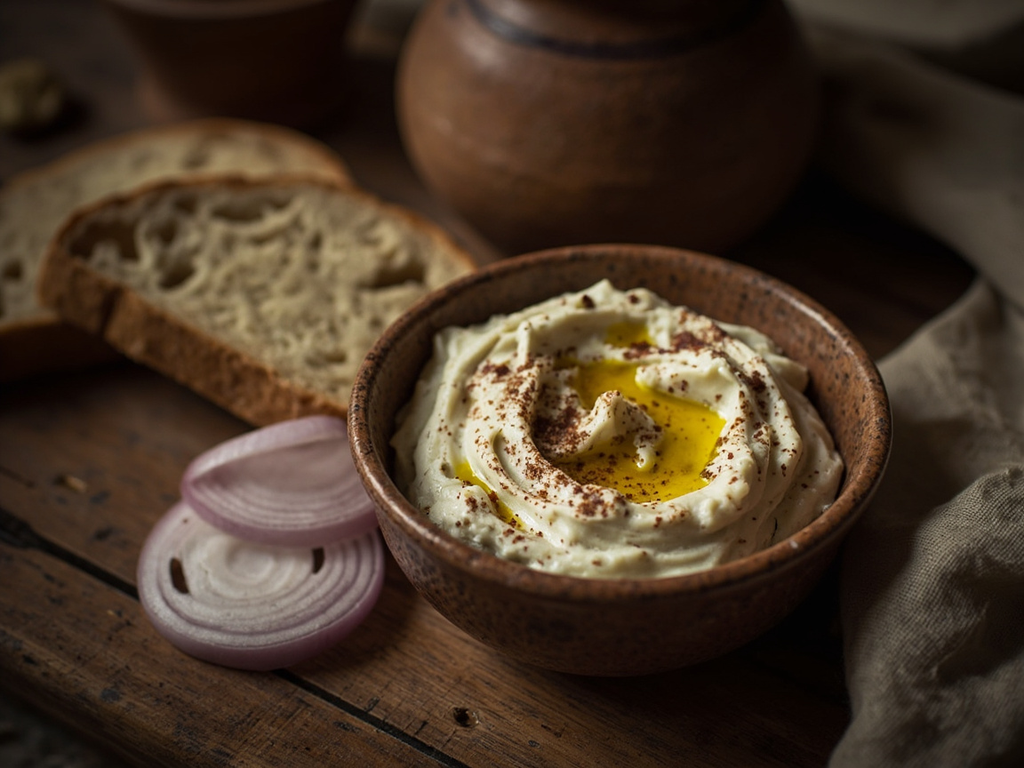
A salted fresh cheese, long aged in a spiced brine until it becomes pungent, sharp, and creamy. Spread on bread in the early morning or on evenings of scarcity: the protein that keeps without ice, treasure of the peasant pantry.
In our villages, my brother, nothing was thrown away and nothing was lacking if you knew how to wait. The mish slept in its jar for months on end, in the cool corner of the house, and the older it got, the more character it had — like a man. A little on bread, and the fellah held out till evening. That is the wisdom of the poor: make it last, let it ferment, never depend on anyone. Egypt too must learn to feed itself.
- •Fresh peasant cheese (areesh) — several patties (base)
- •Salt — generously (preservation)
- •Sour whey — enough to cover (brine)
- •Cumin, fenugreek, coriander — a mixed handful (aging spices)
- •Dried chili — to taste (fire)
Mish — Cheese for Lean Days
A salted fresh cheese, long aged in a spiced brine until it becomes pungent, sharp, and creamy. Spread on bread in the early morning or on evenings of scarcity: the protein that keeps without ice, treasure of the peasant pantry.
Why this dish? Mish is the fermented cheese of modest families in the Egyptian countryside, where Nasser came from. A jar was kept in every home in Upper Egypt, aged for months, to get through lean seasons — a taste of the future president's village childhood.
In our villages, my brother, nothing was thrown away and nothing was lacking if you knew how to wait. The mish slept in its jar for months on end, in the cool corner of the house, and the older it got, the more character it had — like a man. A little on bread, and the fellah held out till evening. That is the wisdom of the poor: make it last, let it ferment, never depend on anyone. Egypt too must learn to feed itself.
Ingredients (period version)
- Fresh peasant cheese (areesh) — several patties (base)
- Salt — generously (preservation)
- Sour whey — enough to cover (brine)
- Cumin, fenugreek, coriander — a mixed handful (aging spices)
- Dried chili — to taste (fire)
Ingredients
- Feta or salted fresh cheese — 250 g, crumbled (base)
- Plain yogurt — 100 g (ferment)
- Salt — 1 tsp (preservation)
- Ground cumin — 1 tsp (spice)
- Ground fenugreek — 1/2 tsp (aging spice)
- Mild or hot chili — 1/2 tsp (fire)
- Olive oil — 2 tbsp (binder)
Method
- Mash the feta with the yogurt until a coarse paste forms.
- Stir in salt, cumin, fenugreek, and chili; mix well.
- Pack into a clean jar, smooth the surface, cover with a drizzle of oil.
- Let ferment in a cool place for 1 to 2 weeks (taste: it gains strength over time).
- Serve a small amount spread on bread, with a few slices of raw onion.
How it was made : Authentic mish matures for months, sometimes years, in an earthenware jar where fresh cheese is added over time — the oldest family jar was passed down through generations. Residues of similar fermented cheeses have been found in ancient Egyptian tombs, making it one of the oldest cheeses in the world.
The contemporary twist : Served as a quenelle on a toasted baladi bread cracker, with a drizzle of oil and smoked chili — village nostalgia in an appetizer bite.
Sources : Magda Mehdawy, My Egyptian Grandmother's Kitchen · Paul Kindstedt, Cheese and Culture
Gamal Abdel Nasser · Charactorium