 flip
flipKvachena Kapusta — Fermented Cabbage for Winter
Kvachena Kapusta — Fermented Cabbage for Winter
Why this dish? Preserving cabbage by fermentation is the shared gesture of Schnittke's two heritages: Russian *kvachena kapusta* and the Volga German *Sauerkraut* are the same sour cabbage, kept in barrels to get through the long winter. It is the cuisine of foresight and scarcity that he always knew.
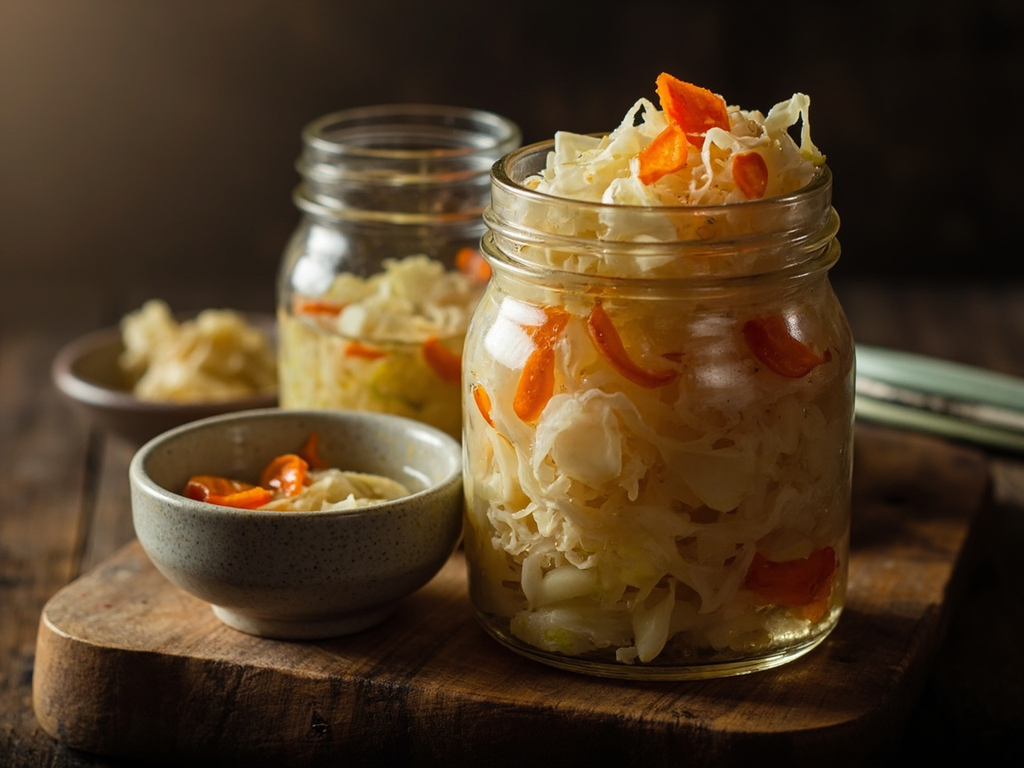
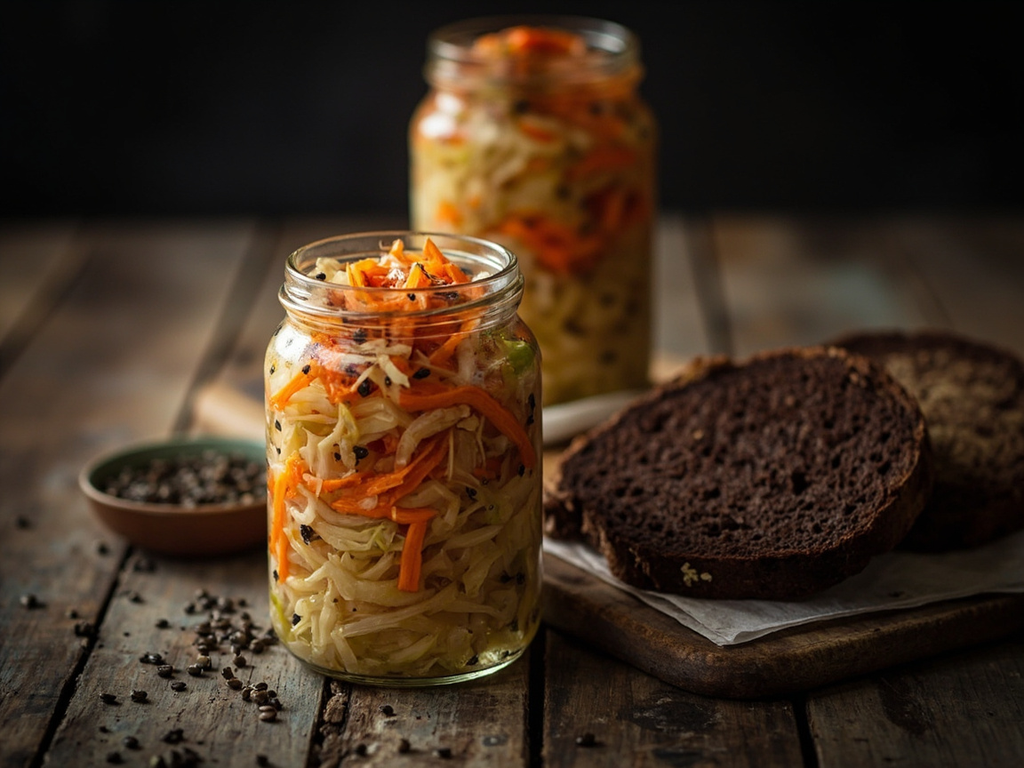
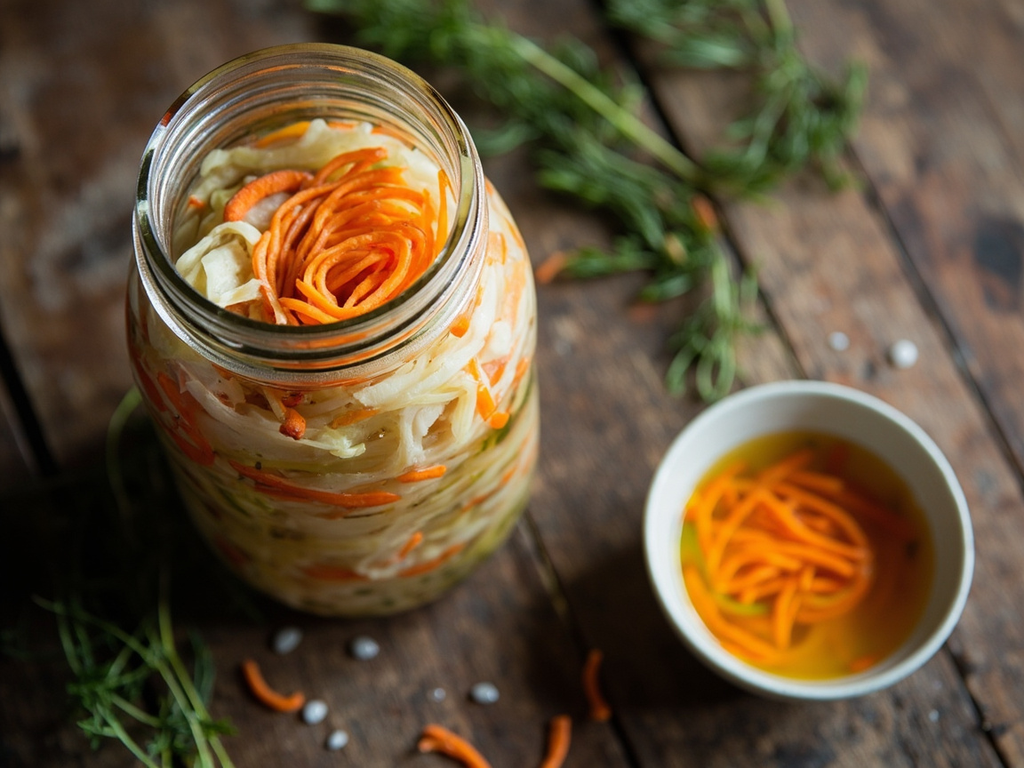
Finely shredded white cabbage, salted and packed with a little carrot, left to ferment for a few days until crunchy, tangy, and alive. A vitamin reserve for winter, to snack on or cook with.
We threw nothing away and planned everything: in autumn, we grated mountains of cabbage for winter, salted it, packed it into a big pot until it released its juice. Russians and Volga Germans made the same gesture, the same sour cabbage—kapusta here, Sauerkraut there. You pack it tight to push out the air, you poke it every day with a clean stick to release the bubbles, and you wait. When outside everything is frozen and gray, that tangy crunch reminds you that there's still life in the jar.
- •White cabbage — one large head (base)
- •Carrot — 1 or 2 (color, sweetness)
- •Salt — in proportion (2% of weight) (brining, fermentation)
- •Dill or caraway seeds — a pinch (flavor (optional))
Kvachena Kapusta — Fermented Cabbage for Winter
Finely shredded white cabbage, salted and packed with a little carrot, left to ferment for a few days until crunchy, tangy, and alive. A vitamin reserve for winter, to snack on or cook with.
Why this dish? Preserving cabbage by fermentation is the shared gesture of Schnittke's two heritages: Russian *kvachena kapusta* and the Volga German *Sauerkraut* are the same sour cabbage, kept in barrels to get through the long winter. It is the cuisine of foresight and scarcity that he always knew.
We threw nothing away and planned everything: in autumn, we grated mountains of cabbage for winter, salted it, packed it into a big pot until it released its juice. Russians and Volga Germans made the same gesture, the same sour cabbage—kapusta here, Sauerkraut there. You pack it tight to push out the air, you poke it every day with a clean stick to release the bubbles, and you wait. When outside everything is frozen and gray, that tangy crunch reminds you that there's still life in the jar.
Ingredients (period version)
- White cabbage — one large head (base)
- Carrot — 1 or 2 (color, sweetness)
- Salt — in proportion (2% of weight) (brining, fermentation)
- Dill or caraway seeds — a pinch (flavor (optional))
Ingredients
- White cabbage — 1 kg shredded (base)
- Carrot — 1 medium, grated (color, sweetness)
- Non-iodized salt — 20 g (2% of weight) (fermentation)
- Caraway or dill seeds — 1 tsp (flavor (optional))
Method
- Finely shred cabbage, grate carrot, place in a large bowl with salt.
- Massage cabbage vigorously by hand for 5-10 minutes until it releases plenty of liquid.
- Pack tightly into a clean jar, ensuring liquid covers the cabbage; add seeds.
- Weight to keep cabbage submerged, cover without sealing airtight.
- Let ferment at room temperature for 5-10 days, poking daily to release bubbles and tasting.
- When acidity is to your liking, seal and refrigerate; it keeps for weeks.
How it was made : Before refrigerators, lacto-fermentation was THE way to preserve vegetables through winter in cold climates. Cabbage was fermented in large wooden barrels, often in cellars, and provided essential vitamin C during the months without fresh vegetables.
The contemporary twist : Serve as a small zakouska, drizzled with oil and sprinkled with red onion and fresh dill, alongside ice-cold vodka.
Alfred Schnittke · Charactorium