 flip
flipMarsh Goose Roasted with Honey and Figs (Qenqenet-style)
Marsh Goose Roasted with Honey and Figs (Qenqenet-style)
Why this dish? The sacred goose Qenqenet is Geb's animal: according to the Hermopolitan myth, the sun is born from its cry or its egg. Roasting a fat goose from the Delta marshes is offering Geb the finest fowl from his own reed beds.
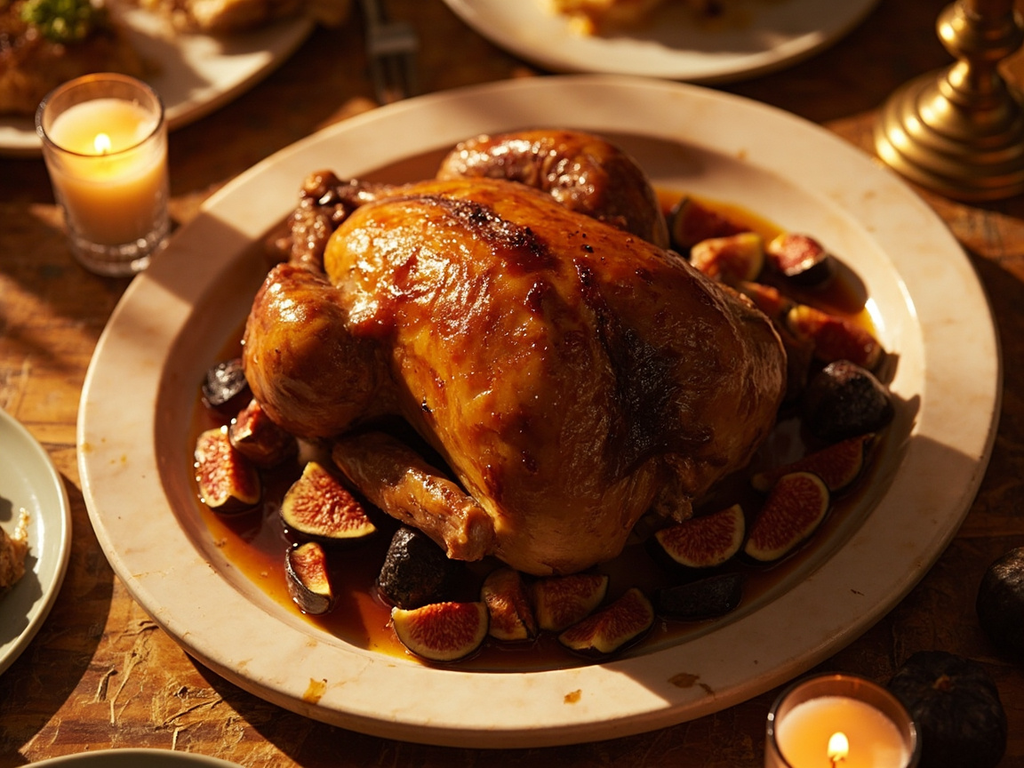
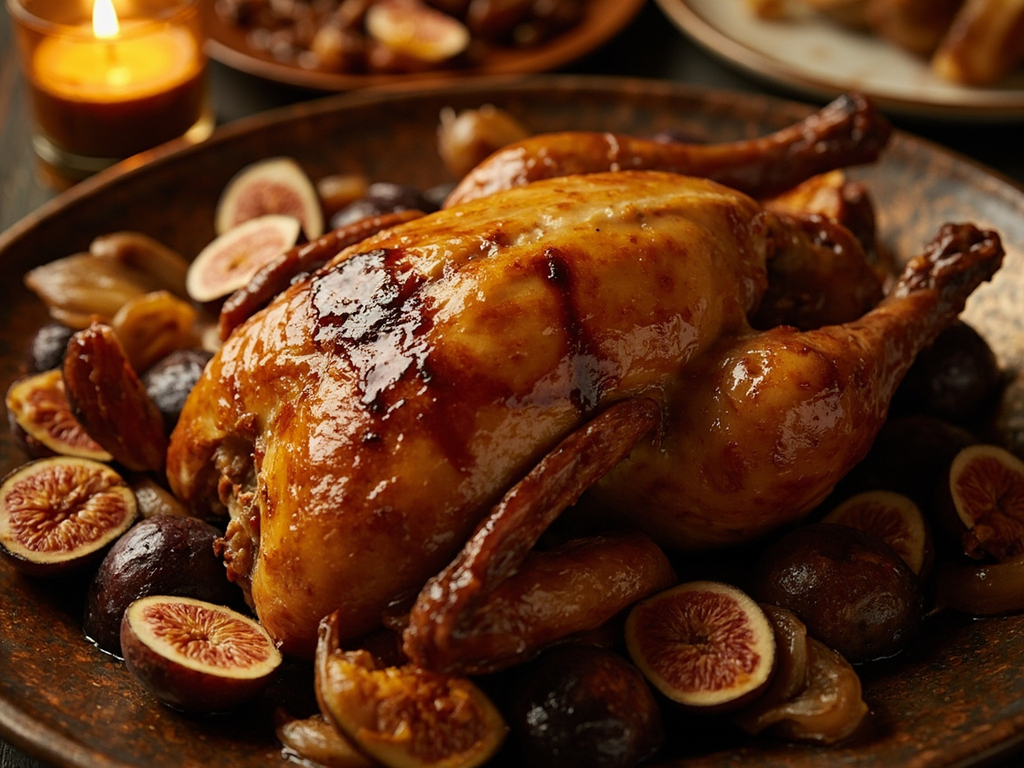
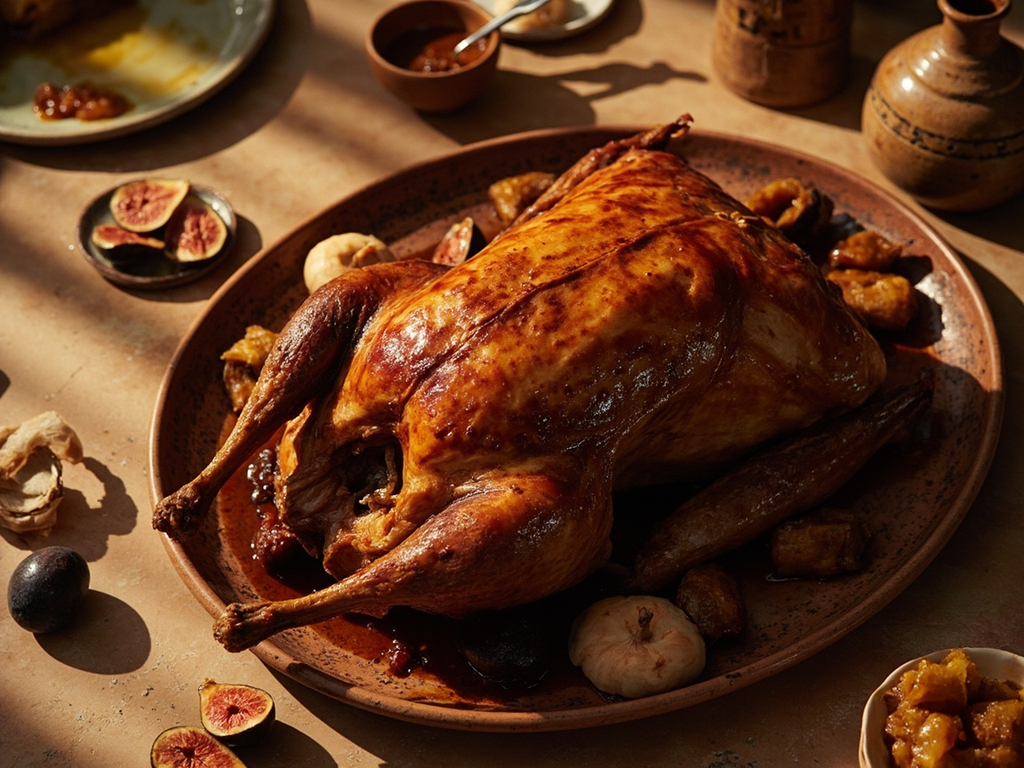
A fat goose, oven-roasted, glazed with honey and stuffed with figs and sweet onions. This is the dish of great banquets and funerary offerings: tender flesh, honey-lacquered skin, the sweetness of orchard fruits answering the bird's fat.
The goose is my bird, the one that broods on the silt and whose cry opens the morning. When my priests wish to honor me, they choose the fattest from the Delta reed beds, they rub it with honey and sea salt, they slip figs and sweet onion from my orchards into its belly. It is placed in the clay oven until its skin shines like the gold of Ra. Eat it slowly, and do not forget: this goose was an offering laid on my table before it was laid on yours.
- •Fat Delta goose, plucked and gutted — one (festive meat)
- •Honey — one jar (glaze)
- •Fresh figs — a full basket (sweet stuffing)
- •Sweet onions — several (stuffing)
- •Sea salt and coriander seeds — by hand (seasoning)
Marsh Goose Roasted with Honey and Figs (Qenqenet-style)
A fat goose, oven-roasted, glazed with honey and stuffed with figs and sweet onions. This is the dish of great banquets and funerary offerings: tender flesh, honey-lacquered skin, the sweetness of orchard fruits answering the bird's fat.
Why this dish? The sacred goose Qenqenet is Geb's animal: according to the Hermopolitan myth, the sun is born from its cry or its egg. Roasting a fat goose from the Delta marshes is offering Geb the finest fowl from his own reed beds.
The goose is my bird, the one that broods on the silt and whose cry opens the morning. When my priests wish to honor me, they choose the fattest from the Delta reed beds, they rub it with honey and sea salt, they slip figs and sweet onion from my orchards into its belly. It is placed in the clay oven until its skin shines like the gold of Ra. Eat it slowly, and do not forget: this goose was an offering laid on my table before it was laid on yours.
Ingredients (period version)
- Fat Delta goose, plucked and gutted — one (festive meat)
- Honey — one jar (glaze)
- Fresh figs — a full basket (sweet stuffing)
- Sweet onions — several (stuffing)
- Sea salt and coriander seeds — by hand (seasoning)
Ingredients
- Goose (or large duck) ~3-4 kg — 1 (festive meat)
- Honey — 4 tbsp (glaze)
- Fresh figs (or dried rehydrated) — 10 (sweet stuffing)
- Sweet onions — 2, quartered (stuffing)
- Crushed coriander seeds — 1 tsp (local spice)
- Salt — to taste (seasoning)
Method
- Pat the goose dry; salt inside and out; sprinkle with crushed coriander.
- Stuff the cavity with figs and sweet onion quarters.
- Roast at 180 °C for about 25 min per 500 g, basting regularly with rendered fat.
- In the last third of cooking, brush with honey every 15 min to lacquer the skin.
- Rest 15 min out of the oven before carving.
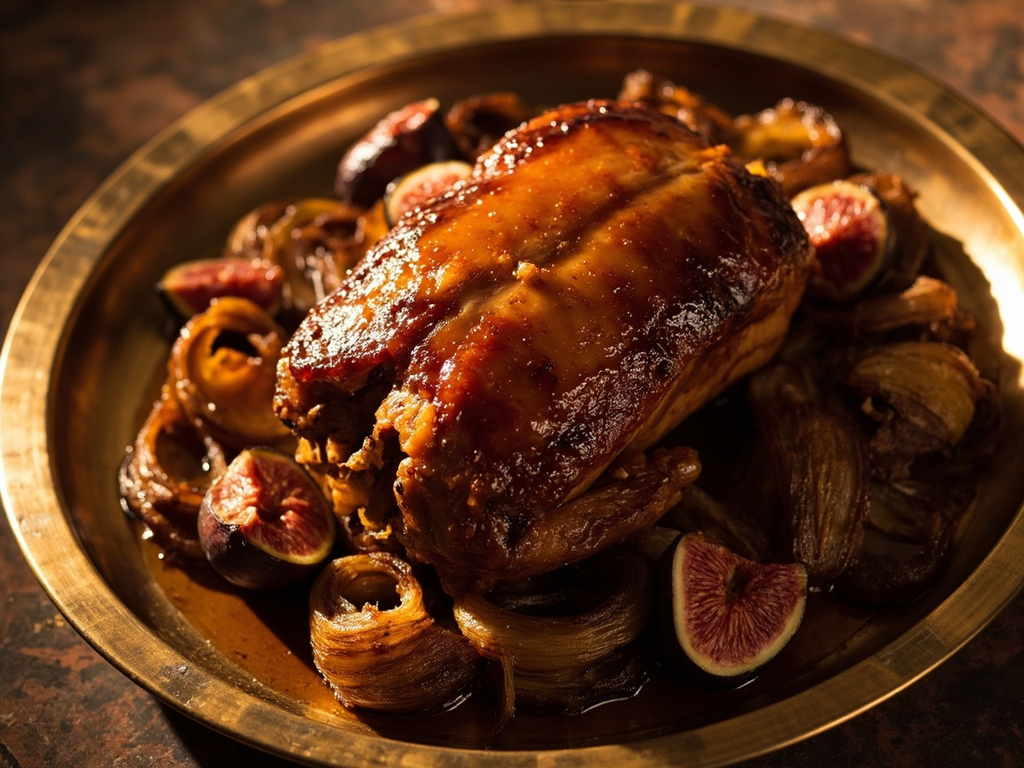
- Serve on a large platter, surrounded by melted figs and confit onion.
How it was made : Waterfowl (geese, ducks, teal) abounded in the Delta marshes and appear everywhere on painted tomb offering tables. They were hunted with nets, fattened by force-feeding (already attested in the Old Kingdom), then roasted on a spit or in a clay oven. Honey, the only sweetener available, served both as sweetness and lacquer; it was precious and reserved for feasts and temples.
The contemporary twist : Present the goose on a bed of edible reeds (split young leeks) with a goose drawn in honey on the plate: a nod to Qenqenet, the cosmic goose whose cry raised the first sun.
Sources : Hilary Wilson, 'Egyptian Food and Drink', Shire Publications, 1988 · Pierre Tallet, 'La cuisine des pharaons', Actes Sud, 2003
Geb · Charactorium