 flip
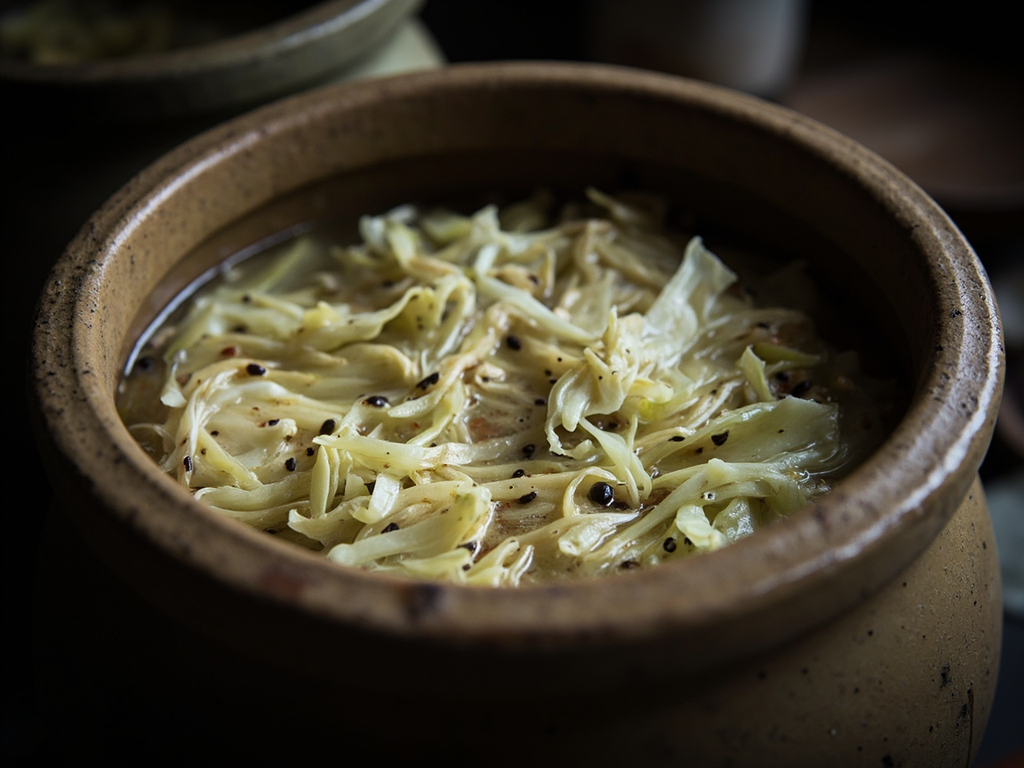
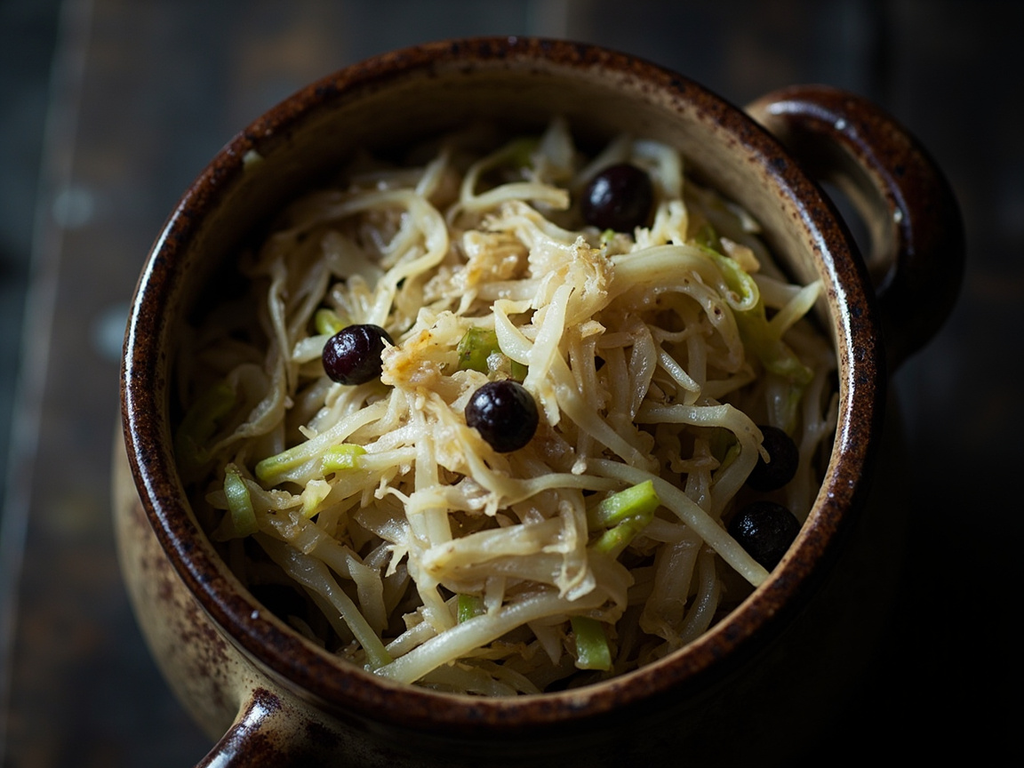
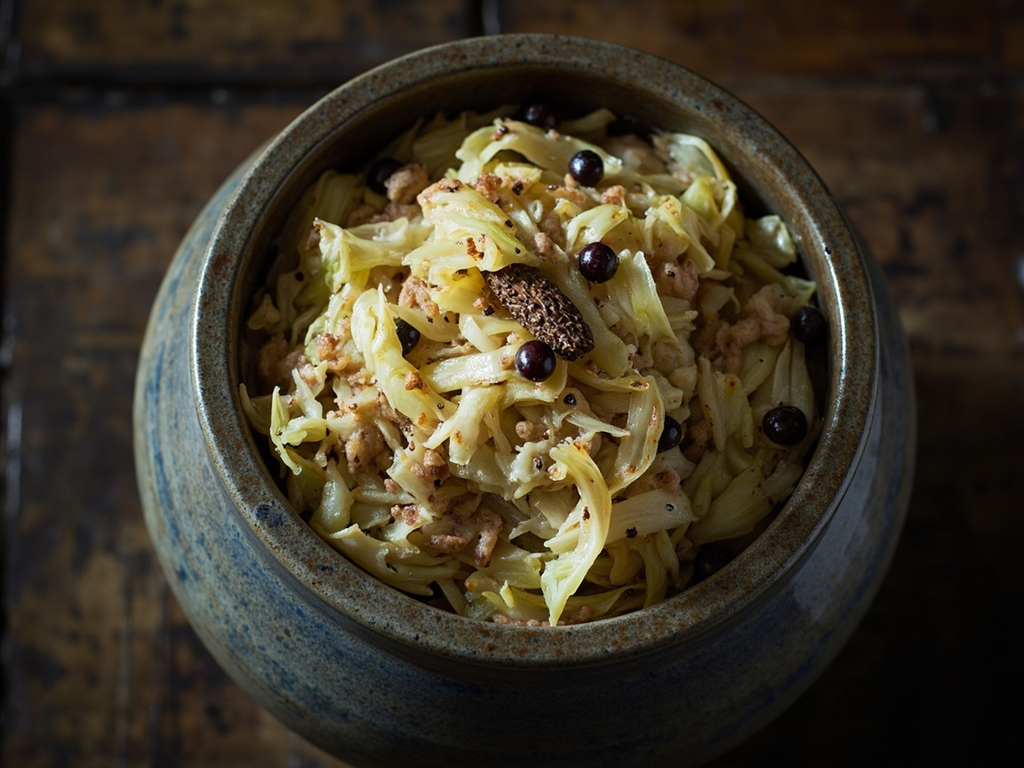
flipCaraway Sauerkraut from the Cellar (Sauerkraut mit Kümmel)
Caraway Sauerkraut from the Cellar (Sauerkraut mit Kümmel)
Why this dish? Cabbage from the garden was one of the pillars of Hessian peasant diet as noted in her profile. Fermented in a large barrel in autumn, it guaranteed vegetables all winter — a domestic skill that every housewife like Dorothea knew by heart.
Finely sliced white cabbage, salted and packed to ferment slowly in its own juice, perfumed with caraway. A living reserve, tangy and crunchy, that accompanied meats and porridges.
When late autumn comes and the cabbages are as big as a child's head, it is time, my girl. We shred the cabbage very fine, we trample it in the barrel with salt and caraway, with full hands, until the juice rises and covers it. Then we cover it, place a stone on top, and let time do its work in the cool cellar. All winter, this sour cabbage keeps us healthy while the garden sleeps under the snow.
- •White cabbages from the garden — several heads (vegetable to ferment)
- •Salt — a good handful per small barrel (fermentation, preservation)
- •Caraway seeds — a few pinches (signature, flavor)
- •Juniper berries — a few (flavor, preservation)
Caraway Sauerkraut from the Cellar (Sauerkraut mit Kümmel)
Finely sliced white cabbage, salted and packed to ferment slowly in its own juice, perfumed with caraway. A living reserve, tangy and crunchy, that accompanied meats and porridges.
Why this dish? Cabbage from the garden was one of the pillars of Hessian peasant diet as noted in her profile. Fermented in a large barrel in autumn, it guaranteed vegetables all winter — a domestic skill that every housewife like Dorothea knew by heart.
When late autumn comes and the cabbages are as big as a child's head, it is time, my girl. We shred the cabbage very fine, we trample it in the barrel with salt and caraway, with full hands, until the juice rises and covers it. Then we cover it, place a stone on top, and let time do its work in the cool cellar. All winter, this sour cabbage keeps us healthy while the garden sleeps under the snow.
Ingredients (period version)
- White cabbages from the garden — several heads (vegetable to ferment)
- Salt — a good handful per small barrel (fermentation, preservation)
- Caraway seeds — a few pinches (signature, flavor)
- Juniper berries — a few (flavor, preservation)
Ingredients
- White cabbage — 1 kg (vegetable)
- Non-iodized salt — 20 g (2% of cabbage weight) (fermentation)
- Caraway seeds — 1 teaspoon (signature)
- Juniper berries — 5 to 6 (flavor)
Method
- Remove outer leaves, core, and shred the cabbage very finely.
- Mix cabbage with salt in a large bowl and massage vigorously by hand for 10 minutes, until liquid releases.
- Add caraway and juniper, then pack firmly into a clean jar or crock.
- The cabbage must be completely submerged in its liquid; place a weight (water-filled bag or clean stone) to keep it under the brine.
- Cover loosely and let ferment at room temperature (18°C) for 1 to 4 weeks, tasting regularly, then store in a cool place.
How it was made : Lacto-fermentation of cabbage is attested in Central Europe since the Middle Ages; in Hesse as throughout Germany, it was done in large wooden barrels weighted with a stone in cool cellars. Caraway and juniper were added for both flavor and their reputed digestive benefits.
The contemporary twist : Serve raw as a small tangy salad with rapeseed oil and grated apple, a nod to Hessian gardens.
Dorothea Viehmann · Charactorium