 flip
flipUmeboshi — Salt-Fermented Plums
Umeboshi — Salt-Fermented Plums
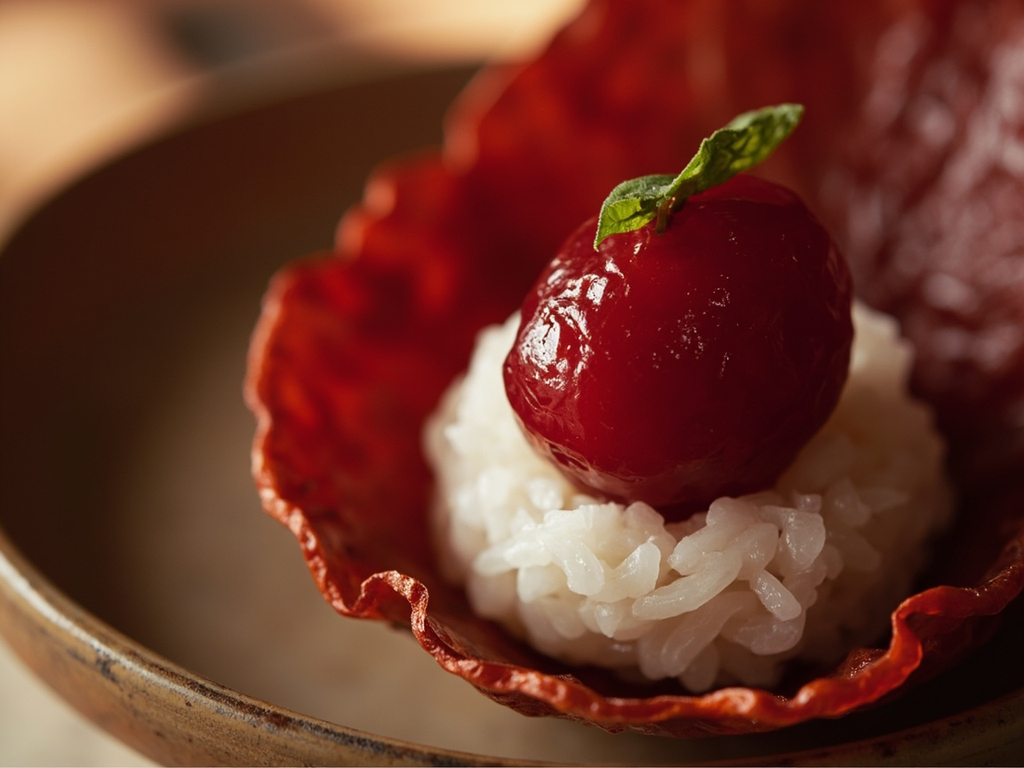
Why this dish? Umeboshi is the universal preserved condiment of Japan: a single plum in the center of white rice, and the Japanese flag appears in the bowl (hinomaru bentō). For a woman who traveled all the way to Paris in 1912, umeboshi was also the taste of home to carry along, the traveler's remedy against fatigue and homesickness.
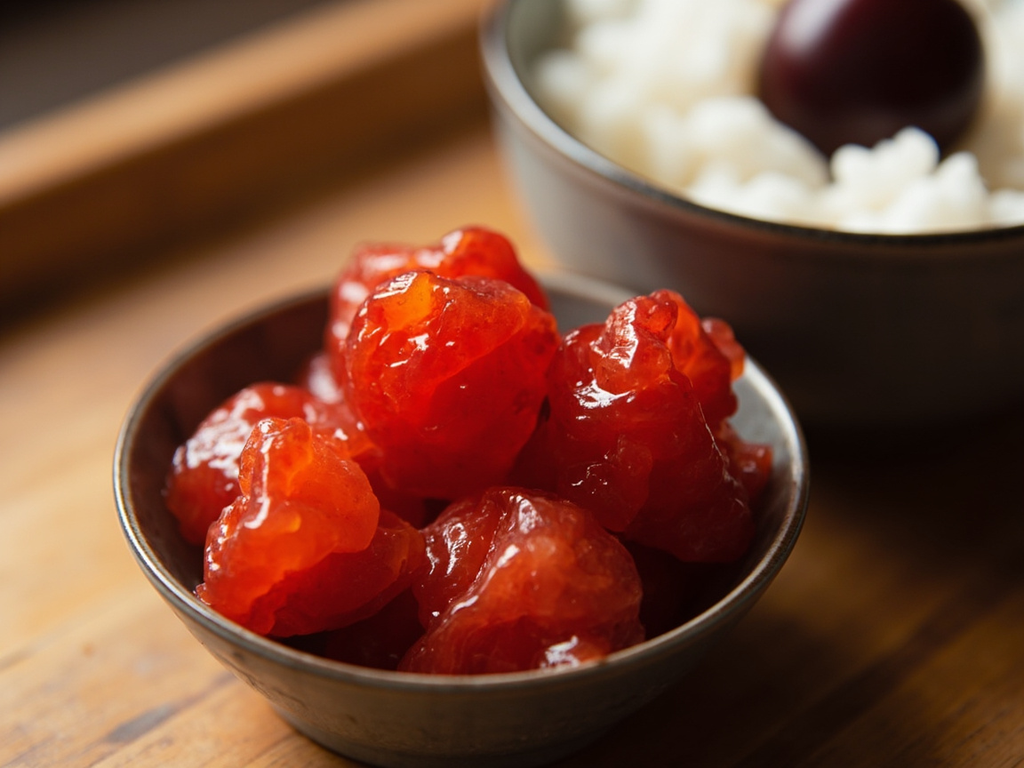
Ume plums salted and then dried in the summer sun, until they become intensely sour and salty, almost electric. Colored and scented with red shiso, they keep for years and enliven a simple bowl of rice.
In the rainy season, when the ume turn yellow and perfume the pantry, we lay them in salt and wait. Then comes doyō, those great days of summer heat: we spread them on racks for three days and three nights, and bring the racks in at night so the dew does not reclaim them. The red shiso gives them that sunset color I so love to sing. A single plum on white rice, and you are satisfied and on your feet — I never traveled without slipping a few into my luggage.
- •Ripe ume plums (turning yellow) — a large basket (fruit to ferment)
- •Salt — about one-fifth the weight of the plums (preservation)
- •Red shiso leaves — one bunch (color and fragrance)
Umeboshi — Salt-Fermented Plums
Ume plums salted and then dried in the summer sun, until they become intensely sour and salty, almost electric. Colored and scented with red shiso, they keep for years and enliven a simple bowl of rice.
Why this dish? Umeboshi is the universal preserved condiment of Japan: a single plum in the center of white rice, and the Japanese flag appears in the bowl (hinomaru bentō). For a woman who traveled all the way to Paris in 1912, umeboshi was also the taste of home to carry along, the traveler's remedy against fatigue and homesickness.
In the rainy season, when the ume turn yellow and perfume the pantry, we lay them in salt and wait. Then comes doyō, those great days of summer heat: we spread them on racks for three days and three nights, and bring the racks in at night so the dew does not reclaim them. The red shiso gives them that sunset color I so love to sing. A single plum on white rice, and you are satisfied and on your feet — I never traveled without slipping a few into my luggage.
Ingredients (period version)
- Ripe ume plums (turning yellow) — a large basket (fruit to ferment)
- Salt — about one-fifth the weight of the plums (preservation)
- Red shiso leaves — one bunch (color and fragrance)
Ingredients
- Ume plums (or firm apricots as substitute) — 1 kg (fruit to ferment)
- Unrefined sea salt — 180 g (18% of weight) (preservation)
- Red shiso leaves — 100 g (color and fragrance)
- Salt for shiso — 20 g (to wilt the shiso)
Method
- Wash the plums, remove the small stems, and dry thoroughly.
- Alternate layers of plums and salt in a clean jar; place a weight on top and cover.
- Leave in a cool place for 1–2 weeks: a liquid (umezu) should cover the plums.
- Rub the red shiso leaves with salt, squeeze to remove the black bitterness, then add them to the jar — they turn everything pink-red.
- On the hottest days of summer, spread the plums in the sun for 3 days, bringing them in at night (or use a gentle dehydrator).
- Return to the jar: they keep for months, even years.
How it was made : Known since medieval times as a samurai ration and remedy, umeboshi was a staple of the family pantry in the Meiji era, made each summer by the women of the house. Sun-drying during "doyō" (the late July heatwave) remains a seasonal ritual.
The contemporary twist : Place a single umeboshi in the center of a perfectly round bowl of white rice: that is the "hinomaru bentō," the flag of Japan on a plate, perfect photo for the table.
Sources : Naomichi Ishige, The History and Culture of Japanese Food, 2001
Akiko Yosano · Charactorium