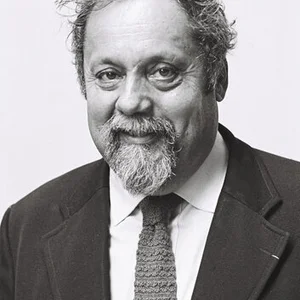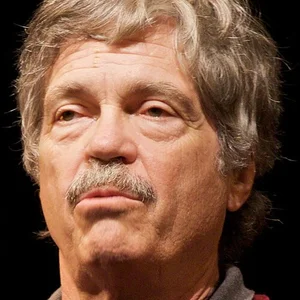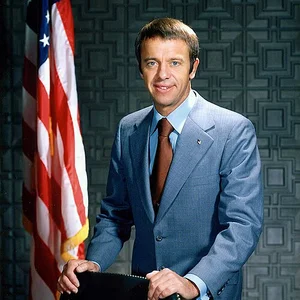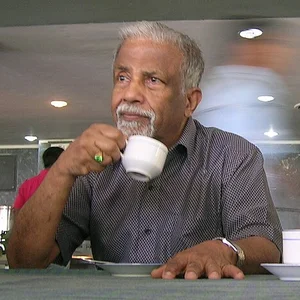

Indian-American theoretical physicist, a major figure in 20th-century physics. He contributed to the theory of the weak interaction and to quantum optics, but never received the Nobel Prize despite several nominations.
Frequently asked questions
Key Facts
- Born in 1931 in Kerala (India), died in 2018 in Texas (United States)
- Proposed the V-A theory of the weak interaction in 1957-1958 with Robert Marshak
- Developed the Sudarshan-Glauber representation (P-representation) in quantum optics in 1963
- Theorized tachyons, hypothetical particles faster than light
- Worked on the quantum Zeno effect in particle physics
Works & Achievements
Together with Robert Marshak, Sudarshan worked out the correct mathematical form of the weak interaction, a cornerstone of the Standard Model of particle physics.
A central tool of quantum optics that links the classical and quantum descriptions of light; at the heart of a famous Nobel Prize controversy.
Sudarshan explored the idea of hypothetical particles travelling faster than light, sparking a lasting debate in theoretical physics.
Together with Baidyanath Misra, he showed that continuous observation can freeze the evolution of a quantum system, an idea now tested in the laboratory.
A fundamental equation describing open quantum systems, essential to modern quantum information.
A landmark book that rewrote classical mechanics using the modern mathematical tools of symmetries.
Anecdotes
In 1957, while still only a young researcher, George Sudarshan, together with his advisor Robert Marshak, proposed the “V minus A” theory, which correctly describes the weak interaction, one of the four fundamental forces of nature. A few months later, the famous Richard Feynman and Murray Gell-Mann published the same idea and reaped most of the glory, something that would remain a wound for Sudarshan all his life.
In 1977, together with Baidyanath Misra, Sudarshan demonstrated a startling phenomenon: if you continuously observe an unstable atom, you can prevent it from decaying. They named it the “quantum Zeno effect,” a nod to the Greek philosopher Zeno of Elea. It is the scientific equivalent of the saying “a watched pot never boils.”
Sudarshan was nominated at least nine times for the Nobel Prize in Physics without ever winning it. In 2005, when the Nobel was awarded to Roy Glauber for quantum optics, several physicists protested publicly, because the famous “representation” that was used also bears Sudarshan's name. He himself would write a letter expressing his disappointment.
Born in a small village in Kerala, India, Sudarshan became a world figure in physics while remaining deeply attached to Indian philosophy, particularly Vedānta. He enjoyed discussing the connections between consciousness, spirituality, and quantum physics.
His name is inscribed in an equation used by every specialist in quantum systems: the Lindblad equation, more aptly called the “GKSL” equation (for Gorini, Kossakowski, Sudarshan, and Lindblad), which describes how a quantum system interacts with its environment.
Primary Sources
The paper proposes that the universal weak interaction has a “vector minus axial-vector” (V−A) structure, based on the chirality invariance of particles.
In it, Sudarshan shows that any statistical description of a light beam can be equivalently translated between the classical and quantum languages, thanks to a representation using “coherent states”.
The authors establish that the continuous observation of an unstable quantum system can, in the limit, completely freeze its evolution, a result nicknamed the “quantum Zeno paradox”.
This treatise reformulates classical mechanics with the modern tools of geometry and symmetries, becoming a reference for advanced students.
Key Places
Village in southern India where George Sudarshan was born in 1931 into a Christian family from Kerala.
Institution where Sudarshan pursued his higher education before turning to research in physics.
Prestigious Indian research institute where Sudarshan worked briefly early in his career, alongside great physicists.
American university where Sudarshan earned his doctorate under Robert Marshak and developed the V−A theory.
University where Sudarshan was a professor for decades and supervised many students in theoretical physics.
Typical Objects

A surface covered in chalk on which theoretical physicists work out their equations in front of colleagues and students. It was Sudarshan's everyday tool for laying out his ideas.

Notebooks filled with handwritten equations, where the theorist sets down his reasoning before publishing it. Theoretical physics is done above all with paper and a pencil.

A sliding instrument used to carry out multiplications and complex operations before the era of electronic calculators. A familiar tool for scientists in the mid-twentieth century.

A major American scientific journal where Sudarshan published his most important work. Publishing in such journals builds a researcher's reputation.

A collection of Indian spiritual philosophy that Sudarshan studied and quoted, feeding his reflections on the links between consciousness and physics.

Large computing machines that appeared in universities from the 1960s onward, used to model physical systems. They gradually came to complement work at the blackboard.
School Curriculum
Vocabulary & Tags
Key Vocabulary
Tags
Daily Life
Morning
A university professor, Sudarshan often began his day by reading scientific papers over a coffee before heading to his office on campus. Mornings were devoted to research, pencil in hand, filling pages with equations.
Afternoon
Afternoons were split between lectures given to students and long discussions at the blackboard with his doctoral candidates. He loved to debate new ideas and weigh up differing points of view.
Evening
In the evening, he would sometimes continue his calculations at home or read texts on Indian philosophy. He enjoyed conversations about the great questions linking science and spirituality.
Food
A vegetarian of Indian origin, he kept a taste for Kerala cuisine (rice, vegetables, spices) while adapting to life in the United States. Meals were occasions of conviviality with colleagues and students.
Clothing
Like most academics of the 20th century, he generally wore a shirt, jacket and, depending on the occasion, a sober suit. At Indian events, he might don traditional clothing.
Housing
He lived in the comfortable apartments and houses typical of American university campuses, in Rochester and later Austin, while keeping close ties with India, where he returned regularly.
Historical Timeline
Period Vocabulary
Liens externes & ressources
Références
Œuvres
Théorie V−A de l'interaction faible
1957-1958
Représentation diagonale (états cohérents de Sudarshan-Glauber)
1963
Théorie des tachyons
années 1960
Effet Zénon quantique
1977
Équation de Gorini-Kossakowski-Sudarshan (GKSL)
1976
« Classical Dynamics: A Modern Perspective » (avec N. Mukunda)
1974