 flip
flipSaltimbocca alla Romana
Saltimbocca alla Romana
Why this dish? Winner of the prestigious Prix de Rome in 1857, Bizet lived for nearly three years at the Villa Medici. This Italian stay left a lasting mark on him. At the tables of Roman trattorias, he would have tasted these veal scallops perfumed with sage and ham, the emblematic dish of the Eternal City he inhabited.
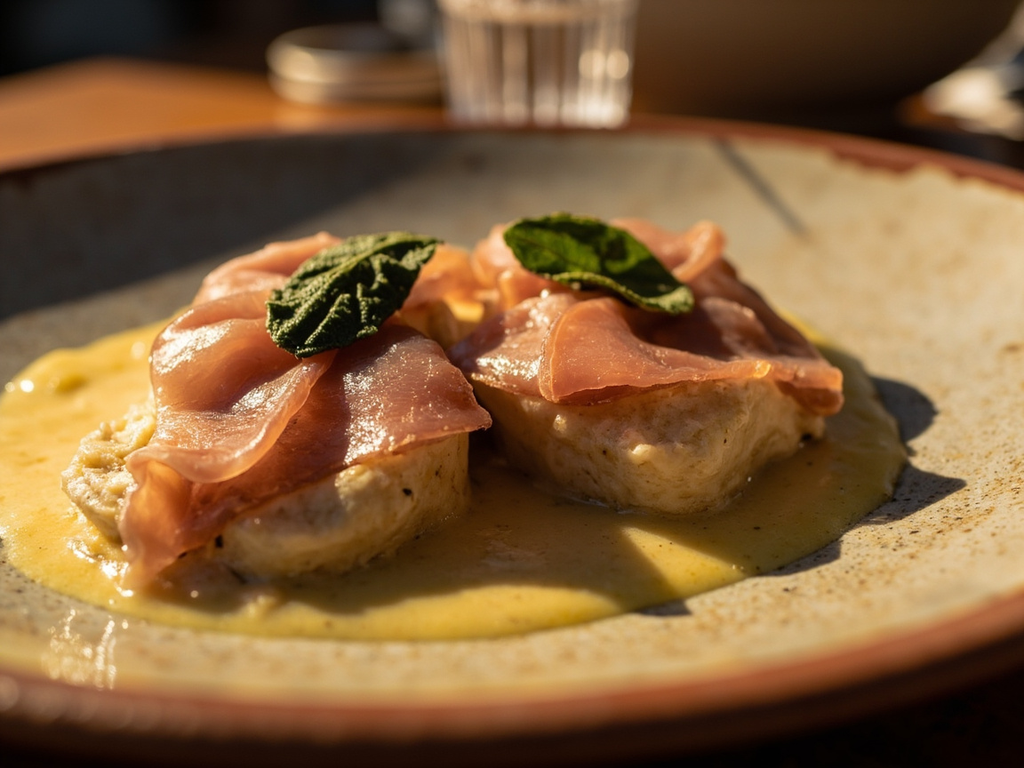
Thin veal scallops topped with a slice of raw ham and a sage leaf, pan-seared and deglazed with white wine. The name means 'jump in the mouth': a lively, salty dish, deeply Roman.
Ah, Rome! Three years at the Villa Medici, the sun on the Pincio and those little tavern tables where you ate like a prince for next to nothing. They would lay a slice of ham and a sage leaf on the veal, pinned with a toothpick — *saltimbocca*, it jumps onto your palate, they said, and by my faith it's true! I confess, I brought back from there more memories of cooking than of successful fugues. Make it quickly, at the last minute, otherwise the veal toughens and all is lost.
- •Veal (thin scallops) — one per guest (meat)
- •Raw ham — one slice per scallop (salty garnish)
- •Fresh sage — one leaf per scallop (signature aroma)
- •Butter — a knob (cooking fat)
- •Dry white wine — a splash (deglazing)
Saltimbocca alla Romana
Thin veal scallops topped with a slice of raw ham and a sage leaf, pan-seared and deglazed with white wine. The name means 'jump in the mouth': a lively, salty dish, deeply Roman.
Why this dish? Winner of the prestigious Prix de Rome in 1857, Bizet lived for nearly three years at the Villa Medici. This Italian stay left a lasting mark on him. At the tables of Roman trattorias, he would have tasted these veal scallops perfumed with sage and ham, the emblematic dish of the Eternal City he inhabited.
Ah, Rome! Three years at the Villa Medici, the sun on the Pincio and those little tavern tables where you ate like a prince for next to nothing. They would lay a slice of ham and a sage leaf on the veal, pinned with a toothpick — *saltimbocca*, it jumps onto your palate, they said, and by my faith it's true! I confess, I brought back from there more memories of cooking than of successful fugues. Make it quickly, at the last minute, otherwise the veal toughens and all is lost.
Ingredients (period version)
- Veal (thin scallops) — one per guest (meat)
- Raw ham — one slice per scallop (salty garnish)
- Fresh sage — one leaf per scallop (signature aroma)
- Butter — a knob (cooking fat)
- Dry white wine — a splash (deglazing)
Ingredients
- Thin veal scallops — 8 small (4 servings) (meat)
- Raw ham (e.g. Parma) — 8 half slices (salty garnish)
- Fresh sage — 8 leaves (signature aroma)
- Butter — 40 g (cooking fat)
- Dry white wine — 100 ml (deglazing)
- Flour, salt, pepper — a little (seasoning)
Method
- Pound the scallops between two sheets of paper to make them very thin.
- Place half a slice of ham and a sage leaf on each, secure with a toothpick.
- Lightly flour the veal side, season with little salt (the ham is already salty), and pepper.
- Sear in foaming butter, ham side first then veal side, 1 to 2 minutes per side.
- Keep the scallops warm, deglaze the pan with white wine, let reduce to a coating sauce and pour over the meat. Serve immediately.
How it was made : Saltimbocca is attested in 19th-century Roman cuisine, where veal, ham, and sage formed a popular trio in trattorias. It was made to order, very quickly, because the secret lies in the thinness of the meat and the speed of cooking — any prolonged cooking toughens it.
The contemporary twist : Serve it on creamy polenta and drizzle with pan juices: Roman rusticity takes on an operatic menu air.
Georges Bizet · Charactorium