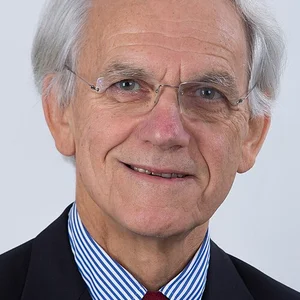

Gérard Mourou is a French physicist born in 1944, a specialist in lasers. Together with Donna Strickland, he invented the chirped pulse amplification (CPA) technique, which earned him the Nobel Prize in Physics in 2018.
Gérard Mourou(1944 — ?)
Gérard Mourou
France
6 min read
Frequently asked questions
Key Facts
- Born on 22 June 1944 in Albertville (Savoy)
- Developed the chirped pulse amplification (CPA) technique in 1985 with Donna Strickland
- Awarded the Nobel Prize in Physics in 2018, shared with Donna Strickland and Arthur Ashkin
- Launched the European ELI (Extreme Light Infrastructure) project of ultra-powerful lasers
- His work has applications in eye surgery (LASIK) and precision machining
Works & Achievements
A fundamental invention, developed with Donna Strickland, that makes it possible to amplify laser pulses without destroying the equipment. It multiplied the power of lasers and founded the entire field of ultra-intense laser physics.
The founding publication in Optics Communications describing the CPA method. Short but decisive, this article has been cited thousands of times.
A research center founded by Mourou that became a world hub for the study of ultra-fast light phenomena.
A direct medical application of his research, used to correct nearsightedness and operate on cataracts with unprecedented precision.
A European network of some of the most powerful laser facilities in the world, initiated by Mourou and located in Romania, Hungary, and the Czech Republic.
The supreme award, given for the invention of CPA and shared with Donna Strickland and Arthur Ashkin.
Anecdotes
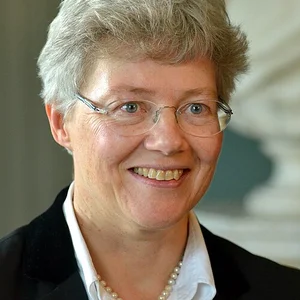
In 2018, Gérard Mourou received the Nobel Prize in Physics together with his doctoral student Donna Strickland, for work they had published in 1985. Donna Strickland thus became the third woman in history to receive the Nobel Prize in Physics, after Marie Curie and Maria Goeppert-Mayer.
The brilliant idea of Mourou and Strickland, chirped pulse amplification (CPA), consists of stretching a laser pulse out in time before amplifying it, then recompressing it. It is a bit like spreading out a wave to make it harmless while you build it up, before concentrating it once again into a wall of energy.
At the time of their decisive first publication, the young Donna Strickland was still only a doctoral student. The founding 1985 paper was only a few pages long, but it paved the way for the most powerful lasers ever built by humankind.
The techniques invented by Mourou are now used in millions of eye surgeries every year: laser surgery for myopia and cataract operations rely on these ultra-short pulses, capable of cutting the cornea with extreme precision.
Gérard Mourou dreams of using these super-powerful lasers to clean up space: his idea would be to target space debris in orbit to slow it down and make it fall back into the atmosphere, where it would burn up before becoming dangerous to satellites.
Primary Sources
We have demonstrated the amplification and subsequent recompression of optical chirped pulses. A system which produces 1.06 µm laser pulses with pulse widths of 2 picoseconds and energies at the millijoule level has been constructed.
The prize is awarded “for groundbreaking inventions in the field of laser physics”, including chirped pulse amplification of high-intensity, ultra-short laser pulses.
Our method, chirped pulse amplification, made it possible to increase the intensity of lasers by several orders of magnitude, paving the way for applications in medicine and fundamental science.
Key Places
Town in the French Alps where Gérard Mourou was born in 1944.
University where Mourou led the Laboratory for Laser Energetics and where he invented the CPA technique with Donna Strickland in 1985.
Here Mourou founded the Center for Ultrafast Optical Science in 1990, a pioneer in ultrafast lasers.
Here Mourou directed the Laboratory of Applied Optics and championed the European ELI project of extreme lasers.
The Swedish capital where Mourou received the Nobel Prize in Physics in December 2018.
Liens externes & ressources
Références
Œuvres
Technique d'amplification par dérive de fréquence (CPA)
1985
Article « Compression of amplified chirped optical pulses »
1985
Center for Ultrafast Optical Science (Université du Michigan)
1990
Chirurgie oculaire au laser femtoseconde
années 1990
Projet ELI (Extreme Light Infrastructure)
2005-2008
Prix Nobel de physique
2018