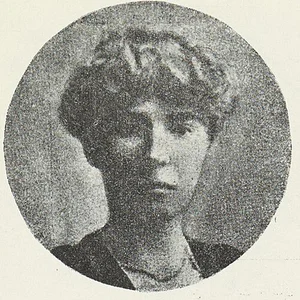

British explorer, archaeologist, and diplomat (1868–1926), she traveled extensively across the Middle East and played a decisive role in the creation of modern Iraq after the First World War. Nicknamed “the Queen of the Desert,” she was one of the first women to exert major political influence in the region.
Gertrude Bell(1868 — 1926)
Gertrude Bell
Royaume-Uni de Grande-Bretagne et d'Irlande
9 min read
Frequently asked questions
Famous Quotes
« I am a citizen of the world, and my country is wherever I happen to be.»
« The East is a jealous mistress; once it has seized you, it never lets you go.»
Key Facts
- 1868: born at Washington New Hall, England
- 1899–1914: repeated travels through Syria, Palestine, Mesopotamia, and Arabia, including a crossing of the Arabian Desert in 1913–1914
- 1915–1920: agent of the Arab Bureau in Cairo then Baghdad, with major influence on British policy in the Middle East
- 1921: participates in the Cairo Conference with Churchill; contributes to placing Faisal I on the throne of Iraq
- 1926: founds the Iraq Museum in Baghdad, dies the same year
Works & Achievements
An account of her journey through Ottoman Syria, blending geographical, ethnographic, and political observation. The work introduced her to the British public and diplomatic circles as an expert on the Arab world.
A record of her expedition through Mesopotamia (present-day Iraq) and Asia Minor, featuring detailed descriptions of landscapes, peoples, and ancient ruins. This book confirmed her reputation as a great traveller and an unrivalled political observer.
A rigorous archaeological study of the Umayyad/Abbasid palace of Ukhaydir in Mesopotamia. Recognised by the academic community as a scholarly work, it demonstrates Bell's precision as a field archaeologist.
An official report commissioned by the British government, analysing the administration of Mesopotamia since 1914. A foundational document for understanding the creation of modern Iraq, it remains a primary historical source of the first importance.
At the Cairo Conference, Bell played a direct role in drawing Iraq's borders and selecting Faisal I as king. Her influence on the political architecture of modern Iraq remains one of her most enduring — and most contested — legacies.
A cultural institution created at her initiative to preserve Iraqi antiquities on their native soil. Now the Iraq Museum, it houses one of the largest collections of Mesopotamian antiquity in the world.
A translation into English of poems by the great Persian poet Hafiz, undertaken after her stay in Persia. It bears witness to her command of Persian and her literary sensibility, beyond her activities as an explorer and diplomat.
Anecdotes
In 1888, Gertrude Bell earned a 'first-class' degree in modern history at Oxford — in just two years instead of four — becoming one of the first women to reach this level of excellence at the university. Since women were not yet entitled to officially receive their degrees, she could never be formally recognized by the institution during her lifetime.
An accomplished mountaineer, Bell completed several first ascents in the Bernese Alps in 1902. Her attempt on the Engelhorn was so remarkable that her Swiss guides named one of the peaks she had climbed after her: the Gertrudspitze, a summit that still bears her name today.
During her journey through central Arabia in 1913–1914, Bell penetrated as far as the city of Ha'il, a territory forbidden to Europeans and controlled by the powerful rival Saud family. Held for several weeks as the 'guest' of Emir Ibn Rashid — a gilded captivity — she was one of the very few Western women ever to visit this heartland of the Arabian Peninsula.
During the First World War, Bell was recruited by British military intelligence and posted to the Arab Bureau in Cairo, then in Baghdad. She became the first woman to hold a political officer post in the British Army, mapping tribes and alliances with a precision that made her an irreplaceable asset for the high command.
Bell founded the Baghdad Museum of Antiquities in 1926, now known as the Iraq Museum. She campaigned throughout her life for archaeological objects discovered in Iraq to remain on Iraqi soil rather than being exported to Europe — a pioneering stance for the time. She died just weeks after the institution's official inauguration.
Primary Sources
To those bred under an elaborate social order few such moments of exhilaration can come as that which stands at the threshold of wild travel. The gates of the enclosed garden are thrown open, the chain at the entrance of the sanctuary is lowered.
I have arrived at Hail and was received by the emir. The city is fortified and suspicious of strangers, but the Arabs treated me with remarkable courtesy. I am taking notes on everything I observe.
The country between the Tigris and Euphrates has been under British administration since 1914. The problems which face the administrator are those which arise from the attempt to impose a foreign system of government upon an ancient and proud people.
The Euphrates is not a river which compels admiration; it is a river which invites to contemplation. Wide and slow, bordered by the inundation of centuries, it moves through a land that has been the seat of empire after empire.
The Arab government is not yet strong enough to stand alone. Faisal needs our support but must be seen to govern independently. Our role must be that of advisers, not masters, if we wish to maintain stability in Mesopotamia.
Key Places
Birthplace of Gertrude Bell in 1868, born into a family of prominent steel industrialists. Her privileged and cultured background gave her access to an exceptional education for a woman of her time.
Bell studied modern history at Lady Margaret Hall and in 1888 earned a first-class degree in just two years — a remarkably rare achievement. It was here that she developed the rigorous analytical mind that would guide her entire career.
Capital of Iraq and the centre of Bell's political activity from 1917. It was here that she exercised her influence over the building of the new Iraqi state, founded the Museum of Antiquities, and died in July 1926.
A city in central Arabia that Bell reached in 1914, making her one of the first Western women to enter a territory then closed to foreigners. Held by the Emir Ibn Rashid, she returned with invaluable observations on the tribal rivalries of the peninsula.
A central stop on her travels through Ottoman Syria, Damascus served as the launching point for several of her desert expeditions. There she built relationships with sheikhs, merchants, and local notables who became her political informants.
An Abbasid archaeological site she studied methodically during her expeditions, resulting in her 1914 scholarly publication. This work exemplifies her dual calling as both intrepid explorer and rigorous archaeologist.
Typical Objects

Bell was a rigorous photographer who documented her travels with hundreds of photographs. Her images of archaeological sites and Arab populations now constitute a precious historical record preserved at the University of Newcastle.

On her expeditions, Bell systematically recorded geographic positions, caravan routes, and tribal territories. Her maps and surveys directly fed British military intelligence services during the war.

Bell wrote thousands of letters to her family, particularly to her father Hugh Bell, describing her travels, encounters, and political reflections with great precision. This correspondence has been published and stands as one of the richest primary sources on the Middle East of that era.

For her long desert crossings, Bell used a portable tent suited to arid conditions. She typically traveled with a small camel caravan and Bedouin guides who provided protection and navigation.

Despite her desert adventures, Bell regularly attended official dinners of the colonial administration in Baghdad. She was determined to combine her identity as an explorer with that of a respected diplomat, moving effortlessly from traveling clothes to formal dress.

For her solitary crossings of unstable regions, Bell carried a revolver — as much a security instrument as a symbol of the authority she asserted in territories where European women traveled only exceptionally.

Bell took part in several archaeological missions, notably at the Ukhaydir Palace site in Iraq. Her fieldwork helped identify and protect Mesopotamian monuments, and she campaigned actively to prevent the illegal export of antiquities from Iraq.
School Curriculum
Vocabulary & Tags
Key Vocabulary
Tags
Daily Life
Morning
In Baghdad in the 1920s, Bell rose early to make the most of the cool hours before the crushing heat of the day. She began her mornings with an extensive correspondence — letters to her family in England, reports to the India Office or the Foreign Office — written at her desk in her house on the banks of the Tigris.
Afternoon
Her afternoons were devoted to meetings and travel: sessions with sheikhs, Iraqi officials, or British officers, and visits to archaeological sites around the capital. She moved about frequently by car or on horseback, notebook and camera always within reach.
Evening
Bell's evenings in Baghdad were often social affairs: official dinners with the colonial administration, diplomatic receptions where she served as a cultural go-between for British officials and Iraqi notables. Back home, she would write in her diary or read Arabic and Persian texts.
Food
In the desert, Bell shared the simple fare of Bedouin caravans — flatbread, dates, camel's milk, cardamom-spiced coffee. In the city, she enjoyed traditional Iraqi cuisine (grilled lamb, spiced rice, pulses) alongside the British meals served in colonial circles, all washed down with tea at every hour.
Clothing
On expedition, Bell wore practical desert clothing: loose, light-coloured robes to shield her from the sun, a wide-brimmed hat, and sturdy boots. Unlike some women travellers of her era, she refused to dress as a man, asserting her femininity while commanding authority. In the city, she wore elegant evening gowns for official receptions.
Housing
In Baghdad, Bell lived in a traditional courtyard house on the banks of the Tigris, which she furnished with oriental rugs, archaeological objects, and a well-stocked library. During her travels, she slept in a light tent pitched in the heart of the desert, navigating by the stars she could read like a map.
Historical Timeline
Period Vocabulary
Liens externes & ressources
Références
Œuvres
The Desert and the Sown
1907
Amurath to Amurath
1911
The Palace and Mosque at Ukhaidir
1914
Review of the Civil Administration of Mesopotamia
1920
Frontières et constitution de l'Irak (contributions diplomatiques)
1921
Fondation du Musée des Antiquités de Bagdad
1926
Poems from the Divan of Hafiz
1897