 flip
flipTuh'u — Lamb Stew with Beetroot, Leek, and Garlic
Tuh'u — Lamb Stew with Beetroot, Leek, and Garlic
Why this dish? A king of Uruk receives guests, and the epic is full of feasts. Tuh'u appears among the oldest written recipes in the world, engraved on Akkadian tablets (Yale collection, circa 1750 BCE) — a festive stew worthy of the table where Gilgamesh, half-man half-god, feasted in his city of high walls.
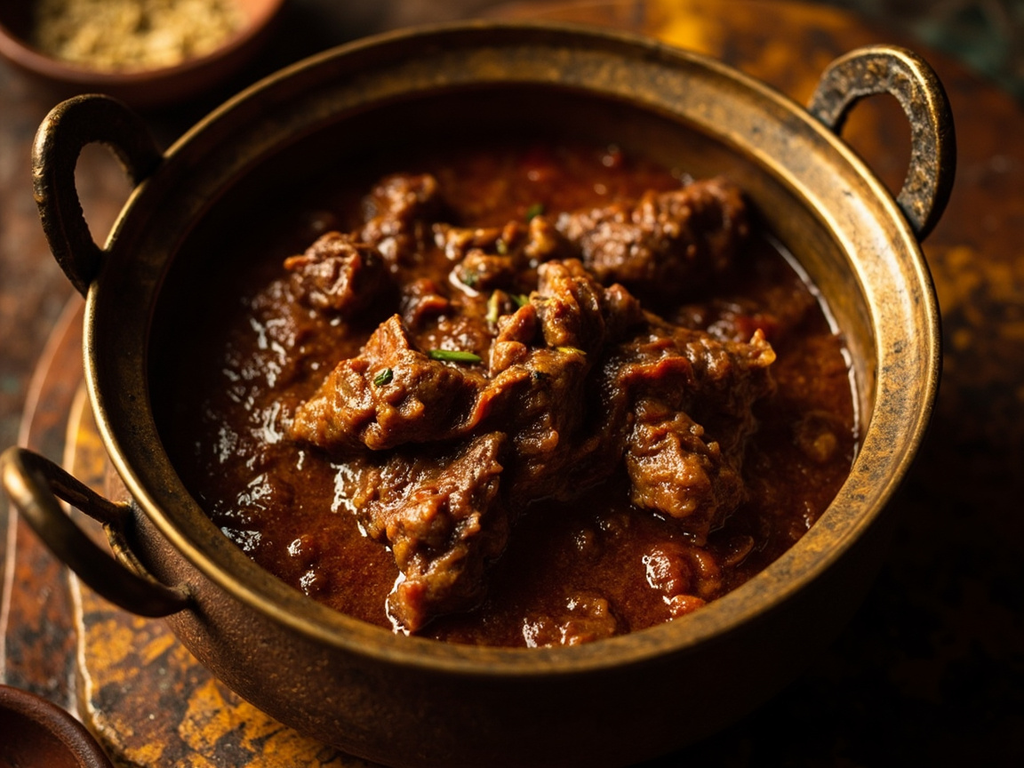
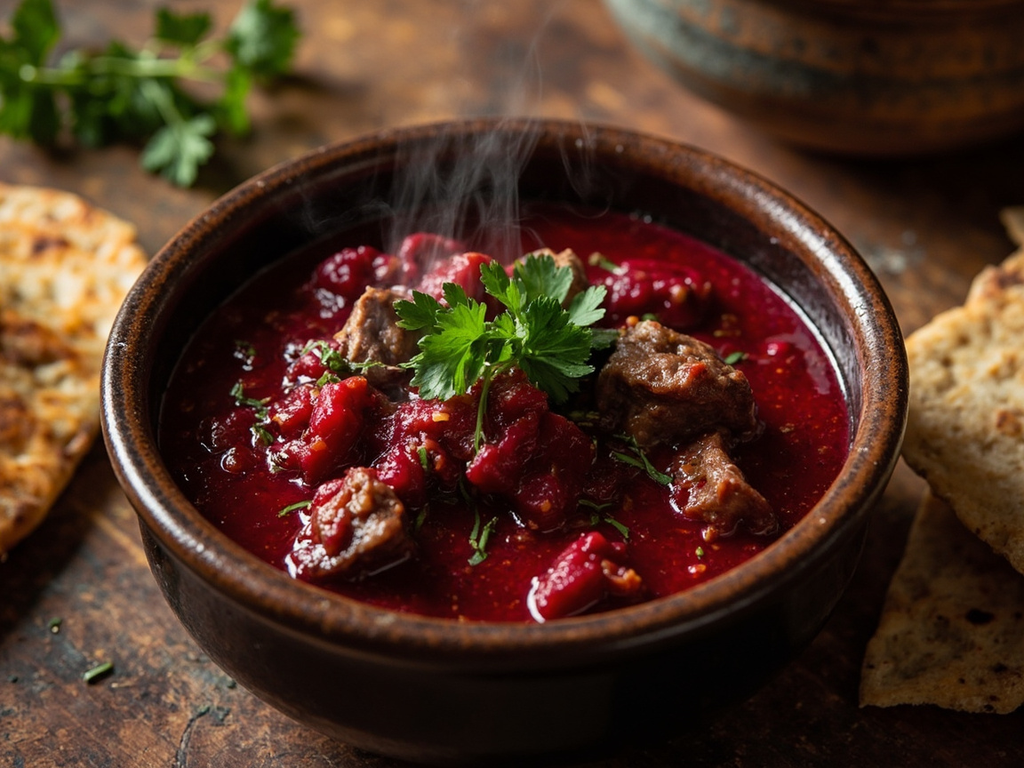
A deep red stew of lamb simmered with beetroot (Sumerian red), leek, crushed garlic, spiced with coriander and cumin, and bound with fermented siqqu. Creamy, fragrant, royal.
Listen to the king who brought back the plant of youth from the depths of the waters: when the princes of neighboring cities came under my walls, tuh'u was set in the bronze pots. Throw in the meat of the fat lamb, water, fat; then comes the red of the earth, the leek and garlic crushed together, and fresh coriander at the last moment. The secret is siqqu, that fish brine that awakens everything — without it, a stew is only water and meat. We ate it with bread, never without beer.
- •Lamb meat (shoulder, leg) — a fine piece (base)
- •Sheep fat — a piece (richness)
- •Beetroot (red) — a few (color and sweetness)
- •Leek and onion — in abundance (aromatics)
- •Crushed garlic — generous (power)
- •Siqqu (fermented fish brine) — a dash (umami base)
- •Fresh coriander, cumin — to taste (fragrance)
- •Salt — according to siqqu (seasoning)
Tuh'u — Lamb Stew with Beetroot, Leek, and Garlic
A deep red stew of lamb simmered with beetroot (Sumerian red), leek, crushed garlic, spiced with coriander and cumin, and bound with fermented siqqu. Creamy, fragrant, royal.
Why this dish? A king of Uruk receives guests, and the epic is full of feasts. Tuh'u appears among the oldest written recipes in the world, engraved on Akkadian tablets (Yale collection, circa 1750 BCE) — a festive stew worthy of the table where Gilgamesh, half-man half-god, feasted in his city of high walls.
Listen to the king who brought back the plant of youth from the depths of the waters: when the princes of neighboring cities came under my walls, tuh'u was set in the bronze pots. Throw in the meat of the fat lamb, water, fat; then comes the red of the earth, the leek and garlic crushed together, and fresh coriander at the last moment. The secret is siqqu, that fish brine that awakens everything — without it, a stew is only water and meat. We ate it with bread, never without beer.
Ingredients (period version)
- Lamb meat (shoulder, leg) — a fine piece (base)
- Sheep fat — a piece (richness)
- Beetroot (red) — a few (color and sweetness)
- Leek and onion — in abundance (aromatics)
- Crushed garlic — generous (power)
- Siqqu (fermented fish brine) — a dash (umami base)
- Fresh coriander, cumin — to taste (fragrance)
- Salt — according to siqqu (seasoning)
Ingredients
- Boneless lamb shoulder — 600 g, cubed (base)
- Raw beetroots — 2 medium, diced (color and sweetness)
- Leek — 1 large, sliced (aromatic)
- Onion — 1, sliced (aromatic)
- Garlic — 4 cloves, crushed (power)
- Fish sauce or colatura (substitute for siqqu) — 1 tbsp (fermented umami base)
- Fresh coriander — 1 small bunch (final fragrance)
- Ground cumin — 1 tsp (fragrance)
- Lamb fat or sesame oil — 2 tbsp (richness)
- Salt — to adjust (seasoning)
Method
- Melt the fat (or heat sesame oil) in a pot and sear the lamb cubes on all sides.
- Add the sliced onion and leek, sweat for 5 minutes.
- Stir in the beetroot dice, crushed garlic, and cumin; cover with hot water.
- Add the fish sauce (substitute for siqqu), cover, and simmer over low heat for 1 hour 30 minutes, until the lamb is tender and the broth is deep red.
- Taste, adjust salt, and toss in the chopped fresh coriander just before serving.
- Serve in a bowl with barley bread for dipping.
How it was made : The culinary tablets of the Babylonian Yale collection (circa 1750 BCE) contain about twenty stew recipes, including tuh'u. They list ingredients (meat, fat, onion, leek, garlic, herbs) without quantities, like memory aids for already expert cooks. Siqqu, a fermented brine, played the role of our soy sauce or fish sauce.
The contemporary twist : Serve the red stew in a dark clay bowl, with confit garlic as garnish and a barley flatbread standing upright — 'the oldest stew in the world', chef's table style.
Sources : Yale Babylonian Collection, culinary tablets YBC 4644 / YBC 8958 / YBC 4648, circa 1750 BCE · Jean Bottéro, The Oldest Cuisine in the World: Cooking in Mesopotamia, University of Chicago Press, 2004 · Gojko Barjamovic et al., 'Pots and Plays' / Ancient Mesopotamian recipes project, Harvard, 2019
Gilgamesh · Charactorium